How to Buy Zcash (ZEC) – Step-by-Step Guide (2026)
How to Buy Zcash on Kraken

Step 1: Create Your Free Kraken Account
Sign up at kraken.com by entering your email address and selecting your country of residence. Complete the identity verification (KYC) process by uploading a government-issued ID and a selfie. This typically takes a few minutes and unlocks full buying and trading access.
Step 2: Deposit Funds
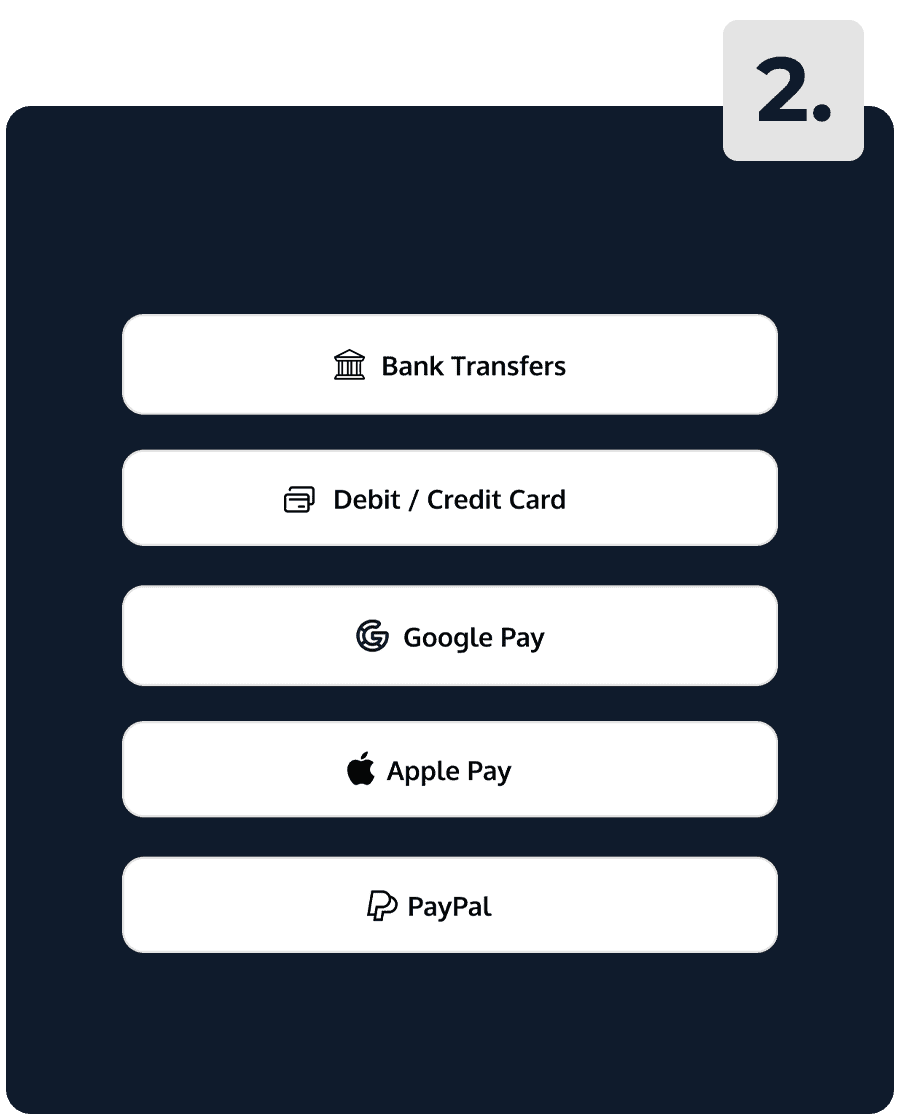
Add money to your Kraken account. US users can deposit via ACH (free, 1–3 days) or wire transfer. UK users can use Faster Payments (free, instant). EU users can use SEPA (free, same day). Debit/credit cards, Apple Pay, and Google Pay are also available for instant deposits. For larger ZEC purchases, bank transfer is the cheapest option.

Step 3: Navigate to “Buy Crypto”
Click “Buy Crypto” on the Kraken website or tap it in the mobile app. This opens the simple buying interface designed for beginners – no trading experience needed.

Step 4: Search for Zcash (ZEC)
Type “Zcash” or “ZEC” in the search bar. Select ZEC from the results. Choose the ZEC/USD pair if you deposited US dollars, ZEC/EUR for euros, or ZEC/GBP for British pounds. Zcash is among the most-traded privacy coins on Kraken.

Step 5: Enter Your Purchase Amount
Enter how much you want to spend in your local currency (minimum $10). Kraken will automatically calculate how many ZEC tokens you will receive at the current market price. You can buy fractional ZEC – you do not need to buy a whole coin.

Step 6: Review and Confirm Your Order
Check the ZEC price, total cost including fees, and the amount of ZEC you will receive. Kraken shows the full breakdown before you confirm. Once you click “Buy,” the ZEC is added to your Kraken account instantly.
Step 7: Secure Your ZEC
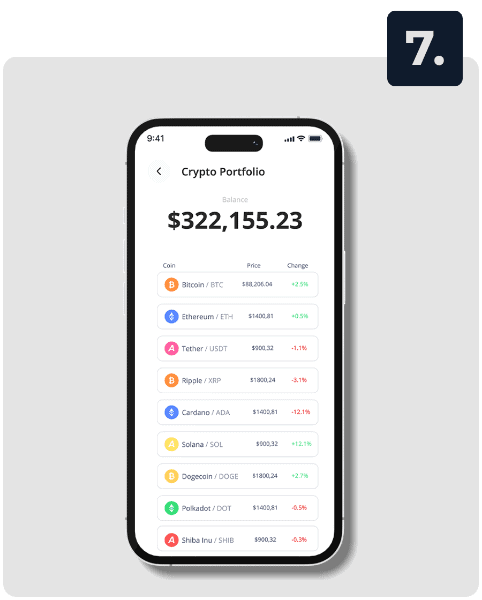
Your ZEC is now in your Kraken wallet. You can hold it here, trade it, or withdraw it to a personal wallet for long-term security and privacy. For maximum privacy, transfer ZEC to a wallet that supports shielded addresses – such as the Zashi mobile wallet or Ywallet. Note that most exchanges, including Kraken, only support transparent ZEC addresses for deposits and withdrawals.
What Is Zcash (ZEC)?
Zcash offers two types of addresses: transparent addresses (t-addresses) that work like Bitcoin – fully visible on the blockchain – and shielded addresses (z-addresses) that use zk-SNARKs to keep all transaction details private. In 2026, Zcash wallets increasingly use Unified Addresses (UAs), which combine both capabilities in a single address for a smoother user experience.
Like Bitcoin, Zcash has a fixed maximum supply of 21 million coins and uses proof-of-work mining with a halving schedule that reduces block rewards over time. The second halving occurred on November 23, 2024, cutting the block reward from 3.125 ZEC to 1.5625 ZEC per block. Alongside this, the NU6 network upgrade restructured Zcash’s funding model: 8% of block rewards now fund Zcash Community Grants (ZCG), and 12% is locked in a community-controlled “lockbox” wallet for future development – replacing the previous direct funding to the Electric Coin Company (ECC) and Zcash Foundation.
Zcash has experienced a remarkable resurgence in 2026. ZEC surged approximately 600% year-over-year, driven by growing institutional interest in privacy technology, the launch of an institutional Zcash mining pool by Foundry Digital (the world’s largest Bitcoin mining pool operator) in March 2026, and a $25 million fundraise to advance privacy coin capabilities. The market cap has grown to approximately $3.8 billion.
The Zcash ecosystem includes dedicated wallets like Zashi (a mobile wallet supporting shielded transactions and Unified Addresses), Ywallet (a lightweight mobile and desktop wallet), and ZecWallet Lite. The ECC core development team experienced a governance-related transition in early 2026, with new contributors stepping in to maintain the protocol.
ZEC trades under the ticker ZEC and is available on major exchanges including Kraken, Coinbase, Binance, OKX, KuCoin, and Gemini. However, some exchanges and jurisdictions restrict privacy coins due to regulatory concerns – always check availability in your region before attempting to buy.
Zcash Price & Market Overview
Before buying ZEC, here are the key numbers to understand the size, liquidity, and structure of the Zcash market. Always check the live price on Kraken or CoinGecko before placing your order.
| Metric | Data (March 2026) |
|---|---|
| Current Price | ~$230 – $400 (highly volatile – check live on Kraken) |
| Market Cap | ~$3.8 billion |
| CoinMarketCap Rank | #30 – #50 |
| 24h Trading Volume | $300M – $400M |
| Circulating Supply | ~16.6 million ZEC |
| Max Supply | 21 million ZEC (same as Bitcoin – fixed, never more) |
| All-Time High (ATH) | ~$880 – January 7, 2018 |
| All-Time Low (ATL) | ~$16 – July 2024 |
| Blockchain | Zcash (own L1 – Equihash PoW, Bitcoin fork) |
| Privacy Technology | zk-SNARKs (zero-knowledge proofs) |
| Block Time | ~75 seconds |
| Current Block Reward | 1.5625 ZEC (post-second halving, November 2024) |
| Mining Algorithm | Equihash (Proof-of-Work) |
| Listed On | Kraken, Coinbase, Binance, OKX, KuCoin, Gemini (some regions restricted) |
Zcash Tokenomics – How the Supply Works
Zcash mirrors Bitcoin’s economic model: a fixed supply of 21 million coins with regular halving events that reduce new issuance over time. Here is exactly how ZEC’s supply and funding structure work:
| Parameter | Value | What This Means |
|---|---|---|
| Max Supply | 21 million ZEC | Hard cap – identical to Bitcoin. No more ZEC can ever be created |
| Circulating Supply | ~16.6 million ZEC | ~79% of total supply has been mined |
| Block Reward (current) | 1.5625 ZEC | Halved in November 2024 – next halving expected ~2028 |
| Block Time | ~75 seconds | Slightly longer than Bitcoin’s 10 minutes per equivalent reward period |
| Mining Algorithm | Equihash (PoW) | ASIC-mineable proof-of-work – Foundry launched an institutional ZEC mining pool in March 2026 |
| Halving Schedule | Every ~4 years | Reduces block reward by 50% – creates increasing scarcity over time |
| Community Grants (ZCG) | 8% of block rewards | Funds ecosystem development, research, and community projects |
| Lockbox Fund | 12% of block rewards | Locked for future community-controlled development spending (introduced with NU6) |
| Miner Rewards | 80% of block rewards | Directly earned by miners securing the network |
| Pre-mine / ICO | None | No pre-mine – but the original “Founders’ Reward” (20% of early supply) funded initial development |
Best Exchanges to Buy Zcash in 2026
While Kraken is our recommended platform, Zcash is listed on most major exchanges. However, as a privacy coin, ZEC availability may be restricted in certain regions. Always verify before depositing funds.
| Exchange | Fee | Min. Buy | Payment Methods | KYC | Best For |
|---|---|---|---|---|---|
| Kraken | 0.16%–0.26% | $10 | Bank Transfer, Card, ACH, Apple Pay, Google Pay | Yes | US, UK, EU – strong security; transparent ZEC addresses supported |
| Coinbase | 0.40%–0.60% | $1 | Card, Bank Transfer, Apple Pay, PayPal (US) | Yes | Simplest UI; receives from both transparent and shielded addresses |
| Binance | 0.10% | $10 | Card, Bank, P2P, Apple Pay, Google Pay | Yes | Highest global volume; lowest spot fees |
| OKX | 0.10% | $5 | Card, Bank, Crypto, P2P | Yes | Wide payment options globally |
| KuCoin | 0.10% | $1 | Card, Bank Transfer | Yes | Low minimum buy; wide altcoin selection |
| Gemini | 0.20%–0.40% | $5 | Card, Bank Transfer, PayPal | Yes | US-regulated; SOC 2 certified security |
How to Store Zcash Safely
Once you have bought ZEC, where you keep it matters – especially if privacy is a priority. Exchange wallets only support transparent addresses. To use Zcash’s privacy features (shielded transactions), you need a wallet that supports shielded or Unified Addresses.
Option 1 – Exchange Wallet (Convenient, No Privacy)
Your ZEC stays in your Kraken or Coinbase account. The exchange holds the private keys on your behalf. All transactions are transparent (visible on the blockchain). Fine for trading, but you cannot use shielded privacy features.
Option 2 – Software Wallet (Free, Self-Custody, Privacy-Capable)
You control the private keys. These wallets support shielded transactions for full Zcash privacy.
| Wallet | Type | Cost | Best For |
|---|---|---|---|
| Zashi | Mobile (iOS & Android) | Free | Best Zcash-specific wallet – Unified Addresses, shielded transactions, recovery tools |
| Ywallet | Mobile & Desktop | Free | Lightweight wallet with shielded support – multi-platform |
| ZecWallet Lite | Desktop | Free | Full-featured desktop wallet – shielded by default |
Option 3 – Hardware Wallet (Most Secure, Limited Privacy)
Your private keys are stored on a physical device never connected to the internet. However, hardware wallet privacy support for ZEC is limited.
| Device | Price | Best For |
|---|---|---|
| Ledger Nano X | ~$149 | Supports ZEC – shielded address support requires Zashi for full functionality |
| Ledger Nano S Plus | ~$79 | Budget option – same security, USB only |
| Trezor Model T | ~$179 | Supports ZEC transparent addresses only – no shielded support |
Is Zcash a Good Investment in 2026?
Zcash is experiencing a significant resurgence in 2026. After years of underperformance, ZEC has surged approximately 600% from its 2024 lows, driven by renewed institutional interest in privacy technology, the launch of Foundry Digital’s institutional Zcash mining pool, and a $25 million fundraise to advance the protocol. The second halving in November 2024 reduced new issuance by 50%, tightening supply at a time of growing demand.
Zcash’s zk-SNARK technology – invented by the Zcash team – has become foundational across the broader crypto industry. Ethereum’s scaling roadmap relies heavily on zero-knowledge proofs, and the technology is increasingly used in institutional applications for privacy-preserving compliance. This positions Zcash as the original “privacy primitive” of blockchain, with potential to benefit from the growing mainstream adoption of zero-knowledge cryptography.
That said, ZEC remains a high-risk asset with unique challenges. Privacy coins face ongoing regulatory pressure in multiple jurisdictions, the ECC core development team experienced governance-related departures in early 2026, and competition from Monero and newer privacy solutions is real.
ZEC Price Scenarios for 2026
| Scenario | Price Range | What Would Need to Happen |
|---|---|---|
| Bearish | $80 – $150 | Regulatory crackdown on privacy coins, exchange delistings expand, mining profitability declines |
| Base Case | $200 – $400 | Stable market, continued institutional mining interest, privacy demand grows steadily |
| Bullish | $400 – $700 | Bitcoin bull run, privacy narrative strengthens, major institutional adoption of zk-proof technology |
| ATH Retest | $800+ | Full crypto super-cycle, privacy coins rerated by market, ZEC becomes primary privacy asset |
Price scenarios are based on analyst estimates and historical data. They are not financial advice. Crypto markets are highly unpredictable.
Key Risks to Understand Before You Buy
- Extreme volatility – ZEC dropped to ~$16 in July 2024 before surging 600%+. Price swings of 30–50% in a single week are not unusual for privacy coins.
- Regulatory risk – privacy coins face the highest regulatory scrutiny of any crypto category. Some exchanges and jurisdictions have already delisted ZEC. Further restrictions are possible.
- Governance uncertainty – the ECC core development team departed in early 2026 amid governance disagreements. New contributors have stepped in, but the transition introduces execution risk.
- Competition – Monero (XMR) is the other major privacy coin. Newer privacy solutions built on Ethereum and other chains also compete for the privacy use case.
- Low adoption relative to market cap – despite strong technology, Zcash’s daily transaction count remains modest compared to larger blockchains. Real-world usage has not yet matched the technology’s potential.
- Mining centralisation risk – as ASIC mining dominates, the hash rate is concentrated among a smaller number of large mining operations.
How to Sell Zcash
Selling ZEC on Kraken is just as straightforward as buying it. Here is the complete step-by-step process:
-
1
Log in to Kraken
Go to your Spot Wallet to confirm your current ZEC balance and the live market price.
-
2
Click “Sell”
Navigate to the Sell section in the main menu and search for ZEC in the asset list.
-
3
Choose Your Trading Pair
Select the currency you want to receive – USD, EUR, GBP, or USDT depending on your preference and location.
-
4
Enter the Amount to Sell
Type either a ZEC amount or a target cash value. Kraken will show your estimated proceeds after fees in real time.
-
5
Review and Confirm
Check the sell price, transaction amount, and fee on the confirmation screen. Click “Sell Now” to execute.
-
6
Withdraw to Your Bank
Your cash balance appears in your Kraken account immediately. Go to Funding → Withdraw to transfer to your bank. Most withdrawals complete within 1–3 business days.
Questions & Answers

Zcash is a privacy-focused cryptocurrency launched in 2016 that uses zk-SNARKs (zero-knowledge proofs) to enable fully private transactions. Unlike Bitcoin where all transactions are publicly visible, Zcash lets users choose between transparent transactions and shielded transactions that hide the sender, recipient, and amount. Zcash has gained renewed popularity in 2026 due to a ~600% price surge, the launch of an institutional mining pool by Foundry Digital, and growing mainstream interest in zero-knowledge proof technology.
A Unified Address (UA) is a single Zcash address that combines both transparent and shielded capabilities. Instead of managing separate t-addresses (transparent) and z-addresses (shielded), modern Zcash wallets like Zashi generate one Unified Address that can receive both types of transactions. This simplifies the user experience while maintaining privacy options. When you give someone your UA, their wallet automatically chooses the most private transaction type available.





Grow your portfolio.
Buy CRYPTO today