How to Buy Stellar – Step-by-Step Guide (2026)

How to Buy Stellar on Kraken

Step 1: Create Your Free Kraken Account
Sign up at kraken.com by entering your email address and selecting your country of residence. Complete the identity verification (KYC) process by uploading a government-issued ID and a selfie. This typically takes a few minutes and unlocks full buying and trading access.
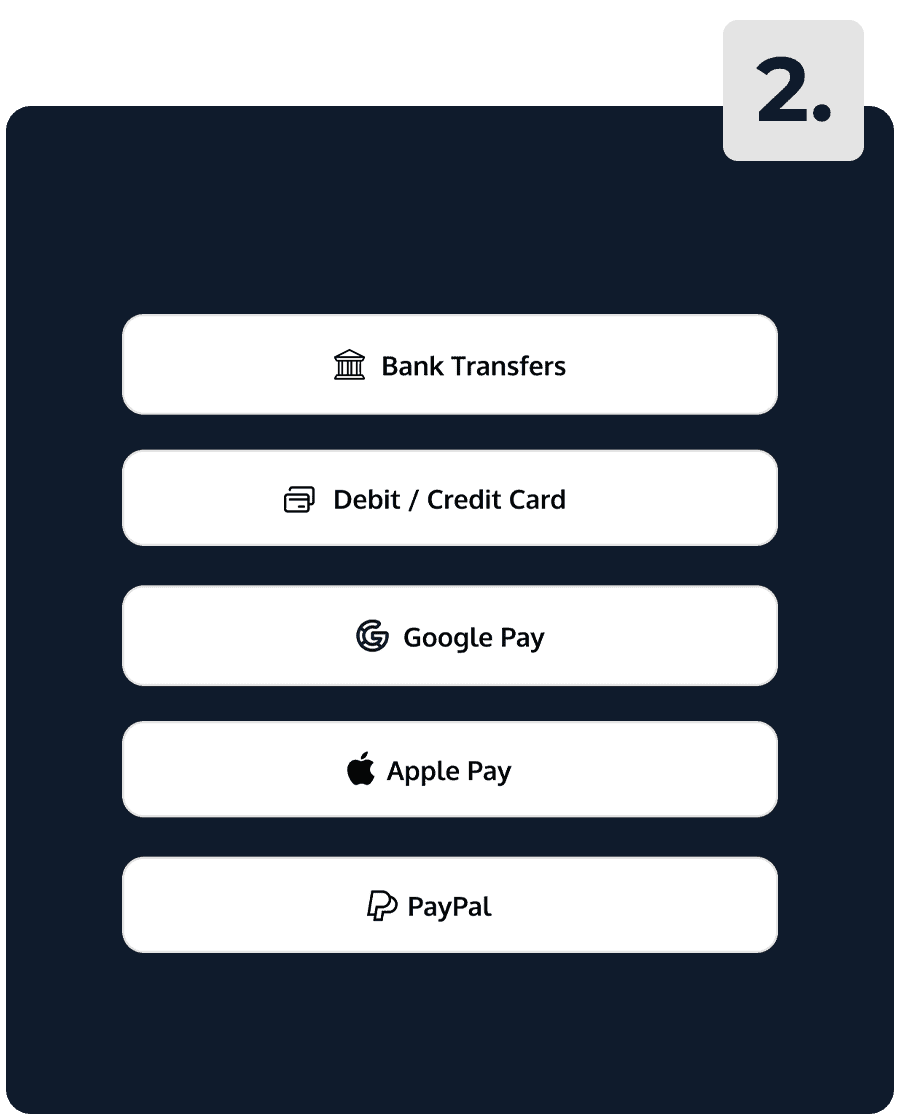
Step 2: Deposit Funds
Add money to your Kraken account. US users can deposit via ACH (free, 1-3 days) or wire transfer. UK users can use Faster Payments (free, instant). EU users can use SEPA (free, same day). Debit/credit cards, Apple Pay, and Google Pay are also available for instant deposits – though card fees are higher (3.75%+). For larger XLM purchases, bank transfer is the cheapest option.

Step 3: Go to “Buy Crypto”
Click “Buy Crypto” on the Kraken website or tap it in the mobile app. This opens the simple buying interface designed for beginners – no trading experience needed.

Step 4: Search for Stellar (XLM)
Type “Stellar” or “XLM” in the search bar and select it from the results. Choose the XLM/USD pair if you deposited US dollars, XLM/EUR for euros, or XLM/GBP for British pounds.

Step 5: Enter Your Purchase Amount
Enter how much you want to spend in your local currency (minimum $10). Kraken will automatically calculate how many XLM tokens you will receive at the current market price. At approximately $0.16 per XLM, a $100 purchase gives you roughly 625 XLM tokens.

Step 6: Review and Confirm Your Order
Check the XLM price, total cost including fees, and the amount of XLM you will receive. Kraken shows the full breakdown before you confirm. Once you click “Buy,” the XLM tokens are added to your Kraken account instantly.
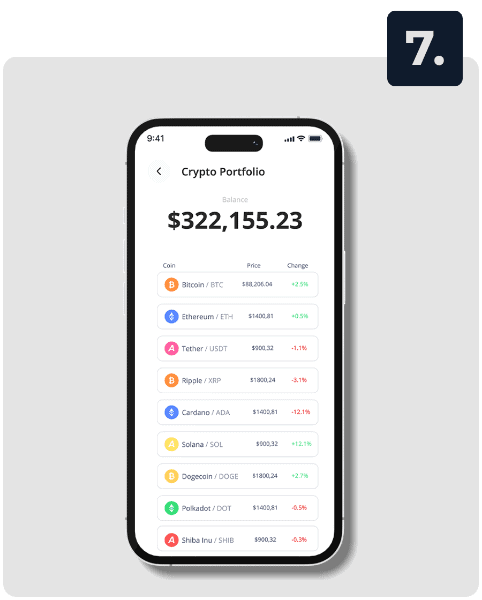
Step 7: Secure Your XLM
Your XLM is now in your Kraken wallet. You can hold it here, trade it, or withdraw it to a personal wallet like Lobstr or Freighter for self-custody. Stellar transactions are extremely fast (3-5 seconds) and cheap (~$0.00001 per transaction). Note that Stellar requires a minimum 1 XLM balance to keep an account active on-chain – make sure to keep at least 1.5 XLM in your wallet to avoid issues.
What Is Stellar (XLM)?
The Stellar network uses the Stellar Consensus Protocol (SCP) – a Federated Byzantine Agreement (FBA) consensus mechanism that differs fundamentally from both Proof-of-Work and Proof-of-Stake. SCP secures the network through trusted reputation rather than computing power or staked tokens, and validators are required to have a publicly verifiable identity. This makes Stellar one of the most energy-efficient blockchain networks while still maintaining strong decentralisation. Transactions are confirmed in 3-5 seconds with mathematical finality, and fees are essentially zero (~$0.00001 per transaction).
Stellar’s native asset is called Lumens (XLM). It serves three primary purposes: paying transaction fees, preventing spam (each account requires a 1 XLM minimum balance), and acting as an intermediary currency in cross-border payments. When sending money between two different fiat currencies on Stellar, the protocol can automatically convert the source currency into XLM and then into the destination currency in seconds, finding the most efficient exchange path through the network’s built-in decentralised exchange. This makes Stellar uniquely suited for cross-border remittances and international payments.
In 2024, Stellar launched Soroban – its smart contract platform built in Rust. Soroban brings DeFi, lending, decentralised exchanges, and tokenised real-world assets to Stellar while maintaining the network’s core principles of efficiency and accessibility. Soroban’s Rust foundation provides strong memory safety guarantees and disallows reentrancy attacks – one of the most common vulnerabilities in DeFi. Stellar’s RWA total value locked has grown to approximately $1.2 billion, with major institutions including Franklin Templeton (tokenised US Treasuries), Ondo Finance (USDY), WisdomTree, and Paxos all running active deployments on the network. In January 2026, Stellar activated Protocol 25 “X-Ray” – a major upgrade introducing native zero-knowledge proofs for private, regulator-compliant transactions.
On March 17, 2026, the SEC and CFTC jointly classified XLM as a “digital commodity” – not a security – alongside Bitcoin, Ethereum, and 13 other major cryptocurrencies. The same week, Amundi (Europe’s largest asset manager) announced a $100 million tokenised fund built on Stellar, validating its institutional RWA utility at scale. Other major partnerships include MoneyGram (cross-border payments in 170+ countries), IBM World Wire (built in 2019), Visa, PayPal, and the DTCC (which has designated XLM as a “Digital Liquidity Token” in its planned tokenisation service launching in H2 2026). CME Group launched XLM futures in January 2026, and the Marshall Islands launched a blockchain-based universal basic income program on Stellar in December 2025.
Stellar Price & Market Overview
Before buying XLM, here are the key numbers to understand the size, liquidity, and structure of the Stellar market. Always check the live price on Kraken or CoinGecko before placing your order.
| Metric | Data (March 2026) |
|---|---|
| Current Price | ~$0.16 (check live on Kraken) |
| Market Cap | ~$5 billion |
| CoinGecko / CMC Rank | #17 – #22 |
| 24h Trading Volume | $120M – $175M |
| Circulating Supply | ~33 billion XLM |
| Max Supply | 50 billion XLM (fixed cap – inflation disabled by community vote in 2019) |
| All-Time High (ATH) | $0.9381 – January 4, 2018 |
| All-Time Low (ATL) | $0.001234 – November 18, 2014 |
| Consensus | Stellar Consensus Protocol (SCP) – Federated Byzantine Agreement |
| Transaction Speed | 3-5 seconds to finality; ~$0.00001 per transaction |
| Throughput | ~3,000 TPS |
| Smart Contracts | Soroban (Rust-based, launched 2024) |
| RWA TVL | ~$1.2 billion |
| Key Partnerships | MoneyGram (170+ countries), Franklin Templeton, Ondo Finance, WisdomTree, Paxos, IBM, DTCC, Amundi |
| Regulatory Status | Digital commodity (SEC/CFTC joint classification – March 17, 2026) |
| Standards Compliance | ISO 20022 (interoperable with SWIFT and central bank systems) |
| Listed On | 200+ exchanges including Kraken, Binance, Coinbase, OKX, KuCoin, Gemini |
Stellar Tokenomics – How the Supply Works
XLM has a fixed maximum supply of 50 billion tokens. In 2019, the Stellar community voted to permanently disable network inflation – meaning no new XLM can ever be created. The Stellar Development Foundation also burned approximately 55 billion XLM in 2019 to reduce the original supply from 105 billion to 50 billion. Here is exactly how the supply is structured:
| Component | Amount | What This Means |
|---|---|---|
| Max Supply | 50 billion XLM | Fixed cap – no new XLM can ever be minted (inflation disabled in 2019) |
| Original Supply | ~105 billion XLM | Original supply at network launch in 2015 |
| 2019 SDF Burn | ~55 billion XLM burned | The Stellar Development Foundation permanently destroyed 55 billion XLM in November 2019, reducing total supply to 50 billion |
| Circulating Supply | ~33 billion XLM | ~66% of total supply is currently in circulation |
| SDF Reserve | ~17 billion XLM | Held by Stellar Development Foundation for ecosystem growth, partnerships, and operations |
| Inflation | None (disabled) | Network inflation was permanently disabled by community vote in October 2019 |
| Account Reserve | 1 XLM minimum per account | Every Stellar account must hold at least 1 XLM to remain active – prevents spam and maintains ledger size |
| Primary Utility | Payments + intermediary currency + spam prevention | XLM pays transaction fees, acts as a bridge currency for cross-border payments, and enforces minimum account balances |
Best Exchanges to Buy Stellar in 2026
While Kraken is our recommended platform, XLM is one of the most universally listed cryptocurrencies – available on over 200 exchanges worldwide. Your best option depends on your location, preferred payment method, and whether you want to use Stellar’s payment features.
| Exchange | Fee | Min. Buy | Payment Methods | KYC | Best For |
|---|---|---|---|---|---|
| Kraken | 0.16%-0.26% | $10 | Bank Transfer, Card, ACH, Apple Pay, Google Pay | Yes | Beginners – US, UK, EU; strong security |
| Binance | 0.10% | $10 | Card, Bank, P2P, Apple Pay, Google Pay | Yes | Highest global XLM volume; lowest fees |
| Coinbase | 0.40%-0.60% | $1 | Card, Bank Transfer, Apple Pay, PayPal (US) | Yes | Simplest UI; good for total beginners |
| Gemini | 0.20%-0.40% | $5 | Card, Bank Transfer, PayPal | Yes | US-regulated; SOC 2 certified security |
| OKX | 0.08%-0.10% | $10 | Card, Bank, P2P | Yes | Low fees; advanced traders |
| Stellar DEX | ~0% (network fees only) | No minimum | Stellar wallet only | No KYC | Built-in decentralised exchange on the Stellar network itself |
How to Store Stellar Safely
Once you have bought XLM, where you keep it matters. Leaving tokens on an exchange exposes you to platform risk. For anything you plan to hold long term, transferring XLM to a personal wallet is the safer choice.
Option 1 – Exchange Wallet (Convenient, Lower Security)
Your XLM stays in your Kraken or Binance account. The exchange holds the private keys on your behalf. Fine for active traders, but not recommended for long-term holding of significant amounts.
Option 2 – Software Wallet (Free, Self-Custody)
You control the private keys and the wallet is connected to the internet. Stellar has purpose-built wallets that support payments, anchors, and Soroban dApps.
| Wallet | Platform | Best For |
|---|---|---|
| Lobstr | iOS + Android + Web | The most popular Stellar wallet. Full payment support, anchor integration, in-app trading on Stellar DEX, and clean interface. Default choice for most XLM users. |
| Freighter | Browser extension + iOS + Android | Official Stellar Development Foundation wallet. Full support for Soroban smart contracts and dApps. Best for DeFi users. |
| Solar Wallet | Desktop + iOS + Android | Open-source multi-platform Stellar wallet with strong security focus and multi-signature support. |
| StellarTerm | Web | Web-based wallet with built-in DEX trading interface. Good for users who want direct access to Stellar’s order books. |
Option 3 – Hardware Wallet (Highest Security)
Your private keys are stored on a physical device that never connects to the internet. The gold standard for long-term XLM storage.
| Wallet | Price | Best For |
|---|---|---|
| Ledger Nano X | ~$149 | Industry standard; Bluetooth; full Stellar support via Ledger Live |
| Ledger Stax / Flex | $279 / $249 | Premium touchscreen hardware wallets; Stellar support included |
| Trezor Safe 5 | ~$169 | Open-source firmware; Stellar support via Trezor Suite |
Is Stellar a Good Investment in 2026?
Stellar has arguably the strongest enterprise payments narrative of any cryptocurrency. The list of institutional partners is exceptional: MoneyGram (cross-border payments in 170+ countries), Franklin Templeton (tokenised US Treasuries), Ondo Finance, WisdomTree, Paxos, IBM World Wire, and most recently Amundi (Europe’s largest asset manager) launching a $100 million tokenised fund in March 2026. The DTCC has designated XLM as a “Digital Liquidity Token” in its planned tokenisation service launching H2 2026. Stellar is ISO 20022 compliant, making it natively interoperable with SWIFT and central bank payment systems.
The March 17, 2026 SEC/CFTC commodity classification removed years of regulatory uncertainty and aligns XLM with Bitcoin and Ethereum from a US legal standpoint. Stellar’s $1.2 billion RWA TVL ranks among the highest of any blockchain, and the Soroban smart contract platform brings DeFi capabilities to a network previously limited to payments. Protocol 25 “X-Ray” added native zero-knowledge proofs for privacy-compliant institutional transactions. CME Group launched XLM futures in January 2026, and the Marshall Islands launched a blockchain-based universal basic income program on Stellar in late 2025.
However, XLM has the same fundamental challenge as Hedera: enterprise utility has not translated to token price appreciation. Despite years of high-profile partnerships, XLM is down 83% from its 2018 ATH and roughly 31% year-over-year. Daily protocol fees are minimal (~$760), suggesting that even significant transaction volume does not drive substantial XLM demand because fees are essentially zero. Stellar is sometimes criticised for being “the quiet infrastructure play with no narrative” – it lacks the meme appeal, DeFi yield farming, or speculative momentum that drives many crypto rallies. Founder Jed McCaleb’s history with Mt. Gox (which collapsed in 2014) and his earlier role at Ripple add some reputational complexity.
XLM Price Scenarios for 2026
| Scenario | Price Range | What Would Need to Happen |
|---|---|---|
| Bearish | $0.10 – $0.14 | Continued macro weakness, Soroban DeFi adoption stalls, $0.14 support breaks, no institutional capital flows |
| Base Case | $0.16 – $0.30 | Stable macro, RWA momentum continues, Amundi fund grows, Soroban TVL increases, DTCC integration delivers |
| Bullish | $0.40 – $0.80 | Bitcoin bull run, RWA tokenisation boom, DTCC tokenisation goes live, major bank settlement adoption |
| ATH Retest | $1.00 – $2.50+ | Full crypto super-cycle, Stellar becomes default RWA settlement layer, central bank CBDC partnerships materialise |
Price scenarios are based on analyst estimates and historical data. They are not financial advice. Crypto markets are highly unpredictable.
Key Risks to Understand Before You Buy
- Enterprise utility vs token price disconnect – despite premier partnerships (MoneyGram, IBM, Franklin Templeton, Amundi), XLM has underperformed for years. Daily protocol fee revenue is minimal because fees are essentially free.
- 83% drawdown from ATH – XLM peaked at $0.9381 in January 2018 and has not come close to that level since. The 8-year underperformance is one of the longest in major crypto.
- Centralisation concerns – the Stellar Development Foundation holds approximately 17 billion XLM (~34% of total supply) and historically had significant influence over network decisions. Validator selection through SCP also relies on trust relationships rather than open participation.
- Founder history – Jed McCaleb co-founded Ripple (which he left after disputes) and Mt. Gox (which collapsed in 2014 after a major hack). While he has been managing director of SDF for over a decade, the history adds some reputational complexity.
- Modest DeFi ecosystem – despite Soroban’s launch in 2024, Stellar’s DeFi TVL (excluding RWA) is much smaller than Ethereum, Solana, or other smart contract platforms.
- Memo field complexity – the requirement to include memos when depositing to exchanges is a common source of lost funds for new users. Stellar is less forgiving of mistakes than newer chains.
- Competition from XRP – Ripple’s XRP serves a similar cross-border payment use case, has more mainstream brand awareness, and just won its SEC lawsuit in 2024. The two networks compete directly for institutional payment partnerships.
How to Sell Stellar
Selling XLM on Kraken is just as straightforward as buying it. Here is the complete step-by-step process:
-
1
Log in to Kraken
Go to your Spot Wallet to confirm your current XLM balance and the live market price.
-
2
Click “Sell”
Navigate to the Sell section in the main menu and search for XLM in the asset list.
-
3
Choose Your Trading Pair
Select the currency you want to receive – USD, EUR, GBP, or USDT depending on your preference and location.
-
4
Enter the Amount to Sell
Type either an XLM amount or a target cash value. Kraken will show your estimated proceeds after fees in real time.
-
5
Review and Confirm
Check the sell price, transaction amount, and fee on the confirmation screen. Click “Sell Now” to execute.
-
6
Withdraw to Your Bank
Your cash balance appears in your Kraken account immediately. Go to Funding – Withdraw to transfer to your bank. Most withdrawals complete within 1-3 business days.
Questions & Answers

The Stellar Consensus Protocol (SCP) is a Federated Byzantine Agreement (FBA) consensus mechanism developed specifically for Stellar. Unlike Proof-of-Work (which requires energy-intensive mining) or Proof-of-Stake (which requires staked tokens), SCP secures the network through trusted reputation – validators must have publicly verifiable identities. This makes Stellar one of the most energy-efficient blockchain networks while still maintaining strong decentralisation. Transactions reach finality in 3-5 seconds.
On March 17, 2026, the SEC and CFTC jointly classified XLM as a “digital commodity” – not a security – alongside Bitcoin, Ethereum, and 13 other major cryptocurrencies. This removes years of regulatory uncertainty that had been a barrier to institutional participation. With XLM legally classified as a commodity, banks, asset managers, and other regulated entities can integrate it without securities law concerns. The same week, Amundi (Europe’s largest asset manager) announced a $100 million tokenised fund built on Stellar.






Grow your portfolio.
Buy CRYPTO today