How to Buy Ethereum – Step-by-Step Guide (2026)
How to Buy Ethereum on Kraken

Step 1: Create Your Free Kraken Account
Sign up at kraken.com by entering your email address and selecting your country of residence. Complete the identity verification (KYC) process by uploading a government-issued ID and a selfie. This typically takes a few minutes and unlocks full buying and trading access.
Step 2: Deposit Funds
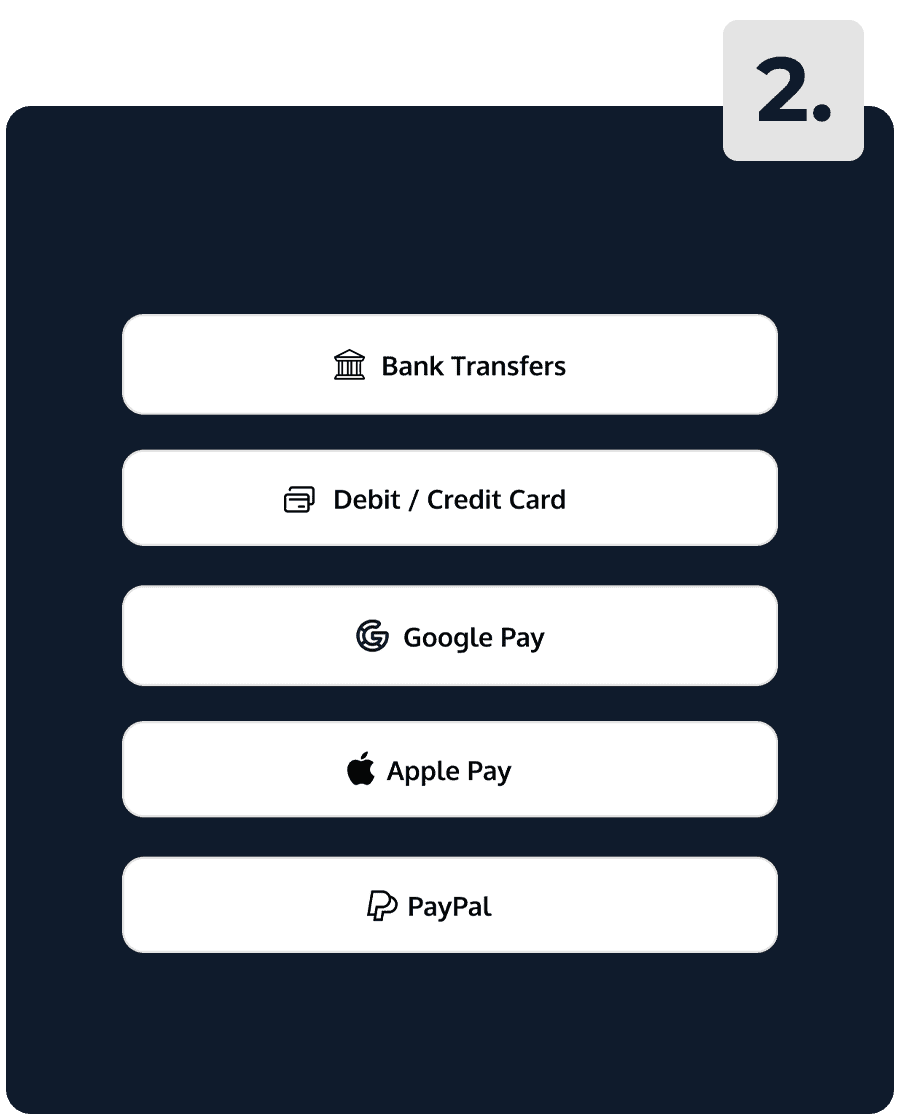
Add money to your Kraken account. US users can deposit via ACH (free, 1-3 days) or wire transfer. UK users can use Faster Payments (free, instant). EU users can use SEPA (free, same day). Debit/credit cards, Apple Pay, and Google Pay are also available for instant deposits – though card fees are higher (3.75%+). For larger ETH purchases, bank transfer is the cheapest option.

Step 3: Go to “Buy Crypto”
Click “Buy Crypto” on the Kraken website or tap it in the mobile app. This opens the simple buying interface designed for beginners – no trading experience needed.

Step 4: Search for Ethereum (ETH)
Type “Ethereum” or “ETH” in the search bar and select it from the results. Choose the ETH/USD pair if you deposited US dollars, ETH/EUR for euros, or ETH/GBP for British pounds.

Step 5: Enter Your Purchase Amount
Enter how much you want to spend in your local currency (minimum $10). Kraken will automatically calculate how much ETH you will receive at the current market price. At approximately $1,600 per ETH, a $100 purchase gives you roughly 0.0625 ETH.

Step 6: Review and Confirm Your Order
Check the ETH price, total cost including fees, and the amount of Ethereum you will receive. Kraken shows the full breakdown before you confirm. Once you click “Buy,” the ETH is added to your Kraken account instantly.
Step 7: Secure Your ETH (Transfer to Wallet or Stake)
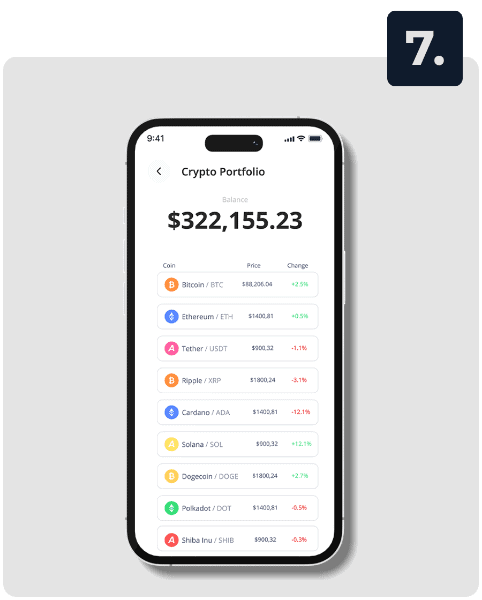
Your Ethereum is now in your Kraken wallet. You can hold it here, trade it, stake it to earn 3-5% APY, or withdraw to a personal wallet. For long-term holding, transfer to a hardware wallet like Ledger or Trezor. For DeFi use, MetaMask is the standard. Never leave large amounts on exchanges.
What Is Ethereum (ETH)?
While Bitcoin is primarily digital money, Ethereum is a complete ecosystem. Its native currency, Ether (ETH), powers every operation on the network – from simple transfers to complex DeFi protocols. Users pay “gas fees” in ETH to execute transactions and run smart contracts. This utility creates constant demand for ETH regardless of speculative trading.
Ethereum underwent a major upgrade in September 2022 called “The Merge,” transitioning from energy-intensive proof-of-work to proof-of-stake consensus. This reduced energy consumption by 99.95% and introduced staking rewards for validators. The 2024 Pectra upgrade further improved wallet experience, staking operations, and Layer 2 throughput. Today, Ethereum secures over $50 billion in DeFi protocols, powers thousands of dApps, and serves as the foundation for the majority of NFT and tokenized asset activity.
Ethereum Price & Market Overview
Before buying ETH, here are the key numbers to understand the size, liquidity, and structure of the Ethereum market. Always check the live price on Kraken or CoinGecko before placing your order.
| Metric | Data (April 2026) |
|---|---|
| Current Price | ~$1,600 (check live on Kraken) |
| Market Cap | ~$200 billion |
| CoinGecko / CMC Rank | #2 |
| 24h Trading Volume | $8B – $15B |
| Circulating Supply | ~120 million ETH |
| Total Supply | ~120 million ETH (post-merge deflationary) |
| All-Time High (ATH) | $4,891 – November 2021 |
| All-Time Low (ATL) | $0.42 – October 2015 |
| Blockchain | Ethereum (Layer 1) – Proof of Stake |
| Staking APY | 3-5% annually |
| Gas Fee Range | $1 – $50+ depending on network congestion |
| DeFi TVL | $50+ billion |
| Layer 2 TVL | $15+ billion (Arbitrum, Optimism, Base) |
| Active Validators | 1,000,000+ securing the network |
| Listed On | 500+ exchanges worldwide |
Ethereum Tokenomics – How the Supply Works
Ethereum’s monetary policy changed dramatically with The Merge in September 2022. The network transitioned from proof-of-work mining to proof-of-stake, and introduced a burn mechanism that can make ETH deflationary during periods of high network activity.
| Component | Amount | What This Means |
|---|---|---|
| Total Supply | ~120 million ETH | No hard cap – supply changes based on network activity |
| Circulating Supply | ~120 million ETH | All ETH is liquid and transferable |
| Staked ETH | ~28 million ETH | Locked in validators earning 3-5% APY (~23% of supply) |
| Issuance Rate | ~0.5-1% annually | New ETH created as staking rewards for validators |
| Burn Mechanism | EIP-1559 base fees burned | Portion of every transaction fee is permanently destroyed |
| Net Inflation | -0.5% to +0.5% | Deflationary when burn exceeds issuance, inflationary when activity is low |
| Minimum Stake | 32 ETH to run validator | Or use pooled staking (Lido, Rocket Pool) for any amount |
| Primary Utility | Gas fees + staking + DeFi collateral | Required for every transaction and smart contract execution |
Best Ways to Buy Ethereum in 2026
While Kraken is our recommended platform, Ethereum is available through multiple channels. Your best option depends on whether you want to stake, use DeFi, or simply hold for price appreciation.
| Method | Fee | Min. Buy | Payment Methods | KYC | Best For |
|---|---|---|---|---|---|
| Kraken | 0.16%-0.26% | $10 | Bank Transfer, Card, ACH, Apple Pay, Google Pay | Yes | Staking (3-5% APY), security, US/UK/EU |
| Binance | 0.10% | $15 | Card, Bank, P2P | Yes | Lowest fees, highest global volume |
| Coinbase | 0.50%-0.60% | $2 | Card, Bank, PayPal | Yes | US beginners, ease of use, learning rewards |
| Ethereum ETF (ETHA) | 0.15%-0.25% | $1 | Brokerage account | Yes | Traditional investors, IRAs, no wallet needed |
| Uniswap (DEX) | 0.3% + gas | No minimum | ETH wallet only | No | Privacy, direct ownership, DeFi access |
| Layer 2 DEXs | 0.01% + L2 gas | No minimum | ETH on Arbitrum/Optimism | No | Lowest fees, fastest transactions |
How to Store Ethereum Safely
Once you have bought ETH, where you keep it matters. Leaving ETH on an exchange means you cannot use DeFi, stake independently, or access Layer 2 solutions. For full functionality and security, a personal wallet is essential.
Option 1 – Exchange Wallet (Convenient, Limited Functionality)
Your ETH stays in your Kraken or Coinbase account. You can stake through the exchange (they run validators for you) but cannot access DeFi protocols, NFTs, or Layer 2 networks. Fine for beginners, but you miss Ethereum’s full capabilities.
Option 2 – Software Wallet (DeFi, NFTs, Layer 2)
You control the private keys and can interact with the entire Ethereum ecosystem. This is the standard for DeFi users and NFT collectors.
| Wallet | Platform | Best For |
|---|---|---|
| MetaMask | Browser + Mobile | DeFi standard, supports all EVM chains, easy dApp connection |
| Rainbow | iOS + Android | User-friendly, NFT focus, L2 native support |
| Rabby | Browser extension | Security-focused, transaction simulation, anti-phishing |
| Phantom | Browser + Mobile | Solana users crossing over, clean interface |
Option 3 – Hardware Wallet (Highest Security)
Your private keys are stored on a physical device that never connects to the internet. Essential for holdings over $1,000 or long-term storage.
| Wallet | Price | Best For |
|---|---|---|
| Ledger Nano X | ~$149 | Industry standard; Bluetooth; mobile support |
| Ledger Nano S Plus | ~$79 | Budget option – same security, USB only |
| Trezor Model T | ~$179 | Touchscreen, open-source, beginner-friendly |
| GridPlus Lattice1 | ~$397 | Advanced users, large screen, SafeCard system |
Is Ethereum a Good Investment in 2026?
Ethereum remains the dominant platform for smart contracts and decentralized applications in 2026. With over $50 billion in DeFi total value locked (TVL), thousands of active dApps, and the majority of NFT and tokenized asset activity, ETH continues to generate real utility demand beyond speculation. The transition to proof-of-stake created a yield-bearing asset (3-5% staking APY) while reducing environmental impact by 99.95%.
However, Ethereum faces significant competition from faster, cheaper Layer 1 blockchains like Solana and Sui, as well as its own Layer 2 solutions that reduce demand for mainnet ETH. Gas fees remain a barrier to entry for small transactions. The price remains 67% below its 2021 all-time high, and regulatory uncertainty surrounds staking services and DeFi protocols.
Ethereum Price Scenarios for 2026
| Scenario | Price Range | What Would Need to Happen |
|---|---|---|
| Bearish | $1,200 – $1,400 | L2s cannibalize mainnet demand, regulatory crackdown on DeFi/staking, competitor chains gain market share |
| Base Case | $1,800 – $2,500 | Steady DeFi growth, institutional adoption of tokenized assets, successful Dencun upgrade effects |
| Bullish | $3,000 – $4,500 | ETF inflows accelerate, RWA (real world assets) boom, Ethereum becomes settlement layer for TradFi |
| ATH Retest | $4,800+ | Full crypto super-cycle, mass adoption of DeFi, flippening narrative returns |
Price scenarios are based on analyst estimates and historical data. They are not financial advice. Crypto markets are highly unpredictable.
Key Risks to Understand Before You Buy
- High gas fees – Mainnet transactions cost $5-50+, making small transfers uneconomical. L2s help but add complexity.
- Competition from L1s and L2s – Solana, Sui, and other fast chains compete for users. Ethereum’s own L2s reduce mainnet fee burn.
- Regulatory uncertainty – SEC has targeted staking services and DeFi protocols. Future regulations could restrict functionality.
- Smart contract risk – DeFi protocols can be hacked. Over $3 billion has been lost to exploits on Ethereum dApps.
- MEV and sandwich attacks – Traders can exploit your transactions on public mempools. Use private RPCs or aggregators.
- Staking lock-up risks – Solo staking requires 32 ETH and technical expertise. Liquid staking has smart contract and depeg risks.
- Technological complexity – Using Ethereum properly requires understanding gas, nonces, ERC-20 tokens, and network congestion.
How to Sell Ethereum
Selling Ethereum on Kraken is just as straightforward as buying it. Here is the complete step-by-step process:
-
1
Log in to Kraken
Go to your Spot Wallet to confirm your current ETH balance and the live market price.
-
2
Click “Sell”
Navigate to the Sell section in the main menu and search for Ethereum (ETH) in the asset list.
-
3
Choose Your Trading Pair
Select the currency you want to receive – USD, EUR, GBP, or USDT depending on your preference and location.
-
4
Enter the Amount to Sell
Type either an ETH amount or a target cash value. Kraken will show your estimated proceeds after fees in real time.
-
5
Review and Confirm
Check the sell price, transaction amount, and fee on the confirmation screen. Click “Sell Now” to execute.
-
6
Withdraw to Your Bank
Your cash balance appears in your Kraken account immediately. Go to Funding – Withdraw to transfer to your bank. Most withdrawals complete within 1-3 business days.
Questions & Answers

Ethereum is a decentralized platform for smart contracts and dApps, while Bitcoin is primarily digital money. Ethereum enables programmable money, DeFi, NFTs, and complex applications. Bitcoin has a fixed 21M supply; Ethereum has dynamic supply with burn mechanisms. Ethereum uses proof-of-stake (energy efficient); Bitcoin uses proof-of-work.
Kraken offers the best balance of security, staking rewards (3-5% APY), and reasonable fees (0.16-0.26%). Coinbase is best for US beginners despite higher fees. Binance has lowest trading fees (0.10%). For traditional investors, Ethereum ETFs (ETHA) offer exposure through brokerage accounts. For privacy, use Uniswap DEX with MetaMask.
As of April 2026, ETH trades at approximately $1,600. You can buy fractional amounts – Kraken allows purchases from $10. At current prices, $10 buys roughly 0.00625 ETH. Gas fees for transfers are separate and vary ($1-50+).
Gas fees are payments to validators for processing transactions and executing smart contracts. They vary based on network congestion. During busy periods (NFT drops, DeFi booms), fees spike. Use Layer 2 solutions (Arbitrum, Optimism, Base) for fees under $0.01, or transact during weekends when mainnet is quieter.
Yes. You can earn 3-5% APY by staking ETH. Options include: (1) Exchange staking (Kraken, Coinbase – easiest), (2) Liquid staking (Lido, Rocket Pool – any amount, receive stETH/rETH tokens), (3) Solo staking (32 ETH minimum, technical expertise required). Staking locks your ETH until future network upgrades enable withdrawals.
Layer 2 networks (Arbitrum, Optimism, Base) are scaling solutions built on Ethereum that process transactions off the main chain, then settle in batches. They offer fees 10-100x cheaper than mainnet ($0.01-0.10 vs $5-50) with same security guarantees. Use L2s for DeFi, NFTs, and frequent transactions. Bridge ETH at bridge.arbitrum.io.
Buying through regulated exchanges is safe from a platform perspective. The Ethereum network itself has operated since 2015 with no fundamental security failures. However, DeFi protocols can be hacked (over $3B lost to exploits), gas fees are unpredictable, and the price is volatile. Only invest what you can afford to lose, and use hardware wallets for significant holdings.
Ethereum offers unique utility as the leading smart contract platform with staking yield (3-5%), but faces competition from faster chains and its own Layer 2 solutions. It’s suitable as a core crypto holding (5-15% of crypto portfolio) if you believe in DeFi and Web3 infrastructure. Consider dollar-cost averaging and using L2s to minimize fees.
The Merge (Sept 2022) was Ethereum’s transition from proof-of-work (mining) to proof-of-stake (staking). It reduced energy consumption by 99.95%, introduced staking rewards, and changed monetary policy to potentially deflationary. This was the most significant upgrade in blockchain history and positioned Ethereum as an ESG-friendly asset.
Ethereum ETFs (like ETHA from BlackRock) are exchange-traded funds that hold actual ETH and trade on stock exchanges. They offer traditional investors exposure to ETH price without managing wallets or private keys. Available in brokerage accounts and IRAs. Trade-off: you don’t own actual ETH, pay management fees (0.15-0.25%), and miss staking rewards.





Grow your portfolio.
Buy CRYPTO today