How to Buy Ethereum – Step-by-Step Guide (2026)
How to Buy Ethereum on Kraken

Step 1: Create Your Free Kraken Account
Sign up at kraken.com by entering your email address and selecting your country of residence. Complete the identity verification (KYC) process by uploading a government-issued ID and a selfie. This typically takes a few minutes and unlocks full buying, trading, and staking access.
Step 2: Deposit Funds
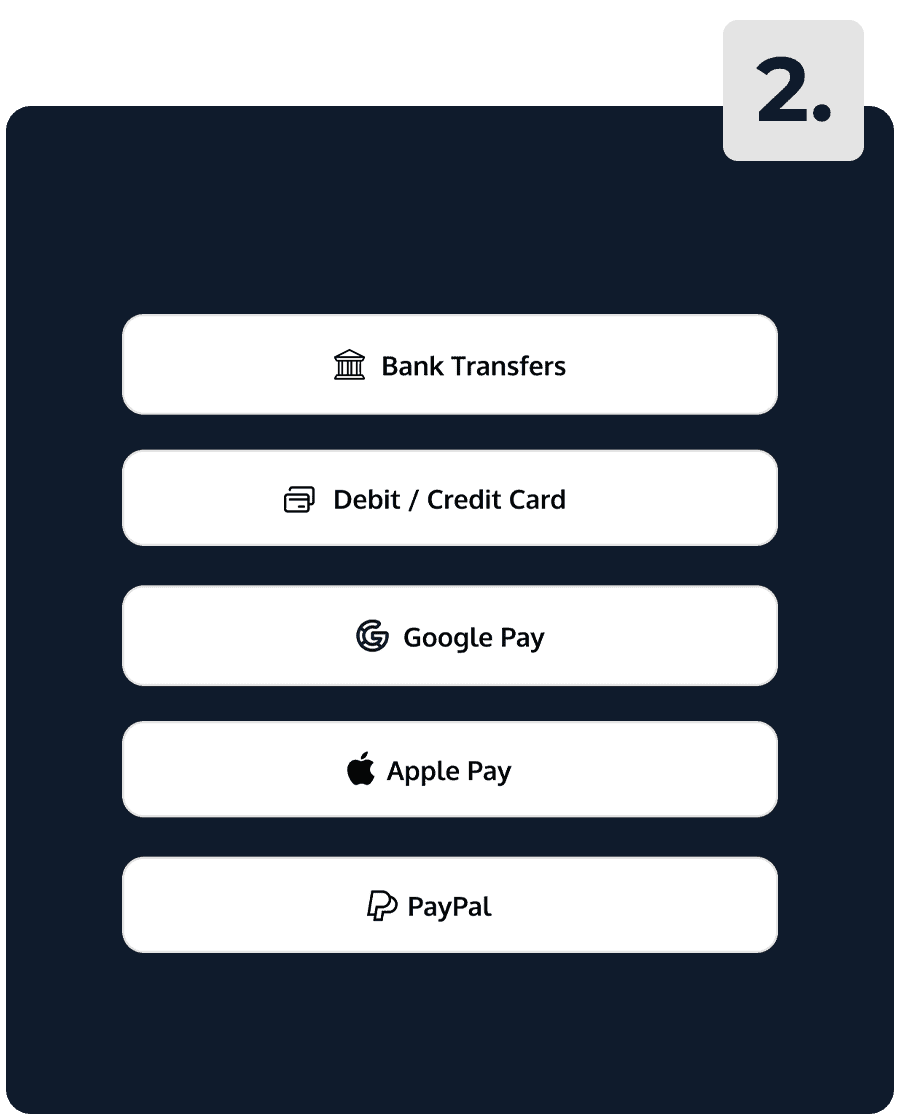
Add money to your Kraken account. US users can deposit via ACH (free, 1–3 days) or wire transfer. UK users can use Faster Payments (free, instant). EU users can use SEPA (free, same day). Debit/credit cards, Apple Pay, and Google Pay are also available for instant deposits – though card fees are higher (3.75%+). For larger ETH purchases, bank transfer is the cheapest option.

Step 3: Navigate to “Buy Crypto”
Click “Buy Crypto” on the Kraken website or tap it in the mobile app. This opens the simple buying interface designed for beginners – no trading experience needed.

Step 4: Search for Ethereum (ETH)
Type “Ethereum” or “ETH” in the search bar and select it from the results. Choose the ETH/USD pair if you deposited US dollars, ETH/EUR for euros, or ETH/GBP for British pounds. Ethereum is the most-traded altcoin on Kraken with the deepest liquidity of any asset after Bitcoin.

Step 5: Enter Your Purchase Amount
Enter how much you want to spend in your local currency (minimum $10). Kraken will automatically calculate how much ETH you will receive at the current market price. At approximately $2,100 per ETH, a $100 purchase gives you roughly 0.0476 ETH. You can buy fractions – there is no need to purchase a whole coin.

Step 6: Review and Confirm Your Order
Check the ETH price, total cost including fees, and the amount of ETH you will receive. Kraken shows the full breakdown before you confirm. Once you click “Buy,” the ETH is added to your Kraken account instantly.
Step 7: Secure Your ETH (or Stake It)
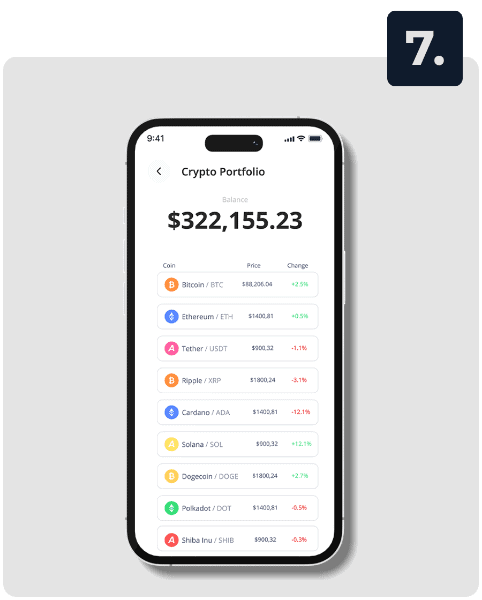
Your ETH is now in your Kraken wallet. You have three options: hold it on Kraken for easy access, stake it directly on Kraken to earn approximately 2.5%–4% APY, or withdraw it to a personal wallet like MetaMask or a Ledger hardware wallet for self-custody. If you plan to use DeFi protocols (lending, swapping, providing liquidity), you will need ETH in a self-custody wallet.
What Is Ethereum (ETH)?
If Bitcoin is digital gold – a store of value – then Ethereum is digital economic infrastructure. The vast majority of decentralised finance (DeFi) protocols, NFT marketplaces, stablecoins (including USDT and USDC), and tokenised real-world assets run on Ethereum or on Layer 2 networks (Arbitrum, Base, Optimism, zkSync) that settle back to Ethereum for security. As of early 2026, Ethereum commands 57%–68% of all DeFi total value locked, with approximately $99–$119 billion in assets deployed across its ecosystem – more than nine times the next-largest platform.
In September 2022, Ethereum completed “The Merge” – its transition from proof-of-work mining to proof-of-stake consensus. This reduced the network’s energy consumption by 99.95% and cut new ETH issuance by approximately 90%. Combined with the EIP-1559 fee-burning mechanism introduced in August 2021 (which has permanently destroyed over 4.6 million ETH), Ethereum’s supply dynamics are unique: the total supply is not capped like Bitcoin’s 21 million, but during periods of high network activity, more ETH is burned than created, making the supply temporarily deflationary. The current circulating supply sits at approximately 121.5 million ETH with an annual inflation rate of roughly 0.23%.
Ethereum has the largest developer community of any blockchain. According to Electric Capital’s 2026 report, Ethereum averaged 11,945 monthly active developers as of January 2026 – more than all other Layer 1 blockchains combined. The network’s major 2025 upgrades include Pectra (May 2025), which raised the validator staking cap from 32 to 2,048 ETH, doubled blob throughput for Layer 2 rollups, and introduced EIP-7702 smart accounts, and Fusaka (December 2025). The next planned upgrade, Glamsterdam, is tentatively targeting mid-2026 and will focus on further Layer 2 cost optimisation and validator efficiency.
On March 17, 2026, the SEC and CFTC jointly classified Ethereum as a “digital commodity” – not a security – in a landmark 68-page interpretive release that provided the regulatory clarity the industry had sought for over a decade. ETH is available on every major cryptocurrency exchange globally, and a growing suite of spot Ethereum ETFs (including BlackRock’s staking-enabled ETHB) make it accessible to traditional investors through standard brokerage accounts.
Ethereum Price & Market Overview
Before buying ETH, here are the key numbers to understand the size, liquidity, and structure of the Ethereum market. Always check the live price on Kraken or CoinGecko before placing your order.
| Metric | Data (March 2026) |
|---|---|
| Current Price | ~$2,100 (check live on Kraken) |
| Market Cap | ~$255 billion |
| CoinGecko / CMC Rank | #2 (behind Bitcoin) |
| 24h Trading Volume | $10B – $18B |
| Circulating Supply | ~121.5 million ETH |
| Max Supply | No hard cap – but EIP-1559 burn makes ETH periodically deflationary |
| Annual Inflation Rate | ~0.23% (among the lowest of any cryptocurrency) |
| All-Time High (ATH) | ~$4,831 – August 2025 |
| All-Time Low (ATL) | $0.42 – October 20, 2015 |
| Blockchain | Own Layer 1 – Proof-of-Stake consensus (since The Merge, September 2022) |
| Staking Yield | ~2.5%–4% APY (varies by method; on-chain ~3.1%) |
| ETH Staked | ~37 million ETH (30% of total supply) |
| DeFi TVL (Ethereum ecosystem) | $99–$119 billion (57%–68% of all DeFi) |
| Active Developers | 11,945 monthly (largest of any blockchain) |
| Regulatory Status | Digital commodity (SEC/CFTC joint classification – March 17, 2026) |
| Listed On | Every major exchange – Kraken, Binance, Coinbase, Gemini, OKX, and hundreds more |
Ethereum Tokenomics – How the Supply Works
Unlike Bitcoin’s fixed 21 million cap, Ethereum has no maximum supply. Instead, ETH’s supply is dynamic – governed by the balance between new issuance (paid to validators as staking rewards) and the EIP-1559 burn mechanism (which permanently destroys a portion of every transaction fee). During high network activity, more ETH is burned than created, making the supply deflationary.
| Component | Amount | What This Means |
|---|---|---|
| Circulating Supply | ~121.5 million ETH | All ETH currently in existence – no locked team tokens or vesting schedules |
| Max Supply | No hard cap | Supply is dynamic – determined by issuance vs. burn rate |
| New Issuance (Post-Merge) | ~1,700 ETH/day | 90% reduction from the ~13,000 ETH/day under proof-of-work mining |
| EIP-1559 Total Burned | 4.6+ million ETH | Permanently destroyed since August 2021 – worth billions at current prices |
| Net Supply Change (2022–2026) | +~950,000 ETH | Mildly inflationary since the Dencun upgrade reduced L2 fees and burn rates |
| Annual Inflation Rate | ~0.23% | Among the lowest of any cryptocurrency – Bitcoin’s is currently ~0.85% |
| ETH Staked | ~37 million ETH (30%) | Locked by validators to secure the network – not freely circulating |
| Staking Yield | ~2.5%–4% APY | Rewards vary by method – solo staking earns more; liquid staking (Lido, Rocket Pool) less |
| Primary Utility | Gas fees + staking | Every transaction, smart contract call, and DeFi interaction requires ETH for gas |
Best Exchanges to Buy Ethereum in 2026
While Kraken is our recommended platform, ETH is the most widely listed cryptocurrency after Bitcoin – available on virtually every exchange. Your best option depends on your location, preferred payment method, and whether you want access to staking or advanced trading features.
| Exchange | Fee | Min. Buy | Payment Methods | KYC | Best For |
|---|---|---|---|---|---|
| Kraken | 0.16%–0.26% | $10 | Bank Transfer, Card, ACH, Apple Pay, Google Pay | Yes | Beginners – US, UK, EU; on-platform staking |
| Binance | 0.10% | $10 | Card, Bank, P2P, Apple Pay, Google Pay | Yes | Highest global ETH volume; lowest fees |
| Coinbase | 0.40%–0.60% | $1 | Card, Bank Transfer, Apple Pay, PayPal (US) | Yes | Simplest UI; free USDC conversion; institutional custody |
| Gemini | 0.20%–0.40% | $5 | Card, Bank Transfer, PayPal | Yes | US-regulated; SOC 2 certified; staking available |
| OKX | 0.08%–0.10% | $10 | Card, Bank, P2P | Yes | Low fees; advanced traders; DeFi wallet built in |
| Uniswap (DEX) | 0.3% swap + gas | No minimum | ETH wallet only | No KYC | Swap tokens directly; privacy; no verification |
How to Store Ethereum Safely
Once you have bought ETH, where you keep it matters. Leaving tokens on an exchange exposes you to platform risk – if the exchange is hacked or goes insolvent (as FTX did in 2022), your funds could be lost. For anything you plan to hold long term, transferring ETH to a personal wallet is the safer choice.
Option 1 – Exchange Wallet (Convenient, Lower Security)
Your ETH stays in your Kraken or Binance account. The exchange holds the private keys on your behalf. Fine for active traders and convenient for on-platform staking, but not recommended for long-term holding of significant amounts.
Option 2 – Software Wallet (Free, Self-Custody)
You control the private keys and the wallet is connected to the internet. Essential for interacting with DeFi protocols, NFTs, and dApps on Ethereum and Layer 2 networks.
| Wallet | Platform | Best For |
|---|---|---|
| MetaMask | Browser extension + iOS + Android | The standard Ethereum wallet – essential for DeFi, NFTs, and dApps. Supports all EVM chains and Layer 2s. |
| Rainbow | iOS + Android | Beautiful mobile-first Ethereum wallet with built-in NFT gallery and L2 support. |
| Trust Wallet | iOS + Android | Multi-chain support (ETH, BNB, SOL, BTC). Built-in browser for dApps. |
| Rabby Wallet | Browser extension + desktop | Advanced security features – pre-transaction risk scanning, multi-chain support. |
| Coinbase Wallet | Browser extension + iOS + Android | Separate from Coinbase exchange account. Good for Base L2 and Coinbase ecosystem users. |
Option 3 – Hardware Wallet (Highest Security)
Your private keys are stored on a physical device that never connects to the internet. The gold standard for long-term ETH storage.
| Wallet | Price | Best For |
|---|---|---|
| Ledger Nano X | ~$149 | Industry standard; Bluetooth; supports ETH, all ERC-20 tokens, and staking through Ledger Live |
| Ledger Stax / Flex | $279 / $249 | Premium touchscreen hardware wallets; full EIP-7702 smart account support post-Pectra |
| Trezor Safe 5 | ~$169 | Open-source firmware; colour touchscreen; strong ETH and ERC-20 support |
Is Ethereum a Good Investment in 2026?
Ethereum has the strongest fundamental case of any altcoin. It is not just a cryptocurrency – it is the settlement layer for the majority of decentralised finance, stablecoins, NFTs, and tokenised real-world assets. Approximately $99–$119 billion in DeFi assets are deployed on Ethereum and its Layer 2 networks, and over $165 billion in Ethereum-based stablecoins (primarily USDT and USDC) circulate through the ecosystem. The network processes 2.2–2.9 million daily transactions at all-time highs, and its 11,945 monthly active developers represent more builder activity than all other Layer 1 blockchains combined.
In 2026, key catalysts include the SEC/CFTC’s formal classification of ETH as a digital commodity (March 17, 2026), BlackRock’s staking-enabled ETHB ETF launch (March 12, 2026), record Ethereum ETF weekly inflows of $160.8 million, 37 million ETH staked (30% of supply removed from circulation), and the upcoming Glamsterdam hard fork targeting further Layer 2 optimisation. Institutional adoption is accelerating – BlackRock alone now manages over $130 billion in crypto-related exchange-traded products.
That said, Ethereum faces real headwinds. The price dropped over 50% from its August 2025 ATH due to macro factors (high oil prices, Fed holding rates at 3.5%–3.75%), Layer 2 scaling has cannibalised Layer 1 fee revenue (undermining the deflationary thesis), and competition from Solana (which has faster throughput and growing developer share) is genuine. Vitalik Buterin’s selling of millions of dollars’ worth of ETH in early 2026 also dented sentiment.
ETH Price Scenarios for 2026
| Scenario | Price Range | What Would Need to Happen |
|---|---|---|
| Bearish | $1,400 – $1,800 | Recession deepens, prolonged Fed tightening, L2 revenue cannibalization continues, ETF outflows |
| Base Case | $2,000 – $3,200 | Stable macro, staking ETF inflows grow, Glamsterdam upgrade on schedule, DeFi TVL holds |
| Bullish | $3,500 – $5,000 | Fed rate cuts, altcoin rotation, RWA tokenisation accelerates, ETH re-enters deflationary phase |
| ATH Retest | $5,000 – $7,000+ | Full crypto bull cycle, massive institutional RWA flows, ETH staking yield attracts TradFi capital |
Price scenarios are based on analyst estimates and historical data. They are not financial advice. Crypto markets are highly unpredictable.
Key Risks to Understand Before You Buy
- Market volatility – ETH has experienced drawdowns exceeding 80% in past cycles (2018, 2022) and dropped 56% from its 2025 ATH. This level of volatility is normal for crypto.
- L2 revenue cannibalization – Layer 2 networks handle an increasing share of transactions at ultra-low fees, reducing the ETH burned on Layer 1 and undermining the deflationary narrative.
- Competition from Solana – Solana offers higher throughput and lower fees on its base layer, and is attracting growing developer and retail user attention.
- No supply cap – unlike Bitcoin’s 21 million hard cap, Ethereum’s supply can grow indefinitely if network activity stays low enough that issuance exceeds burns.
- Staking concentration risk – Lido controls approximately 28% of all staked ETH, creating centralisation concerns around a single liquid staking protocol.
- Macro sensitivity – ETH is highly correlated with Bitcoin (0.75–0.85) and risk assets generally. Fed policy, geopolitics, and recession fears directly impact ETH prices.
- Regulatory execution risk – while the SEC/CFTC commodity classification is a major positive, the CLARITY Act has not yet passed Congress. The current framework is interpretation, not statute.
How to Sell Ethereum
Selling ETH on Kraken is just as straightforward as buying it. Here is the complete step-by-step process:
-
1
Log in to Kraken
Go to your Spot Wallet to confirm your current ETH balance and the live market price.
-
2
Unstake (If Applicable)
If your ETH is staked on Kraken, navigate to the staking section and initiate an unstake. There may be a short waiting period before your ETH becomes freely tradable again.
-
3
Click “Sell”
Navigate to the Sell section in the main menu and search for ETH in the asset list.
-
4
Choose Your Trading Pair
Select the currency you want to receive – USD, EUR, GBP, or USDT depending on your preference and location.
-
5
Enter the Amount to Sell
Type either an ETH amount or a target cash value. Kraken will show your estimated proceeds after fees in real time.
-
6
Review and Confirm
Check the sell price, transaction amount, and fee on the confirmation screen. Click “Sell Now” to execute.
-
7
Withdraw to Your Bank
Your cash balance appears in your Kraken account immediately. Go to Funding → Withdraw to transfer to your bank. Most withdrawals complete within 1–3 business days.
Questions & Answers

Ethereum is a decentralised smart contract platform that acts as the backbone for DeFi, NFTs, stablecoins, and tokenised real-world assets. It is the second-largest cryptocurrency by market cap and the most widely used programmable blockchain in the world. Over 11,900 developers actively build on it every month, and its ecosystem holds $99–$119 billion in DeFi assets. Ethereum is popular because it is the most established platform for building and using decentralised applications.
ETH works with any Ethereum-compatible wallet. MetaMask is the most popular and widely supported – essential for DeFi, dApps, and Layer 2 networks. Rainbow and Rabby are excellent mobile and browser alternatives. For maximum security and long-term holding, use a hardware wallet like Ledger Nano X or Trezor Safe 5. Both support ETH, all ERC-20 tokens, and staking through liquid staking protocols.





Grow your portfolio.
Buy CRYPTO today