How to Buy Cardano – Step-by-Step Guide (2026)
How to Buy Cardano on Kraken

Step 1: Create Your Free Kraken Account
Sign up at kraken.com by entering your email address and selecting your country of residence. Complete the identity verification (KYC) process by uploading a government-issued ID and a selfie. This typically takes a few minutes and unlocks full buying, trading, and staking access.
Step 2: Deposit Funds
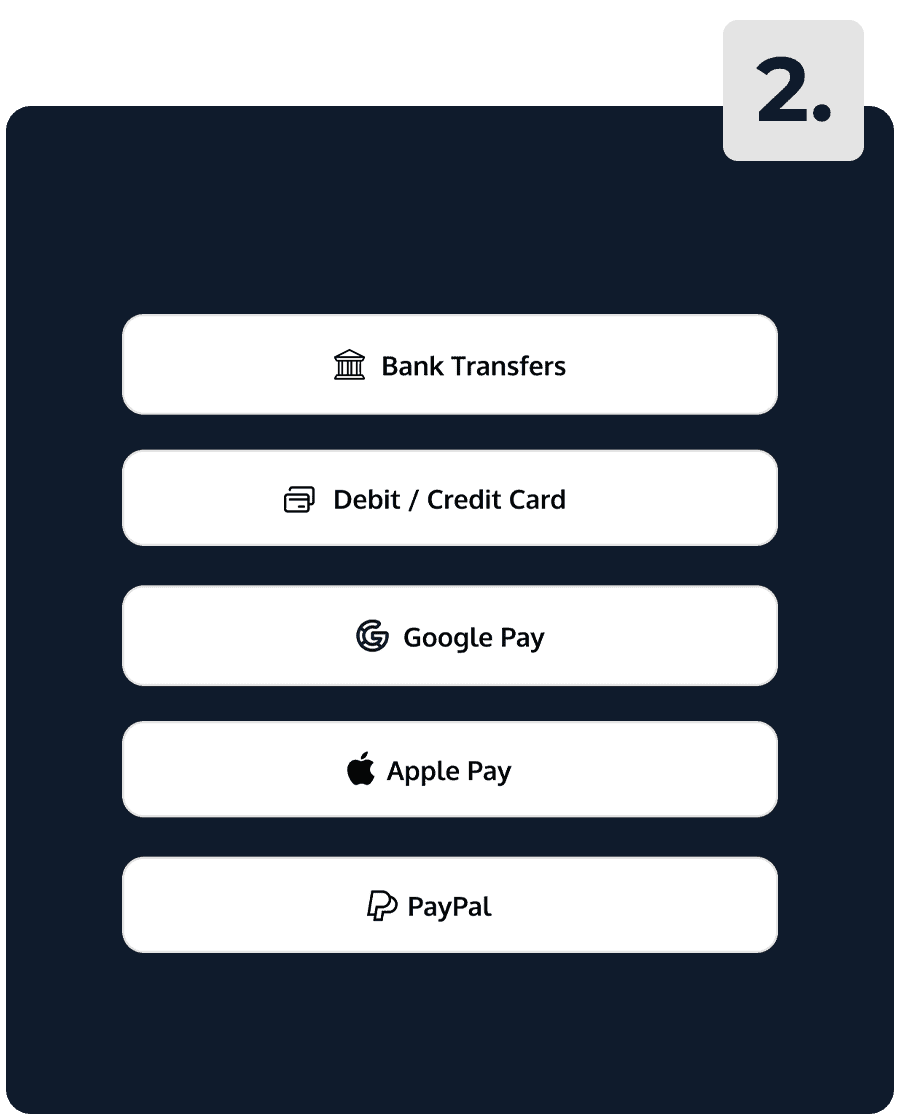
Add money to your Kraken account. US users can deposit via ACH (free, 1-3 days) or wire transfer. UK users can use Faster Payments (free, instant). EU users can use SEPA (free, same day). Debit/credit cards, Apple Pay, and Google Pay are also available for instant deposits – though card fees are higher (3.75%+). For larger ADA purchases, bank transfer is the cheapest option.

Step 3: Navigate to “Buy Crypto”
Click “Buy Crypto” on the Kraken website or tap it in the mobile app. This opens the simple buying interface designed for beginners – no trading experience needed.

Step 4: Search for Cardano (ADA)
Type “Cardano” or “ADA” in the search bar and select it from the results. Choose the ADA/USD pair if you deposited US dollars, ADA/EUR for euros, or ADA/GBP for British pounds. Cardano is one of the top 10 most-traded assets on Kraken.

Step 5: Enter Your Purchase Amount
Enter how much you want to spend in your local currency (minimum $10). Kraken will automatically calculate how many ADA tokens you will receive at the current market price. At approximately $0.27 per ADA, a $100 purchase gives you roughly 370 ADA tokens. ADA is one of the most affordable top-10 cryptocurrencies by unit price.

Step 6: Review and Confirm Your Order
Check the ADA price, total cost including fees, and the amount of ADA you will receive. Kraken shows the full breakdown before you confirm. Once you click “Buy,” the ADA tokens are added to your Kraken account instantly.
Step 7: Stake Your ADA (or Withdraw It)
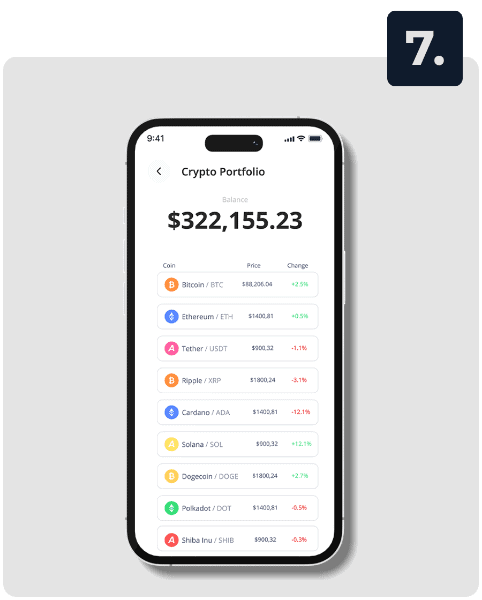
Your ADA is now in your Kraken wallet. You have three options: hold it on Kraken for easy access, stake it directly on Kraken to earn approximately 3%-5% APY, or withdraw it to a personal Cardano wallet like Eternl or Yoroi for self-custody and native delegation staking. Unlike most other cryptocurrencies, Cardano staking has no lockup period – your ADA remains liquid and spendable while earning rewards.
What Is Cardano (ADA)?
The platform is developed by three organisations working in coordination: Input Output Global (IOG, formerly IOHK) handles core research and engineering, the Cardano Foundation manages governance and adoption partnerships, and EMURGO drives commercial adoption. Cardano’s consensus mechanism, Ouroboros, was the first provably secure proof-of-stake protocol published in a top-tier academic venue (Crypto 2017). The blockchain is written in Haskell, a functional programming language favoured for mission-critical systems because of its mathematical rigour and resistance to common software bugs.
In September 2025, Cardano achieved a major governance milestone with the Chang hard fork, which ushered in the Voltaire era – full decentralised governance. ADA holders can now elect Delegate Representatives (DReps), vote on treasury proposals, and directly shape the blockchain’s future direction. The community has already approved a 70 million ADA treasury investment in stablecoin infrastructure (bringing USDT and USDC natively to Cardano) and additional funding for DeFi liquidity.
Cardano’s ecosystem is growing rapidly. DeFi total value locked (TVL) surpassed $1.1 billion in early 2026, with major DEXs like Minswap and SundaeSwap, lending protocols like Liqwid and Lenfi, and a growing number of NFT and RWA tokenisation projects. The Midnight privacy sidechain – using zero-knowledge proofs for selective data disclosure – is launching its mainnet in late March 2026, targeting enterprise and institutional users who need privacy-compliant blockchain solutions. The Ouroboros Leios scaling upgrade (targeting 1,000-10,000 TPS) is 67% complete and scheduled for mainnet deployment later in 2026.
On March 17, 2026, the SEC and CFTC jointly classified ADA as a “digital commodity” – not a security – alongside Bitcoin, Ethereum, and 13 other major cryptocurrencies. CME Group launched regulated ADA futures on February 9, 2026, and Grayscale has filed for a spot Cardano ETF (GADA). ADA is the native token of the network, named after Ada Lovelace, the 19th-century mathematician widely regarded as the first computer programmer.
Cardano Price & Market Overview
Before buying ADA, here are the key numbers to understand the size, liquidity, and structure of the Cardano market. Always check the live price on Kraken or CoinGecko before placing your order.
| Metric | Data (March 2026) |
|---|---|
| Current Price | ~$0.27 (check live on Kraken) |
| Market Cap | ~$9.8 billion |
| CoinGecko / CMC Rank | #9 – #11 |
| 24h Trading Volume | $400M – $600M |
| Circulating Supply | ~36.1 billion ADA |
| Max Supply | 45 billion ADA (hard cap – no new ADA can be created beyond this) |
| All-Time High (ATH) | $3.10 – September 2, 2021 |
| All-Time Low (ATL) | $0.01735 – October 1, 2017 |
| Blockchain | Own Layer 1 – Ouroboros Proof-of-Stake consensus |
| Staking Yield | ~3%-5% APY (no lockup – ADA stays liquid) |
| DeFi TVL | ~$1.1 billion |
| Governance Era | Voltaire (fully decentralised – ADA holders vote on all proposals) |
| Regulatory Status | Digital commodity (SEC/CFTC joint classification – March 17, 2026) |
| CME Futures | Live since February 9, 2026 |
| ETF Filing | Grayscale spot Cardano ETF (GADA) – pending SEC approval |
| Listed On | 300+ exchanges including Kraken, Binance, Coinbase, KuCoin, OKX, Gemini |
Cardano Tokenomics – How the Supply Works
ADA has a fixed maximum supply of 45 billion tokens. No new ADA can ever be created beyond this cap. New ADA enters circulation through staking rewards drawn from a reserve pool that shrinks over time, similar to Bitcoin’s halving schedule but with a smoother reduction curve.
| Allocation | Amount | What This Means |
|---|---|---|
| Max Supply | 45 billion ADA | Hard cap – the absolute maximum that will ever exist |
| Circulating Supply | ~36.1 billion ADA | ~80% of total supply already in circulation |
| Reserve (Staking Rewards) | ~8.9 billion ADA | Distributed as staking rewards over time – diminishing gradually each epoch |
| Treasury | Funded by 20% of each epoch’s rewards | Community-governed fund for development, ecosystem grants, and protocol upgrades |
| Initial Distribution (2017) | ~26 billion ADA sold + ~5.2 billion to IOG/EMURGO/Foundation | Roughly 80% went to public sale across five rounds; 20% to founding entities |
| Staking Model | Delegated Proof-of-Stake | Delegate your ADA to any stake pool – no lockup, no minimum, rewards every 5 days |
| Inflation Rate | ~2%-3% per year (declining) | New ADA from reserves enters circulation through staking – rate decreases as reserves shrink |
| Primary Utility | Gas fees + staking + governance | ADA pays for transactions, secures the network through staking, and powers voting |
Best Exchanges to Buy Cardano in 2026
While Kraken is our recommended platform, ADA is one of the most widely listed cryptocurrencies – available on over 300 exchanges worldwide. Your best option depends on your location, preferred payment method, and whether you want access to staking.
| Exchange | Fee | Min. Buy | Payment Methods | KYC | Best For |
|---|---|---|---|---|---|
| Kraken | 0.16%-0.26% | $10 | Bank Transfer, Card, ACH, Apple Pay, Google Pay | Yes | Beginners – US, UK, EU; on-platform ADA staking |
| Binance | 0.10% | $10 | Card, Bank, P2P, Apple Pay, Google Pay | Yes | Highest global ADA volume; lowest fees |
| Coinbase | 0.40%-0.60% | $1 | Card, Bank Transfer, Apple Pay, PayPal (US) | Yes | Simplest UI for total beginners; ADA staking available |
| KuCoin | 0.10% | $1 | Card, Bank Transfer | Yes | Low minimum buy; wide altcoin selection |
| OKX | 0.08%-0.10% | $10 | Card, Bank, P2P | Yes | Low fees; advanced traders; Web3 wallet built in |
| Minswap (DEX) | 0.3% swap | No minimum | Cardano wallet only | No KYC | Native Cardano DEX; swap ADA for Cardano tokens directly |
How to Store Cardano Safely
Once you have bought ADA, where you keep it matters. Leaving tokens on an exchange exposes you to platform risk – if the exchange is hacked or goes insolvent (as FTX did in 2022), your funds could be lost. For anything you plan to hold long term, transferring ADA to a personal Cardano wallet is the safer choice – and you can stake it directly from your own wallet.
Option 1 – Exchange Wallet (Convenient, Lower Security)
Your ADA stays in your Kraken or Binance account. The exchange holds the private keys on your behalf. Fine for active traders, and most exchanges offer simplified staking. Not recommended for long-term holding of significant amounts.
Option 2 – Software Wallet (Free, Self-Custody)
You control the private keys and can delegate your ADA to any stake pool to earn rewards. Cardano’s native wallets are purpose-built for the network and support staking, governance voting, and native tokens.
| Wallet | Platform | Best For |
|---|---|---|
| Eternl (formerly ccvault) | Browser extension + iOS + Android | Most feature-rich Cardano wallet – multi-account, multi-delegation, dApp connector, governance voting. The go-to wallet for power users. |
| Yoroi | Browser extension + iOS + Android | Developed by EMURGO (Cardano founding entity). Simple, lightweight, beginner-friendly. Good for staking. |
| Nami | Browser extension | Minimalist single-address wallet. Fast and clean. Popular with DeFi users on Cardano. |
| Lace | Browser extension + iOS + Android | Built by IOG (Cardano’s core developer). Multi-chain support planned. Clean modern interface. |
| Vespr | iOS + Android | Mobile-first Cardano wallet with built-in DEX aggregator and NFT gallery. |
Option 3 – Hardware Wallet (Highest Security)
Your private keys are stored on a physical device that never connects to the internet. The gold standard for long-term ADA storage. All hardware wallets below support native Cardano staking through their companion apps.
| Wallet | Price | Best For |
|---|---|---|
| Ledger Nano X | ~$149 | Industry standard; Bluetooth; stake ADA through Ledger Live or pair with Eternl/Yoroi |
| Ledger Stax / Flex | $279 / $249 | Premium touchscreen devices; full Cardano support including staking and governance |
| Trezor Safe 5 | ~$169 | Open-source firmware; Cardano support via Eternl or Yoroi integration |
Is Cardano a Good Investment in 2026?
Cardano occupies a unique position in crypto as the most research-driven Layer 1 blockchain. Its peer-reviewed development model, functional programming foundation, and methodical upgrade path appeal to investors who value long-term technical rigour over hype-driven development. The network’s DeFi TVL surpassed $1.1 billion, and the Voltaire governance era gives ADA holders direct control over the blockchain’s direction and treasury spending.
In 2026, key catalysts include the SEC/CFTC classification of ADA as a digital commodity (March 17, 2026), CME Group futures trading (live since February 9, 2026), the pending Grayscale spot ADA ETF (GADA), the Midnight privacy sidechain mainnet launch (late March 2026), the van Rossem hard fork bringing Plutus smart contract enhancements (April 2026), and the Ouroboros Leios scaling upgrade targeting 1,000-10,000 TPS. Whale wallets accumulated over 454 million ADA ($161 million) in January-February 2026, raising their share of supply to 67.5%.
That said, Cardano faces significant headwinds. The price has dropped over 91% from its 2021 ATH and over 60% in the past six months alone. DeFi TVL at $1.1 billion is still small compared to Ethereum ($99-$119 billion) and Solana ($9.2 billion). The “academic fortress” reputation has sometimes worked against Cardano – critics argue development is too slow, and newer protocols like Hyperliquid have surpassed ADA in market cap. Cardano’s staking yield (3%-5%) is competitive, but it does not generate the fee revenue of faster-moving ecosystems.
ADA Price Scenarios for 2026
| Scenario | Price Range | What Would Need to Happen |
|---|---|---|
| Bearish | $0.15 – $0.25 | Continued macro weakness, Leios delays, DeFi TVL stagnates, no ETF approval |
| Base Case | $0.28 – $0.50 | Midnight launches successfully, Leios on track, CME futures drive institutional interest |
| Bullish | $0.60 – $1.20 | Bitcoin bull run, ADA ETF approved, Leios delivers 1,000+ TPS, DeFi TVL reaches $3B+ |
| ATH Retest | $2.00 – $3.10+ | Full crypto super-cycle, massive RWA tokenisation on Cardano, Midnight enterprise adoption takes off |
Price scenarios are based on analyst estimates and historical data. They are not financial advice. Crypto markets are highly unpredictable.
Key Risks to Understand Before You Buy
- Severe drawdown from ATH – ADA is down over 91% from its $3.10 peak. There is no guarantee it will recover to previous highs, and many altcoins from previous cycles never do.
- Development speed – Cardano’s peer-reviewed approach ensures quality but is slower than competitors. Features promised years ago (smart contracts, scaling) have taken longer to deliver than expected.
- Ecosystem size gap – at $1.1 billion TVL, Cardano’s DeFi ecosystem is roughly 1% the size of Ethereum’s. Attracting developers and liquidity away from established platforms remains a challenge.
- Competition from Solana and Ethereum L2s – Solana offers higher throughput today, and Ethereum Layer 2 networks (Arbitrum, Base) provide cheap, fast transactions with access to the largest DeFi ecosystem.
- Supply inflation – approximately 8.9 billion ADA remain in the reserve pool and will gradually enter circulation through staking rewards over the coming years, adding selling pressure.
- Concentrated whale holdings – wallets holding 100K-100M ADA control approximately 67.5% of the supply. Large sell-offs from these holders could significantly impact the price.
- ETF uncertainty – while Grayscale has filed for a spot ADA ETF, approval is not guaranteed. Rejection or indefinite delay could dampen institutional sentiment.
How to Sell Cardano
Selling ADA on Kraken is just as straightforward as buying it. Here is the complete step-by-step process:
-
1
Log in to Kraken
Go to your Spot Wallet to confirm your current ADA balance and the live market price.
-
2
Click “Sell”
Navigate to the Sell section in the main menu and search for ADA in the asset list.
-
3
Choose Your Trading Pair
Select the currency you want to receive – USD, EUR, GBP, or USDT depending on your preference and location.
-
4
Enter the Amount to Sell
Type either an ADA amount or a target cash value. Kraken will show your estimated proceeds after fees in real time.
-
5
Review and Confirm
Check the sell price, transaction amount, and fee on the confirmation screen. Click “Sell Now” to execute.
-
6
Withdraw to Your Bank
Your cash balance appears in your Kraken account immediately. Go to Funding – Withdraw to transfer to your bank. Most withdrawals complete within 1-3 business days.
Questions & Answers

Cardano is a proof-of-stake blockchain platform built on peer-reviewed academic research. It was founded by Charles Hoskinson, a co-founder of Ethereum, and is developed using the Haskell programming language for maximum code reliability. Cardano is popular because of its methodical, science-driven approach to development, its fully non-custodial staking model (no lockup), and its growing ecosystem of DeFi protocols, NFTs, and real-world asset applications. The network’s Voltaire governance era gives every ADA holder a direct vote on the blockchain’s future.
ADA requires a Cardano-compatible wallet – it does not work with Ethereum wallets like MetaMask. The most popular options are Eternl (most features), Yoroi (simple and beginner-friendly), Lace (built by IOG), and Nami (minimalist). All support native staking and dApp interaction. For maximum security, use a Ledger or Trezor hardware wallet paired with Eternl or Yoroi.





Grow your portfolio.
Buy CRYPTO today