How to Buy BNB – Step-by-Step Guide (2026)

How to Buy BNB on Kraken

Step 1: Create Your Free Kraken Account
Sign up at kraken.com by entering your email address and selecting your country of residence. Complete the identity verification (KYC) process by uploading a government-issued ID and a selfie. This typically takes a few minutes and unlocks full buying and trading access.
Step 2: Deposit Funds
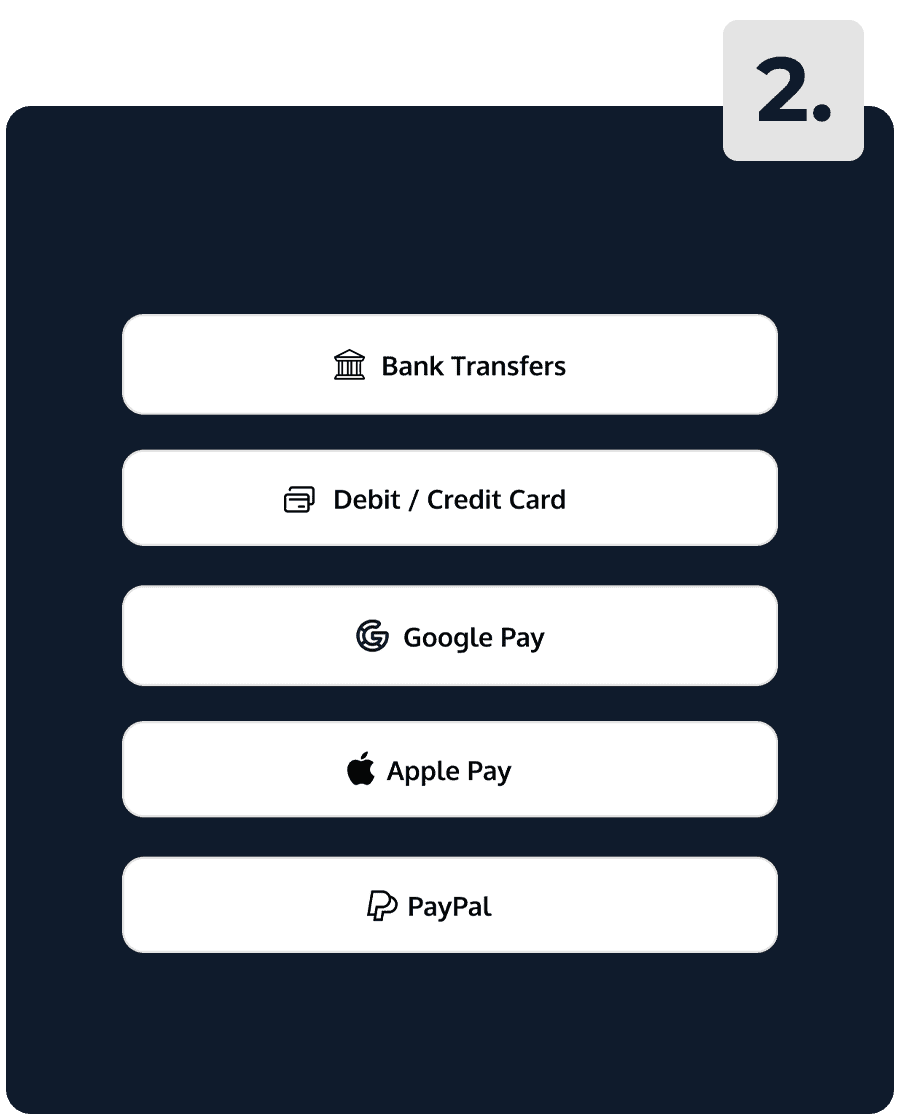
Add money to your Kraken account. US users can deposit via ACH (free, 1-3 days) or wire transfer. UK users can use Faster Payments (free, instant). EU users can use SEPA (free, same day). Debit/credit cards, Apple Pay, and Google Pay are also available for instant deposits – though card fees are higher (3.75%+). For larger BNB purchases, bank transfer is the cheapest option.

Step 3: Go to “Buy Crypto”
Click “Buy Crypto” on the Kraken website or tap it in the mobile app. This opens the simple buying interface designed for beginners – no trading experience needed.

Step 4: Search for BNB
Type “BNB” or “Binance Coin” in the search bar and select it from the results. Choose the BNB/USD pair if you deposited US dollars, BNB/EUR for euros, or BNB/GBP for British pounds.

Step 5: Enter Your Purchase Amount
Enter how much you want to spend in your local currency (minimum $10). Kraken will automatically calculate how much BNB you will receive at the current market price. At approximately $600 per BNB, a $100 purchase gives you roughly 0.167 BNB.

Step 6: Review and Confirm Your Order
Check the BNB price, total cost including fees, and the amount of Binance Coin you will receive. Kraken shows the full breakdown before you confirm. Once you click “Buy,” the BNB is added to your Kraken account instantly.
Step 7: Secure Your BNB (Transfer to Wallet or Stake)
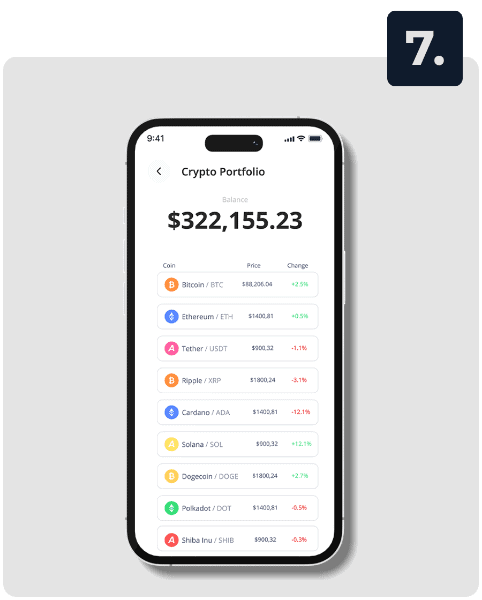
Your BNB is now in your Kraken wallet. You can hold it here, trade it, or withdraw to a personal wallet. For staking (3-8% APY), transfer to Trust Wallet, MetaMask with BSC configured, or a hardware wallet. For BNB Chain DeFi, you’ll need a BSC-compatible wallet like MetaMask or Trust Wallet.
What Is BNB (Binance Coin)?
BNB serves multiple functions within its ecosystem: it’s used to pay for transaction fees on BSC (with discounts when using BNB), stake for network security and earn rewards, participate in token sales on Binance Launchpad, and as collateral in DeFi protocols. The BNB Chain is currently the third-largest blockchain by total value locked (TVL) and hosts thousands of decentralized applications, from DeFi protocols like PancakeSwap to NFT marketplaces and GameFi projects.
A key feature of BNB is its auto-burn mechanism. Binance commits to burning (permanently destroying) 100 million BNB – half of the total supply – through quarterly burns based on trading volume and an automatic burn formula. Additionally, BEP-95 burns a portion of gas fees in real-time, making BNB deflationary during periods of high network activity. This creates a unique supply dynamic where BNB becomes scarcer over time, unlike inflationary tokens.
BNB Price & Market Overview
Before buying BNB, here are the key numbers to understand the size, liquidity, and structure of the BNB market. Always check the live price on Kraken or CoinGecko before placing your order.
| Metric | Data (April 2026) |
|---|---|
| Current Price | ~$600 (check live on Kraken) |
| Market Cap | ~$90 billion |
| CoinGecko / CMC Rank | #4 – #5 |
| 24h Trading Volume | $1.5B – $2.5B |
| Circulating Supply | ~144 million BNB |
| Total Supply | ~144 million BNB (decreasing via burns) |
| Max Supply | ~200 million BNB (100M will be burned) |
| All-Time High (ATH) | $1,166 – May 2021 |
| All-Time Low (ATL) | $0.096 – August 2017 |
| Blockchain | BNB Chain (BSC, opBNB, Greenfield) |
| Consensus | Proof of Staked Authority (PoSA) |
| Staking APY | 3-8% annually |
| Transaction Fee (BSC) | $0.01 – $0.50 |
| DeFi TVL (BSC) | $3+ billion |
| Auto-Burn Target | 100 million BNB (50% of total supply) |
| Listed On | 100+ exchanges worldwide |
BNB Tokenomics – How the Supply Works
BNB has a unique dual-burn mechanism that makes it progressively scarcer over time. Unlike Bitcoin’s fixed schedule or Ethereum’s variable burn, BNB combines scheduled quarterly burns with real-time gas fee burns.
| Component | Amount | What This Means |
|---|---|---|
| Total Supply | ~144 million BNB | Decreasing over time due to burns |
| Circulating Supply | ~144 million BNB | All BNB is liquid and transferable |
| Original Supply | ~200 million BNB | ~100M for public sale, ~80M to team, ~20M to angels |
| Auto-Burn Target | 100 million BNB | Binance commits to destroy 50% of total supply |
| Quarterly Burns | Variable | Based on BNB price and trading volume in previous quarter |
| BEP-95 Real-Time Burn | Portion of gas fees | Validator fees are burned in real-time, making BNB deflationary |
| Burned to Date | ~50+ million BNB | Over 25% of total supply already destroyed |
| Staking Rewards | 3-8% APY | From transaction fees and block rewards on BSC |
| Primary Utility | Gas fees + staking + DeFi | Required for BSC transactions, staking for rewards, collateral in DeFi |
Best Ways to Buy BNB in 2026
While Kraken is our recommended platform, BNB is available through multiple channels. Your best option depends on whether you want to stake immediately, use BSC DeFi, or simply hold for price appreciation.
| Method | Fee | Min. Buy | Payment Methods | KYC | Best For |
|---|---|---|---|---|---|
| Kraken | 0.16%-0.26% | $10 | Bank Transfer, Card, ACH, Apple Pay, Google Pay | Yes | Security, US/UK/EU compliance, staking |
| Binance | 0.10% | $15 | Card, Bank, P2P | Yes | Lowest fees, native ecosystem, Launchpad |
| Trust Wallet | Varies | $10 | Card, crypto | Yes | Buy + stake in one app, BSC native |
| PancakeSwap (DEX) | 0.25% | No minimum | BSC wallet only | No | Privacy, immediate DeFi access |
| Crypto ATM | 5%-10% | $20 | Cash | No (under limits) | Cash purchases, anonymity |
| P2P Platforms | 0%-1% | Variable | Bank, cash, PayPal | No | Privacy, local currency, no verification |
How to Store BNB Safely
Once you have bought BNB, where you keep it matters. Leaving BNB on an exchange means you miss staking rewards and cannot access BNB Chain DeFi. For full functionality, a BSC-compatible wallet is essential.
Option 1 – Exchange Wallet (Convenient, Limited)
Your BNB stays in your Kraken or Binance account. You cannot stake independently or use DeFi protocols. Fine for short-term holding, but you miss 3-8% APY staking rewards and the entire BSC ecosystem.
Option 2 – Software Wallet (Staking + DeFi)
You control the private keys and can stake, use PancakeSwap, and access all BSC dApps. This is the standard for BNB Chain users.
| Wallet | Platform | Best For |
|---|---|---|
| Trust Wallet | iOS + Android | Native BSC support, built-in staking, easiest for beginners |
| MetaMask | Browser + Mobile | DeFi power user, add BSC network manually, hardware wallet support |
| SafePal | Hardware + Software | Binance-backed, built-in DApp browser, cross-chain |
| Rabby | Browser extension | Security-focused, transaction preview, anti-phishing |
Option 3 – Hardware Wallet (Highest Security)
Your private keys are stored on a physical device. Essential for holdings over $1,000 or long-term storage.
| Wallet | Price | Best For |
|---|---|---|
| Ledger Nano X | ~$149 | Industry standard; Bluetooth; BSC support via Ledger Live |
| Ledger Nano S Plus | ~$79 | Budget option – same security, USB only |
| Trezor Model T | ~$179 | Touchscreen, open-source, BSC compatible |
| SafePal S1 | ~$49 | Air-gapped, Binance ecosystem, budget-friendly |
Is BNB a Good Investment in 2026?
BNB remains a top-5 cryptocurrency by market cap in 2026, benefiting from its integral role in the BNB Chain ecosystem – the third-largest blockchain by TVL with thousands of active dApps. The auto-burn mechanism creates unique supply scarcity, with over 50 million BNB (25% of supply) already destroyed and a commitment to burn 100 million total. Staking offers 3-8% APY, providing yield during holding periods.
However, BNB faces significant regulatory and centralization concerns. The 2023 SEC lawsuit against Binance and CZ’s 2024 guilty plea create ongoing legal overhang. BNB Chain has only 21 active validators (vs. Ethereum’s 1M+), making it more centralized. The price remains 50% below its 2021 ATH, and competition from Ethereum L2s and Solana threatens its “low-cost EVM chain” positioning.
BNB Price Scenarios for 2026
| Scenario | Price Range | What Would Need to Happen |
|---|---|---|
| Bearish | $400 – $500 | Regulatory enforcement intensifies, Binance loses market share, SEC wins against ecosystem |
| Base Case | $600 – $800 | Steady BSC DeFi activity, continued burns reduce supply, opBNB gains traction |
| Bullish | $900 – $1,200 | New bull market, BNB Chain becomes dominant L1 for emerging markets, Greenfield storage adoption |
| ATH Retest | $1,100+ | Full crypto super-cycle, regulatory clarity favors BNB, Binance ecosystem expands |
Price scenarios are based on analyst estimates and historical data. They are not financial advice. Crypto markets are highly unpredictable.
Key Risks to Understand Before You Buy
- Regulatory overhang – SEC lawsuit against Binance ongoing. CZ’s guilty plea and $4.3B fine create uncertainty. Future enforcement could restrict BNB utility.
- Centralization concerns – Only 21 validators secure BSC vs. Ethereum’s decentralized network. Binance historically controlled majority of stake.
- Exchange dependency – Despite BNB Chain independence, price action remains correlated with Binance exchange fortunes and CZ’s legal situation.
- Competition from L2s – Ethereum L2s (Arbitrum, Base) offer similar low fees with better security. Solana competes for retail users.
- Smart contract risk – BSC has experienced numerous exploits (Meerkat, Uranium, Cream Finance). Over $200M lost to hacks.
- Staking lock-up – Unstaking BNB requires 7-day unbonding period during which you cannot access funds or earn rewards.
- Token distribution – Original allocation gave 80% to team/angels. Large insider holdings create sell pressure risk.
How to Sell BNB
Selling BNB on Kraken is just as straightforward as buying it. Here is the complete step-by-step process:
-
1
Log in to Kraken
Go to your Spot Wallet to confirm your current BNB balance and the live market price.
-
2
Click “Sell”
Navigate to the Sell section in the main menu and search for BNB in the asset list.
-
3
Choose Your Trading Pair
Select the currency you want to receive – USD, EUR, GBP, or USDT depending on your preference and location.
-
4
Enter the Amount to Sell
Type either a BNB amount or a target cash value. Kraken will show your estimated proceeds after fees in real time.
-
5
Review and Confirm
Check the sell price, transaction amount, and fee on the confirmation screen. Click “Sell Now” to execute.
-
6
Withdraw to Your Bank
Your cash balance appears in your Kraken account immediately. Go to Funding – Withdraw to transfer to your bank. Most withdrawals complete within 1-3 business days.
Questions & Answers

BNB is the utility token of BNB Chain (BSC), a smart contract platform for DeFi and dApps. Bitcoin is digital money only. BNB pays for gas fees, stakes for rewards, and powers an entire ecosystem. BNB has deflationary tokenomics (auto-burn) while Bitcoin has fixed 21M supply. BNB uses Proof of Staked Authority (21 validators); Bitcoin uses Proof of Work.
Kraken offers the best balance of security and reasonable fees (0.16-0.26%) for US/UK/EU users. Binance has lowest fees (0.10%) and native ecosystem access. Trust Wallet allows buying + staking in one app. For privacy, use PancakeSwap DEX with MetaMask. For cash, use P2P platforms or crypto ATMs.
As of April 2026, BNB trades at approximately $600. You can buy fractional amounts – Kraken allows purchases from $10. At current prices, $10 buys roughly 0.0167 BNB. BSC transaction fees are separate and cost $0.01-0.50.
BNB Chain is a blockchain ecosystem with three components: BSC (smart contracts and DeFi), opBNB (Layer 2 for ultra-low fees), and Greenfield (decentralized storage). BNB is the native gas token for all three. BSC is EVM-compatible, meaning Ethereum dApps can easily port over. It uses Proof of Staked Authority (PoSA) with 21 validators for fast, cheap transactions.
Yes. You can earn 3-8% APY by staking BNB. Options include: (1) Trust Wallet (easiest mobile staking), (2) BNB Chain Staking dApp (direct delegation to validators), (3) Liquid staking (Stader, Ankr – receive liquid tokens while staking), (4) Exchange staking (Binance, Kraken). Unstaking requires a 7-day unbonding period.
Binance commits to destroying 100 million BNB (50% of total supply) through quarterly auto-burns. The burn amount is based on BNB price and trading volume. Additionally, BEP-95 burns a portion of gas fees in real-time. Over 50 million BNB has already been burned, creating deflationary pressure on the remaining supply.
Buying through regulated exchanges is safe from a platform perspective. The BNB Chain has operated since 2019 with no fundamental security failures. However, BSC dApps have been hacked (over $200M lost), the SEC has sued Binance, and only 21 validators secure the network. Only invest what you can afford to lose, and use hardware wallets for significant holdings.
BNB offers utility as the gas token for a major DeFi ecosystem with deflationary tokenomics (auto-burn), but faces regulatory overhang (SEC lawsuit) and centralization concerns (21 validators). It’s suitable as a satellite holding (3-7% of crypto portfolio) if you believe in BNB Chain’s emerging market focus. Consider staking to earn yield while holding.
Always use BEP20 (BSC) network. BNB is also available as BEP2 (legacy Binance Chain) but this is being phased out. Never send BNB to an Ethereum address – it will be permanently lost. BSC addresses start with “0x” like Ethereum but are on a separate blockchain. Always double-check the network selection before confirming withdrawal.
BNB was originally created by Binance exchange in 2017, but BNB Chain is now an independent, community-governed blockchain. Binance does not control BNB Chain, though it remains a major stakeholder. BNB is the utility token of the ecosystem, not equity in Binance exchange. However, price action remains correlated with Binance’s fortunes.





Grow your portfolio.
Buy CRYPTO today