How to Buy Uniswap – Step-by-Step Guide (2026)

How to Buy Uniswap on Kraken

Step 1: Create Your Free Kraken Account
Sign up at kraken.com by entering your email address and selecting your country of residence. Complete the identity verification (KYC) process by uploading a government-issued ID and a selfie. This typically takes a few minutes and unlocks full buying and trading access.
Step 2: Deposit Funds
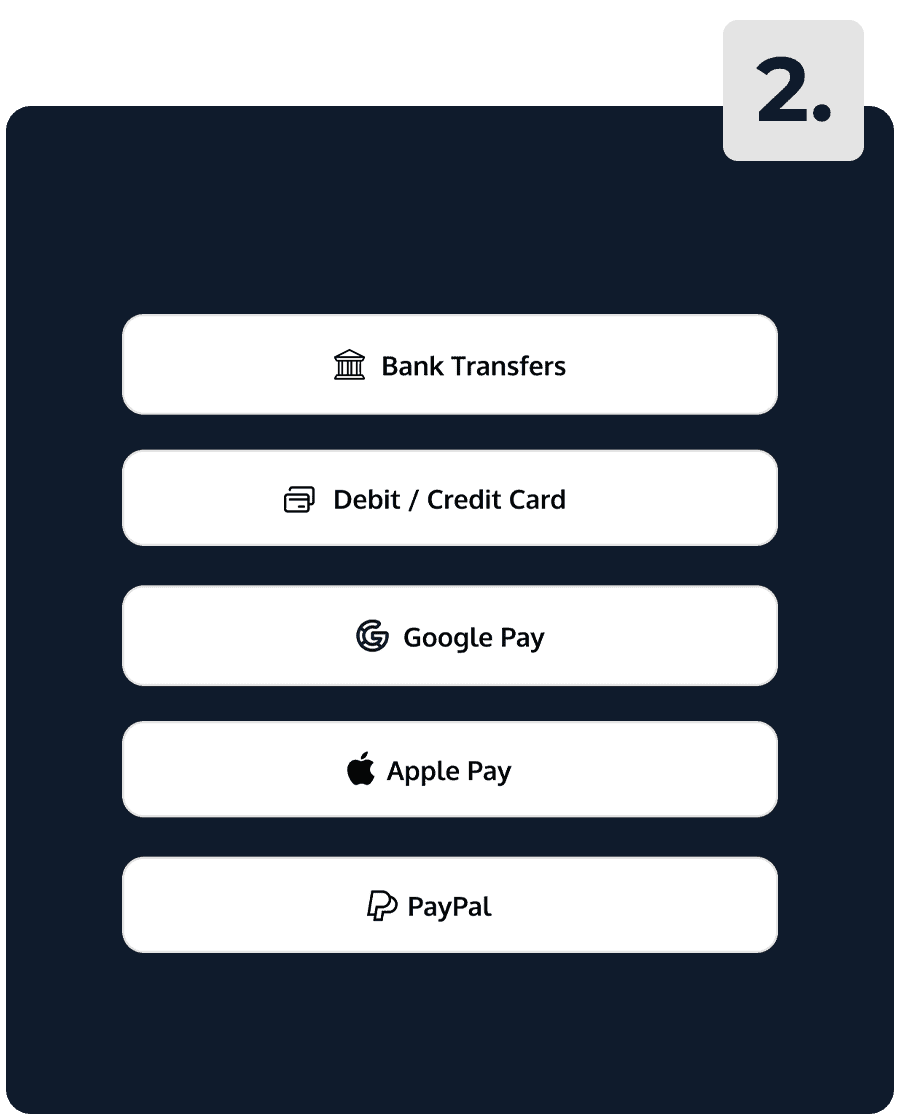
Add money to your Kraken account. US users can deposit via ACH (free, 1-3 days) or wire transfer. UK users can use Faster Payments (free, instant). EU users can use SEPA (free, same day). Debit/credit cards, Apple Pay, and Google Pay are also available for instant deposits – though card fees are higher (3.75%+). For larger UNI purchases, bank transfer is the cheapest option.

Step 3: Navigate to “Buy Crypto”
Click “Buy Crypto” on the Kraken website or tap it in the mobile app. This opens the simple buying interface designed for beginners – no trading experience needed.

Step 4: Search for Uniswap (UNI)
Type “Uniswap” or “UNI” in the search bar and select it from the results. Choose the UNI/USD pair if you deposited US dollars, UNI/EUR for euros, or UNI/GBP for British pounds.

Step 5: Enter Your Purchase Amount
Enter how much you want to spend in your local currency (minimum $10). Kraken will automatically calculate how much UNI you will receive at the current market price. At approximately $4 per UNI, a $100 purchase gives you roughly 25 UNI tokens.

Step 6: Review and Confirm Your Order
Check the UNI price, total cost including fees, and the amount of Uniswap you will receive. Kraken shows the full breakdown before you confirm. Once you click “Buy,” the UNI is added to your Kraken account instantly.
Step 7: Secure Your UNI (Transfer to Wallet for Governance)
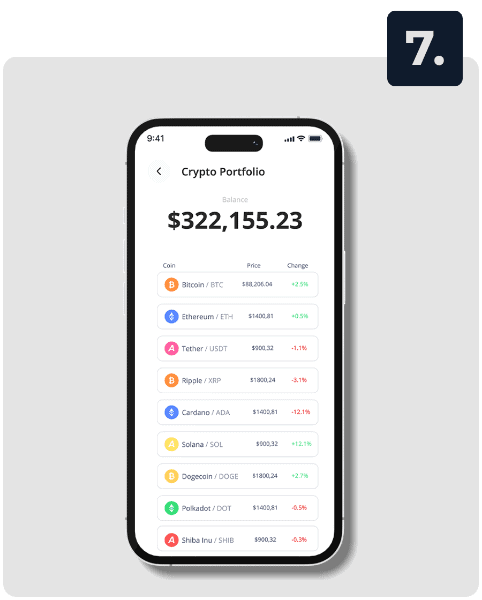
Your Uniswap is now in your Kraken wallet. You can hold it here, trade it, or withdraw to a personal wallet. To participate in governance voting, transfer to MetaMask, Trust Wallet, or a hardware wallet. For long-term storage, use a Ledger device. Never leave large amounts on exchanges.
What Is Uniswap (UNI)?
Unlike centralized exchanges that custody user funds and match orders internally, Uniswap operates entirely through smart contracts. Users maintain full control of their assets while trading against liquidity pools containing token pairs. Liquidity providers deposit equal values of two tokens into pools and earn a share of trading fees (typically 0.3%) proportional to their contribution.
The UNI token, launched in September 2020 via one of crypto’s most famous airdrops (400 UNI to every past user, worth $1,200 at the time), serves as the protocol’s governance token. Holders can propose and vote on protocol upgrades, fee tiers, treasury allocations, and token listings. In February 2025, the SEC closed its investigation into Uniswap Labs without enforcement action, providing regulatory clarity rare in the DeFi sector. The upcoming V4 upgrade introduces “hooks” – customizable plugins allowing developers to create novel liquidity strategies and order types.
Uniswap Price & Market Overview
Before buying UNI, here are the key numbers to understand the size, liquidity, and structure of the Uniswap market. Always check the live price on Kraken or CoinGecko before placing your order.
| Metric | Data (April 2026) |
|---|---|
| Current Price | ~$4.00 (check live on Kraken) |
| Market Cap | ~$2.5 billion |
| CoinGecko / CMC Rank | #20 – #25 |
| 24h Trading Volume | $100M – $200M |
| Circulating Supply | ~634 million UNI |
| Total Supply | ~1 billion UNI |
| Max Supply | 1 billion UNI (hard cap) |
| All-Time High (ATH) | $44.97 – May 2021 |
| All-Time Low (ATL) | $0.419 – September 2020 |
| Blockchain | Ethereum (ERC-20) |
| Protocol Type | Decentralized Exchange (DEX) – AMM |
| Total Value Locked (TVL) | $4+ billion |
| Daily Trading Volume (Protocol) | $1+ billion |
| Supported Chains | Ethereum, Base, Arbitrum, Polygon, Optimism, Unichain |
| SEC Investigation | Closed February 2025 – no enforcement |
| Listed On | 100+ exchanges worldwide |
Uniswap Tokenomics – How the Supply Works
UNI has a fixed maximum supply of 1 billion tokens with a predetermined distribution schedule. Unlike inflationary tokens, no new UNI will ever be created, creating a deflationary scarcity model as tokens are lost or locked in governance.
| Allocation | Amount | What This Means |
|---|---|---|
| Community Treasury | 430 million UNI (43%) | Controlled by governance for grants, incentives, ecosystem growth |
| Team & Investors | 360 million UNI (36%) | 4-year vesting schedule for founders, employees, and early investors |
| Community Airdrop | 150 million UNI (15%) | Distributed to past users in September 2020 (400 UNI each) |
| Liquidity Mining | 60 million UNI (6%) | Initial liquidity mining rewards (completed) |
| Max Supply | 1 billion UNI | Hard cap – no inflation, no more tokens can be created |
| Circulating Supply | ~634 million UNI | ~63% of total supply currently liquid |
| Treasury Holdings | ~200+ million UNI | Controlled by DAO for future initiatives |
| Primary Utility | Governance voting | Vote on protocol upgrades, fee tiers, token listings, treasury use |
Best Ways to Buy Uniswap in 2026
While Kraken is our recommended platform, UNI is available through multiple channels. Your best option depends on whether you want to participate in governance, provide liquidity, or simply hold for price appreciation.
| Method | Fee | Min. Buy | Payment Methods | KYC | Best For |
|---|---|---|---|---|---|
| Kraken | 0.16%-0.26% | $10 | Bank Transfer, Card, ACH, Apple Pay, Google Pay | Yes | Security, governance participation, US/UK/EU |
| Binance | 0.10% | $15 | Card, Bank, P2P | Yes | Lowest fees, highest global volume |
| Coinbase | 0.50%-0.60% | $2 | Card, Bank, PayPal | Yes | US beginners, learning rewards |
| Trust Wallet | Varies | $10 | Card, MoonPay | Yes | Buy + connect to Uniswap DEX instantly |
| Uniswap (DEX) | 0.3% + gas | No minimum | ETH wallet only | No | Privacy, immediate self-custody, governance |
| Layer 2 DEXs | 0.01% + L2 gas | No minimum | ETH on Base/Arbitrum | No | Lowest fees, fast finality |
How to Store Uniswap Safely
Once you have bought UNI, where you keep it matters. To participate in governance, you must use a self-custody wallet. Leaving UNI on an exchange means you cannot vote on protocol changes or delegate your voting power.
Option 1 – Exchange Wallet (Convenient, No Governance)
Your UNI stays in your Kraken or Coinbase account. You cannot participate in governance voting or delegate. Fine for short-term trading, but you miss the core utility of UNI.
Option 2 – Software Wallet (Governance + DeFi)
You control the private keys and can participate in governance, vote on proposals, and use UNI in DeFi protocols. This is essential for UNI holders.
| Wallet | Platform | Best For |
|---|---|---|
| MetaMask | Browser + Mobile | DeFi standard, direct Uniswap integration, hardware wallet support |
| Trust Wallet | iOS + Android | Mobile governance, built-in DApp browser, easy delegation |
| Rainbow | iOS + Android | User-friendly, governance-focused, clean interface |
| Coinbase Wallet | Mobile + Browser | US users, easy onboarding, Uniswap connection |
Option 3 – Hardware Wallet (Highest Security + Governance)
Your private keys are stored on a physical device. Essential for significant holdings and long-term governance participation.
| Wallet | Price | Best For |
|---|---|---|
| Ledger Nano X | ~$149 | Industry standard, Bluetooth, MetaMask integration |
| Ledger Nano S Plus | ~$79 | Budget option, same security, USB only |
| Trezor Model T | ~$179 | Touchscreen, open-source, governance-friendly |
Is Uniswap a Good Investment in 2026?
Uniswap remains the dominant decentralized exchange protocol in 2026, with over $4 billion in TVL and $1+ billion in daily trading volume across Ethereum and Layer 2 networks. The February 2025 closure of the SEC investigation without enforcement provided rare regulatory clarity for a DeFi protocol. The upcoming V4 upgrade introduces “hooks” – customizable plugins that could dramatically expand use cases and developer innovation.
However, UNI faces significant challenges as an investment. The token is purely governance-focused with no current fee accrual, meaning value depends entirely on speculative demand and potential future fee switches. Competition from centralized exchanges, other DEXs (Curve, Balancer), and concentrated liquidity models (Uniswap V3’s own innovation) threaten market share. The price remains 91% below ATH, and DeFi governance tokens have underperformed ETH in recent cycles.
Uniswap Price Scenarios for 2026
| Scenario | Price Range | What Would Need to Happen |
|---|---|---|
| Bearish | $2.50 – $3.50 | DeFi continues to underperform, fee switch never activated, competition captures volume |
| Base Case | $4.00 – $6.00 | V4 adoption steady, governance participation increases, DeFi sector stabilizes |
| Bullish | $8.00 – $12.00 | Fee switch activated, V4 hooks drive innovation, institutional DeFi adoption |
| ATH Retest | $20.00+ | Full crypto super-cycle, UNI becomes revenue-generating asset, DEX volumes exceed CEX |
Price scenarios are based on analyst estimates and historical data. They are not financial advice. Crypto markets are highly unpredictable.
Key Risks to Understand Before You Buy
- No fee accrual – UNI is governance-only. Unlike CEX tokens (BNB) or some DeFi tokens, UNI holders do not receive trading fee revenue unless governance votes to activate fee switch.
- Regulatory uncertainty – While SEC investigation closed without enforcement, future DeFi regulation could impact Uniswap Labs or token classification.
- Governance apathy – Low voter turnout in DAOs means small groups control decisions. Your votes may not significantly influence outcomes.
- Smart contract risk – Uniswap’s contracts are battle-tested but V4 introduces new complexity with hooks. Bugs could lead to fund loss.
- Competition – CEXs offer lower fees for retail; Curve dominates stablecoin swaps; concentrated liquidity (V3) reduced LP profitability and protocol revenue.
- Impermanent loss – If providing liquidity (not holding UNI), you face IL when token prices diverge. Most LPs lose money compared to buy-and-hold.
- Ethereum dependency – High gas fees on Ethereum mainnet push volume to L2s and alt-L1s, potentially fragmenting liquidity and reducing UNI relevance.
How to Sell Uniswap
Selling UNI on Kraken is just as straightforward as buying it. Here is the complete step-by-step process:
-
1
Log in to Kraken
Go to your Spot Wallet to confirm your current UNI balance and the live market price.
-
2
Click “Sell”
Navigate to the Sell section in the main menu and search for Uniswap (UNI) in the asset list.
-
3
Choose Your Trading Pair
Select the currency you want to receive – USD, EUR, GBP, or USDT depending on your preference and location.
-
4
Enter the Amount to Sell
Type either a UNI amount or a target cash value. Kraken will show your estimated proceeds after fees in real time.
-
5
Review and Confirm
Check the sell price, transaction amount, and fee on the confirmation screen. Click “Sell Now” to execute.
-
6
Withdraw to Your Bank
Your cash balance appears in your Kraken account immediately. Go to Funding – Withdraw to transfer to your bank. Most withdrawals complete within 1-3 business days.
Questions & Answers

Uniswap is a decentralized exchange (DEX) protocol on Ethereum that uses Automated Market Makers (AMMs) instead of order books. Users trade against liquidity pools containing token pairs. Prices are determined algorithmically based on the ratio of tokens in the pool (x*y=k formula). Liquidity providers deposit token pairs and earn trading fees.
Kraken offers the best balance of security and reasonable fees (0.16-0.26%) for US/UK/EU users. Binance has lowest fees (0.10%). For immediate self-custody and governance participation, buy ETH on any exchange, transfer to MetaMask, and swap for UNI on Uniswap DEX. This gives you instant voting rights.
As of April 2026, UNI trades at approximately $4.00. You can buy fractional amounts – Kraken allows purchases from $10. At current prices, $10 buys roughly 2.5 UNI tokens. Always check live price before buying.
UNI is the governance token you buy and hold. Providing liquidity means depositing token pairs (e.g., ETH + USDC) into Uniswap pools to earn trading fees. Providing liquidity carries impermanent loss risk – you may earn less than simply holding. Most retail LPs lose money. Holding UNI is simpler but has no yield.
No – UNI is not a staking token. It is purely for governance (voting on protocol changes). You cannot stake UNI to earn yield. Some protocols may offer UNI lending/borrowing, but this carries smart contract risk. The only way to earn from Uniswap is providing liquidity (different from holding UNI) or potential future fee switch activation.
Uniswap V4 (2024-2025 upgrade) introduces “hooks” – customizable plugins that allow developers to create novel liquidity strategies, custom order types, and new AMM curves. This makes Uniswap a platform for innovation, not just a DEX. V4 also improves gas efficiency and enables native ETH pairs. It could significantly expand Uniswap’s use cases beyond simple swaps.
In 2024, the SEC issued a Wells notice to Uniswap Labs suggesting potential enforcement. However, in February 2025, the SEC closed the investigation without taking action. This provided rare regulatory clarity for a DeFi protocol. The decision may reflect Uniswap’s non-custodial nature (they don’t hold user funds) and proactive engagement with regulators.
Buying through regulated exchanges is safe from a platform perspective. The Uniswap protocol has processed $1+ trillion in volume since 2018 with no major smart contract hacks. However, UNI is a governance token with no current revenue share, making it speculative. Only invest what you can afford to lose, and use hardware wallets for significant holdings.
UNI is a bet on DEX dominance and governance value. It offers no yield or fee accrual currently, making it purely speculative. Suitable as a small DeFi allocation (2-5% of crypto portfolio) if you believe in decentralized trading. Consider it a “call option” on future fee switch activation. Most investors should prioritize ETH or productive assets over governance tokens.
Impermanent loss occurs when providing liquidity to AMM pools. If one token’s price changes significantly vs. the other, you end up with less of the appreciating asset than if you had simply held. The loss is “impermanent” until you withdraw, but most LPs experience net losses compared to buy-and-hold. Only provide liquidity if you understand this risk and have a strategy.




Grow your portfolio.
Buy CRYPTO today