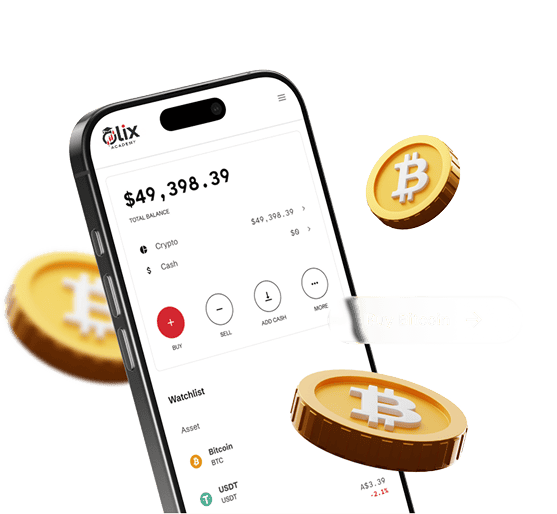
How to Buy Bitcoin – Step-by-Step Guide (2026)
How to Buy Bitcoin on Kraken

Step 1: Create Your Free Kraken Account
Sign up at kraken.com by entering your email address and selecting your country of residence. Complete the identity verification (KYC) process by uploading a government-issued ID and a selfie. This typically takes a few minutes and unlocks full buying and trading access.
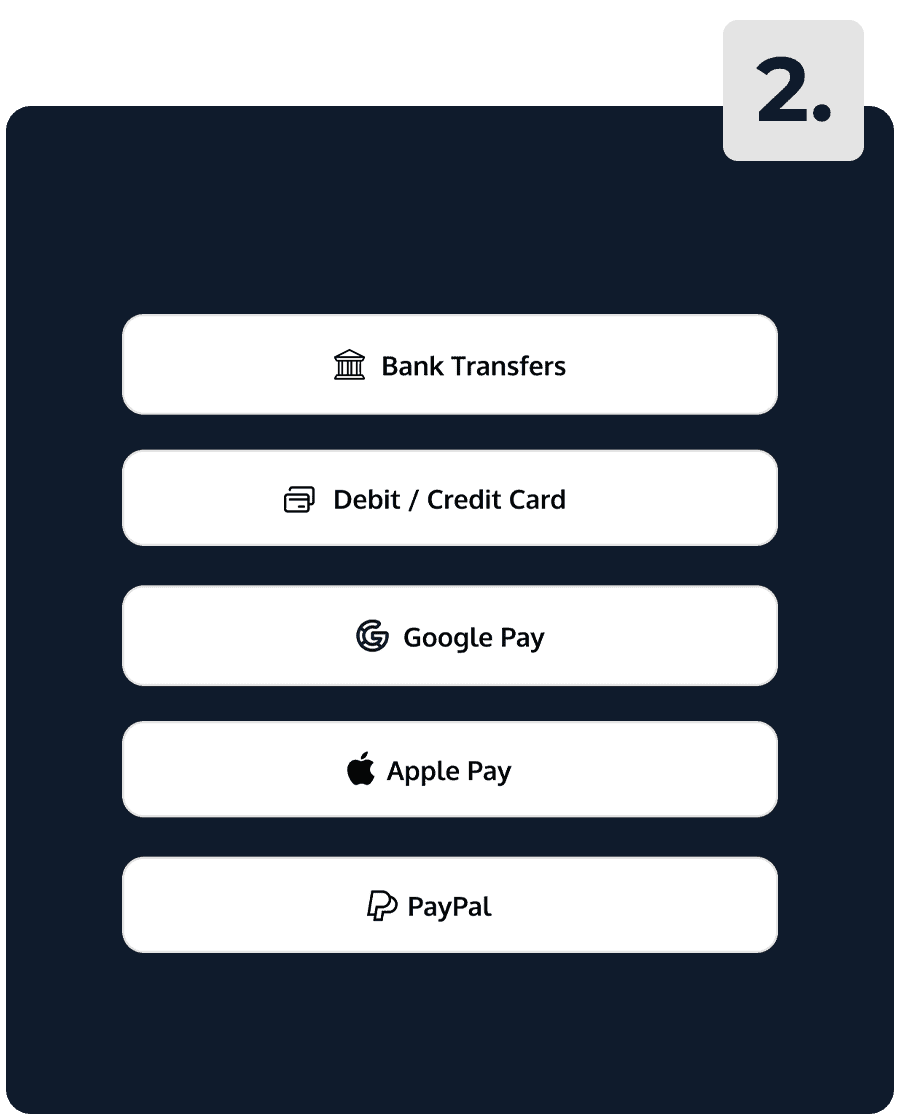
Step 2: Deposit Funds
Add money to your Kraken account. US users can deposit via ACH (free, 1-3 days) or wire transfer. UK users can use Faster Payments (free, instant). EU users can use SEPA (free, same day). Debit/credit cards, Apple Pay, and Google Pay are also available for instant deposits – though card fees are higher (3.75%+). For larger BTC purchases, bank transfer is the cheapest option.

Step 3: Go to “Buy Crypto”
Click “Buy Crypto” on the Kraken website or tap it in the mobile app. This opens the simple buying interface designed for beginners – no trading experience needed.

Step 4: Search for Bitcoin (BTC)
Type “Bitcoin” or “BTC” in the search bar and select it from the results. Choose the BTC/USD pair if you deposited US dollars, BTC/EUR for euros, or BTC/GBP for British pounds.

Step 5: Enter Your Purchase Amount
Enter how much you want to spend in your local currency (minimum $10). Kraken will automatically calculate how much Bitcoin you will receive at the current market price. At approximately $75,000 per BTC, a $100 purchase gives you roughly 0.00133 BTC.

Step 6: Review and Confirm Your Order
Check the BTC price, total cost including fees, and the amount of Bitcoin you will receive. Kraken shows the full breakdown before you confirm. Once you click “Buy,” the Bitcoin is added to your Kraken account instantly.
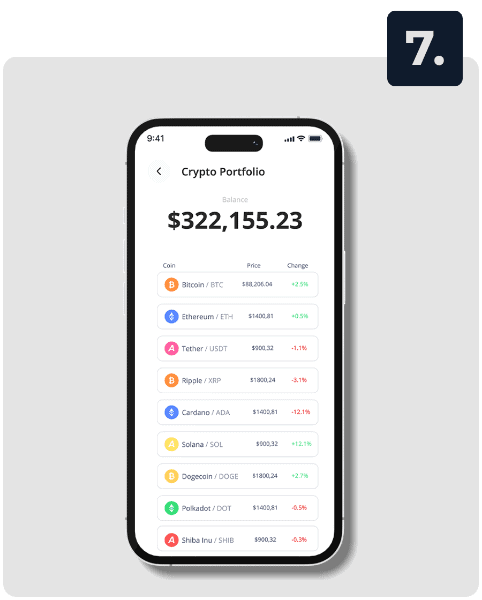
Step 7: Secure Your BTC (Transfer to Wallet)
Your Bitcoin is now in your Kraken wallet. You can hold it here, trade it, or withdraw it to a personal wallet. For long-term holding, transfer to a hardware wallet like Ledger or Trezor. For mobile access, use BlueWallet or Electrum. Never leave large amounts on exchanges – “not your keys, not your coins.”
What Is Bitcoin (BTC)?
Bitcoin is often referred to as “digital gold” due to its fixed supply cap of 21 million coins, making it a deflationary asset resistant to inflation. It serves as both a store of value and a medium of exchange, allowing users to send and receive payments globally without intermediaries like banks. Transactions are verified by miners who solve complex cryptographic puzzles, earning BTC rewards for securing the network.
In 2024, Bitcoin achieved a major milestone with the approval of spot Bitcoin ETFs by the U.S. Securities and Exchange Commission (SEC), bringing institutional legitimacy and making it accessible through traditional brokerage accounts. Today, Bitcoin trades on Wall Street, is held by major corporations like MicroStrategy and Tesla, and has been adopted as legal tender in countries like El Salvador. With a market cap exceeding $1.4 trillion, Bitcoin remains the dominant cryptocurrency by every metric.
Bitcoin Price & Market Overview
Before buying BTC, here are the key numbers to understand the size, liquidity, and structure of the Bitcoin market. Always check the live price on Kraken or CoinGecko before placing your order.
| Metric | Data (April 2026) |
|---|---|
| Current Price | ~$74,700 (check live on Kraken) |
| Market Cap | ~$1.49 trillion |
| CoinGecko / CMC Rank | #1 |
| 24h Trading Volume | $25B – $35B |
| Circulating Supply | ~19.7 million BTC |
| Max Supply | 21,000,000 BTC (hard cap – no more can ever be created) |
| All-Time High (ATH) | $108,786 – January 2025 |
| All-Time Low (ATL) | $0.0009 – July 2010 |
| Blockchain | Own Layer 1 – Proof of Work (SHA-256) |
| Block Reward | 3.125 BTC (halved every 4 years) |
| Hash Rate | ~650 EH/s (network security) |
| ETF Approval | January 2024 (11 spot ETFs approved) |
| Corporate Treasury | MicroStrategy (500K+ BTC), Tesla, Block, etc. |
| Legal Tender | El Salvador, Central African Republic |
| Listed On | 500+ exchanges worldwide |
Bitcoin Tokenomics – How the Supply Works
Bitcoin’s monetary policy is programmed into its code and cannot be changed. This fixed scarcity is what gives Bitcoin its value proposition as “digital gold” and a hedge against inflation.
| Component | Amount | What This Means |
|---|---|---|
| Max Supply | 21,000,000 BTC | Hard cap encoded in protocol – no more can ever be created |
| Circulating Supply | ~19.7 million BTC | Currently available and trading (94% of total supply) |
| Remaining to Mine | ~1.3 million BTC | Will be mined by approximately 2140 |
| Block Reward | 3.125 BTC | Halved every 210,000 blocks (~4 years). Next halving: 2028 |
| Halving Schedule | Every 4 years | Reduces new supply issuance by 50%. Creates scarcity shock |
| Lost Coins | ~3-4 million BTC estimated | Forever inaccessible due to lost private keys |
| Inflation Rate | ~0.8% annually | Current issuance rate. Drops to ~0.4% after 2028 halving |
| Primary Utility | Store of value + payments | Digital gold, peer-to-peer cash, settlement layer |
Best Ways to Buy Bitcoin in 2026
While Kraken is our recommended platform for direct purchase, Bitcoin is available through multiple channels in 2026. Your best option depends on your location, preferred custody method, and whether you want exposure through traditional finance.
| Method | Fee | Min. Buy | Payment Methods | KYC | Best For |
|---|---|---|---|---|---|
| Kraken | 0.16%-0.26% | $10 | Bank Transfer, Card, ACH, Apple Pay, Google Pay | Yes | Direct ownership – US, UK, EU; strong security |
| Binance | 0.10% | $15 | Card, Bank, P2P | Yes | Lowest fees, highest global volume |
| Coinbase | 0.50%-0.60% | $2 | Card, Bank, PayPal | Yes | US beginners, ease of use |
| Bitcoin ETF (IBIT) | 0.12%-0.25% | $1 | Brokerage account | Yes | Traditional investors, IRAs, 401k |
| Bisq (P2P) | 0.15% | No minimum | Bank transfer, Cash | No | Privacy, no verification |
| Bitcoin ATM | 5%-15% | $10 | Cash only | No (under $1k) | Cash purchases, anonymity |
How to Store Bitcoin Safely
Once you have bought Bitcoin, where you keep it matters. Leaving BTC on an exchange exposes you to platform risk – if the exchange is hacked or goes insolvent (as FTX did in 2022), your Bitcoin could be lost. For anything you plan to hold, transferring to a personal wallet is the safer choice.
Option 1 – Exchange Wallet (Convenient, Lower Security)
Your Bitcoin stays in your Kraken or Coinbase account. The exchange holds the private keys on your behalf. Fine for active traders, but not recommended for long-term holding.
Option 2 – Software Wallet (Free, Self-Custody)
You control the private keys and the wallet is connected to the internet. Good for regular use and small amounts.
| Wallet | Platform | Best For |
|---|---|---|
| Electrum | Desktop | Advanced users, Bitcoin-only, Lightning support |
| BlueWallet | iOS + Android | Beginners, Lightning Network, easy interface |
| Sparrow Wallet | Desktop | Privacy-focused users, coin control, multisig |
| Exodus | Mobile + Desktop | Multi-coin, user-friendly, built-in exchange |
Option 3 – Hardware Wallet (Highest Security)
Your private keys are stored on a physical device that never connects to the internet. The gold standard for long-term Bitcoin storage.
| Wallet | Price | Best For |
|---|---|---|
| Ledger Nano X | ~$149 | Industry standard; Bluetooth; mobile support |
| Ledger Nano S Plus | ~$79 | Budget option – same security, USB only |
| Trezor Model T | ~$179 | Touchscreen, open-source, beginner-friendly |
| Coldcard Mk4 | ~$158 | Maximum security, Bitcoin-only, air-gapped |
✓ Write your 12/24-word seed phrase on paper (never digitally)
✓ Store backups in multiple physical locations (safe deposit box, home safe)
✓ Never share your seed phrase with anyone – ever
✓ Verify your receive address on the device screen before sending
✓ Use a passphrase (25th word) for additional security on large holdings
Is Bitcoin a Good Investment in 2026?
Bitcoin remains the dominant cryptocurrency in 2026, with a market cap above $1.4 trillion and daily trading volumes regularly exceeding $25 billion. Following the 2024 ETF approvals, Bitcoin has gained institutional legitimacy with major financial firms offering exposure to clients. However, BTC remains a high-volatility asset with significant price swings.
Institutional adoption continues to grow. MicroStrategy holds over 500,000 BTC as a treasury asset. Tesla, Block (Square), and numerous public companies have added Bitcoin to their balance sheets. Nation-states including El Salvador and the Central African Republic have adopted Bitcoin as legal tender. The 2024 halving reduced new supply issuance, creating a supply squeeze that historically precedes bull markets.
Bitcoin Price Scenarios for 2026
| Scenario | Price Range | What Would Need to Happen |
|---|---|---|
| Bearish | $60,000 – $70,000 | Global recession, regulatory crackdown, major exchange failure, mining ban |
| Base Case | $80,000 – $110,000 | Steady institutional adoption, halving supply squeeze, stable macro environment |
| Bullish | $120,000 – $150,000 | ETF inflows accelerate, nation-state adoption expands, Fed rate cuts |
| ATH Retest | $108,000+ | Strong market momentum, retail FOMO, corporate treasury accumulation |
Price scenarios are based on analyst estimates and historical data. They are not financial advice. Crypto markets are highly unpredictable.
Key Risks to Understand Before You Buy
- High volatility – Bitcoin can drop 20-30% in days. In 2022, it fell 77% from peak to trough ($69k to $15k).
- Regulatory risk – Governments could ban or restrict Bitcoin trading, mining, or self-custody. China banned mining in 2021.
- Technology risk – Quantum computing could threaten cryptographic security (though mitigations and upgrades exist).
- Concentration risk – Large holders (“whales”) can move markets. Satoshi’s 1 million BTC remains unmoved.
- Environmental concerns – Proof-of-work mining faces ESG criticism and potential restrictions in some jurisdictions.
- Competition – Other cryptocurrencies and central bank digital currencies (CBDCs) could reduce Bitcoin’s market share.
How to Sell Bitcoin
Selling Bitcoin on Kraken is just as straightforward as buying it. Here is the complete step-by-step process:
-
1
Log in to Kraken
Go to your Spot Wallet to confirm your current BTC balance and the live market price.
-
2
Click “Sell”
Navigate to the Sell section in the main menu and search for Bitcoin (BTC) in the asset list.
-
3
Choose Your Trading Pair
Select the currency you want to receive – USD, EUR, GBP, or USDT depending on your preference and location.
-
4
Enter the Amount to Sell
Type either a BTC amount or a target cash value. Kraken will show your estimated proceeds after fees in real time.
-
5
Review and Confirm
Check the sell price, transaction amount, and fee on the confirmation screen. Click “Sell Now” to execute.
-
6
Withdraw to Your Bank
Your cash balance appears in your Kraken account immediately. Go to Funding – Withdraw to transfer to your bank. Most withdrawals complete within 1-3 business days.
Questions & Answers

Bitcoin is a decentralized digital currency created in 2009 by Satoshi Nakamoto. Its value comes from scarcity (21M cap), decentralization (no government control), security (proof-of-work), and growing adoption as digital gold and a hedge against inflation. It was the first cryptocurrency and remains the largest by market cap.
For most users, Kraken offers the best balance of security, fees (0.16-0.26%), and ease of use. Binance has the lowest fees (0.10%) and highest volume. Coinbase is best for US beginners despite higher fees. For traditional investors, Bitcoin ETFs (IBIT, FBTC) offer exposure through brokerage accounts.
As of April 2026, Bitcoin trades at approximately $74,700. You don’t need to buy a whole Bitcoin – Kraken allows purchases from $10. At current prices, $10 buys roughly 13,400 Satoshis (0.000133 BTC).
Yes. Kraken, Coinbase, and Binance all support card purchases. Card payments process instantly but have higher fees (2-4%) than bank transfers. Bank transfers (ACH/SEPA) are cheaper but take 1-3 days. Apple Pay and Google Pay are also supported.
For small amounts, software wallets like BlueWallet or Electrum work well. For significant holdings, a hardware wallet (Ledger, Trezor, Coldcard) is essential. Never store large amounts on exchanges long-term. The phrase “not your keys, not your coins” means you only truly own Bitcoin if you control the private keys.
Bitcoin ETFs (Exchange Traded Funds) like IBIT (BlackRock) and FBTC (Fidelity) trade on stock exchanges and track Bitcoin’s price. Pros: Easy to buy in brokerage/IRA accounts, regulated, no wallet management. Cons: You don’t own actual BTC, annual fees (0.12-0.25%), limited trading hours. Choose ETFs for convenience, direct BTC for ownership and financial sovereignty.
Buying through regulated exchanges like Kraken is safe from a platform perspective. The greater risk is price volatility – Bitcoin can drop 20-30% in days. Only invest what you can afford to lose, and use hardware wallets for long-term storage. The Bitcoin network itself has never been hacked in 15+ years.
Bitcoin has been the best-performing asset of the last decade, but past performance doesn’t guarantee future results. It’s a high-risk, high-volatility asset suitable for 1-5% of a diversified portfolio. Consider dollar-cost averaging (DCA) to reduce timing risk. Bitcoin is best viewed as long-term savings technology, not a get-rich-quick scheme.
The halving is an event that occurs every 4 years (210,000 blocks) where the block reward for miners is cut in half. This reduces the rate at which new Bitcoin is created. The 2024 halving reduced rewards from 6.25 to 3.125 BTC per block. Historically, halvings have preceded major bull markets due to supply shock.
Bitcoin is the only truly decentralized, fixed-supply, proof-of-work cryptocurrency with no pre-mine, no founder reward, and no central authority. It has the longest track record (since 2009), strongest security (650+ EH/s hash rate), and widest adoption. Other cryptocurrencies may offer faster transactions or smart contracts, but none match Bitcoin’s monetary policy and decentralization.



Grow your portfolio.
Buy CRYPTO today