How to Buy Cosmos – Step-by-Step Guide (2026)

How to Buy Cosmos on Kraken

Step 1: Create Your Free Kraken Account
Sign up at kraken.com by entering your email address and selecting your country of residence. Complete the identity verification (KYC) process by uploading a government-issued ID and a selfie. This typically takes a few minutes and unlocks full buying, trading, and staking access.
Step 2: Deposit Funds
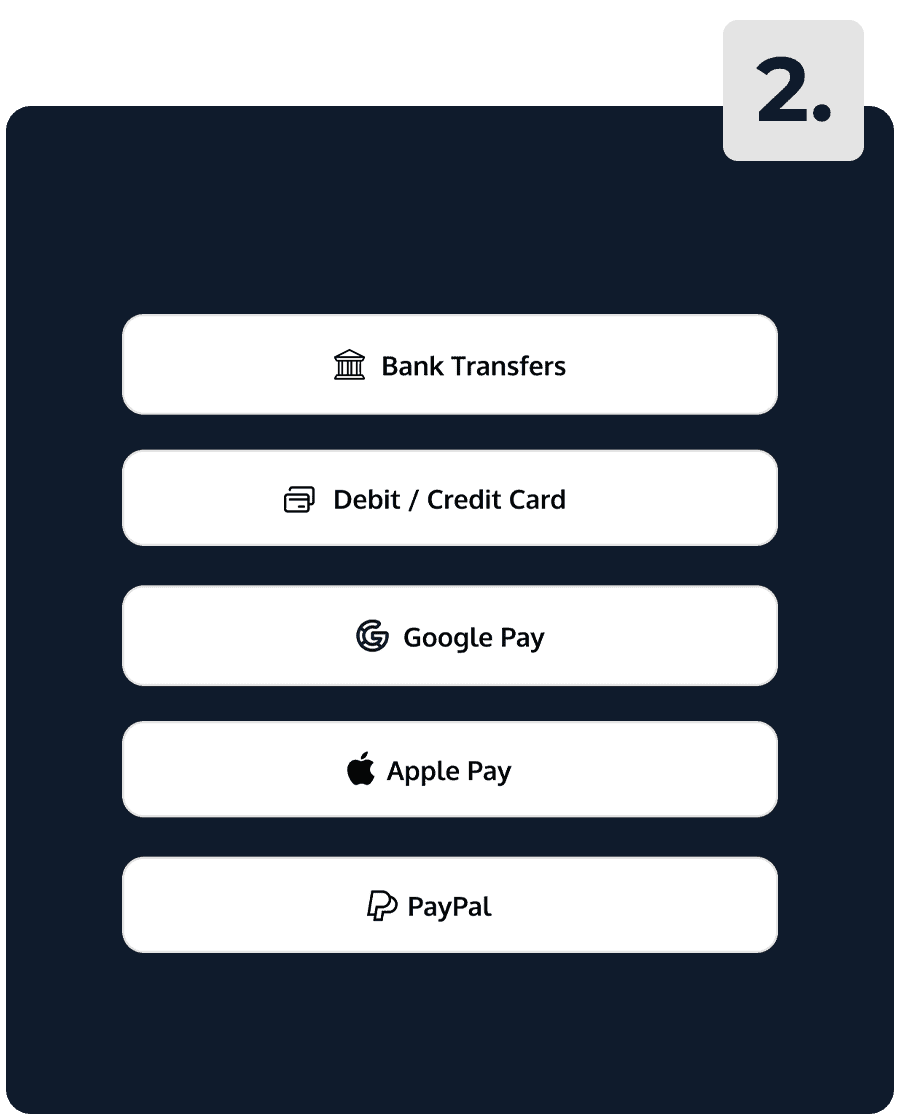
Add money to your Kraken account. US users can deposit via ACH (free, 1-3 days) or wire transfer. UK users can use Faster Payments (free, instant). EU users can use SEPA (free, same day). Debit/credit cards, Apple Pay, and Google Pay are also available for instant deposits with higher fees (3.75%+). For larger ATOM purchases, bank transfer is the cheapest option.

Step 3: Go to “Buy Crypto”
Click “Buy Crypto” on the Kraken website or tap it in the mobile app. This opens the simple buying interface designed for beginners.

Step 4: Search for Cosmos (ATOM)
Type “Cosmos” or “ATOM” in the search bar and select it from the results. Choose the ATOM/USD pair if you deposited US dollars, ATOM/EUR for euros, or ATOM/USDT for stablecoin trading.

Step 5: Enter Your Purchase Amount
Enter how much you want to spend in your local currency (minimum $10). Kraken will automatically calculate how many ATOM tokens you will receive at the current market price. At approximately $1.80 per ATOM, a $100 purchase gives you roughly 55 ATOM tokens.

Step 6: Review and Confirm Your Order
Check the ATOM price, total cost including fees, and the amount of ATOM you will receive. Kraken shows the full breakdown before you confirm. Once you click “Buy,” the ATOM tokens are added to your Kraken account instantly.
Step 7: Stake or Withdraw Your ATOM
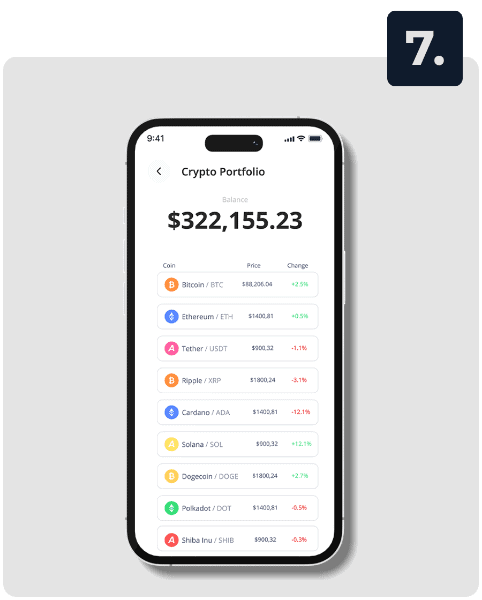
Your ATOM is now in your Kraken wallet. You can hold it here, stake it for approximately 12-15% APY (one of the highest yields among major PoS networks), or withdraw it to a personal wallet like Keplr. If you plan to use Cosmos ecosystem dApps like Osmosis (DEX), dYdX, Celestia, or Injective, you will need ATOM in a self-custody wallet that supports the Cosmos network.
What Is Cosmos (ATOM)?
The Cosmos technology stack consists of three core components: CometBFT (formerly Tendermint Core), a high-performance Byzantine Fault Tolerant consensus engine; the Cosmos SDK, a modular framework that lets developers build application-specific blockchains in weeks rather than months; and IBC (Inter-Blockchain Communication), the protocol that enables trustless asset and data transfers between independent chains. Cosmos uses a “hub and spoke” architecture where the Cosmos Hub serves as the central coordination chain, and “zones” (independent blockchains) connect through IBC.
The Cosmos ecosystem is one of the largest in crypto by number of independent chains. Major networks built using Cosmos technology include Osmosis (largest Cosmos DEX), dYdX (the perpetual futures exchange that migrated from Ethereum), Celestia (modular blockchain), Injective (DeFi-focused), Kava (lending), Cronos (Crypto.com’s chain), Sei (parallelised L1), and many others. Notably, Binance Chain is also built on Cosmos technology. Over 100+ chains are currently connected via IBC, making it the largest cross-chain network by sovereign chain count.
ATOM is the native cryptocurrency of the Cosmos Hub specifically – not all of Cosmos. This is an important distinction: Cosmos is a framework, not a single chain, and ATOM only secures and governs the Hub itself. ATOM is used for staking (earning ~12-15% APY), governance voting on Cosmos Hub upgrades, and paying transaction fees. The current staking ratio is approximately 61.4% – one of the highest of any major PoS network. In 2025, IBC Eureka launched, enabling trustless interoperability with Ethereum. In 2026, IBC integrations to Solana and Base are in final development.
Cosmos faces a unique tokenomics challenge. ATOM has historically been highly inflationary (7-20% annually) to incentivise staking, but this dilutes long-term holders. In 2026, Cosmos Labs initiated a structured tokenomics redesign process to shift ATOM toward a fee-revenue model rather than circular inflation – aiming to position ATOM as the “revenue token” for enterprise Cosmos chains. The Gaia v27.0 upgrade and CometBFT performance improvements targeting 10,000+ TPS are also under active development. Cosmos was NOT included in the SEC/CFTC’s March 17, 2026 digital commodity classification.
Cosmos Price & Market Overview
Before buying ATOM, here are the key numbers to understand the size, liquidity, and structure of the Cosmos market. Always check the live price on Kraken or CoinGecko before placing your order.
| Metric | Data (March 2026) |
|---|---|
| Current Price | ~$1.80 (check live on Kraken) |
| Market Cap | ~$700M – $800M |
| CoinGecko / CMC Rank | #50 – #65 |
| 24h Trading Volume | $30M – $80M |
| Circulating Supply | ~391 million ATOM |
| Max Supply | No fixed cap (inflationary 7-20% annually) |
| All-Time High (ATH) | $44.70 – January 2022 |
| All-Time Low (ATL) | $1.13 – March 2020 |
| Blockchain | Cosmos Hub – CometBFT (formerly Tendermint) Proof-of-Stake |
| Block Time | ~7 seconds |
| Average Fee | ~$0.01 per transaction |
| Staking Yield | ~12-15% APY (among the highest of any major PoS network) |
| Staking Ratio | ~61.4% (one of the highest in crypto) |
| Founders | Jae Kwon, Ethan Buchman (Interchain Foundation) |
| IBC-Connected Chains | 100+ sovereign chains |
| Notable Cosmos Chains | Osmosis, dYdX, Celestia, Injective, Kava, Cronos, Sei, Binance Chain |
| Regulatory Status | Not on SEC/CFTC March 2026 commodity list |
| Listed On | 200+ exchanges including Kraken, Binance, Coinbase, OKX, KuCoin |
Cosmos Tokenomics – How the Supply Works
ATOM has no fixed supply cap and uses a dynamic inflation model that adjusts based on the staking ratio. The goal is to incentivise staking by penalising non-stakers with inflation dilution. This model is currently under review for a major redesign in 2026.
| Component | Amount | What This Means |
|---|---|---|
| Circulating Supply | ~391 million ATOM | All currently circulating; no significant locked vesting remains from the original ICO |
| Max Supply | No fixed cap | Cosmos uses dynamic inflation adjusted by staking participation – no hard cap exists |
| Initial Supply (2017 ICO) | ~236 million ATOM | Cosmos raised ~$17 million in its April 2017 ICO at $0.10 per ATOM |
| Current Inflation | ~7-10% annually | Adjusts dynamically – higher inflation when staking ratio is low, lower when high |
| Inflation Range | 7% – 20% | Hard-coded bounds; current rate near the lower end due to high staking participation |
| Staking Yield | ~12-15% APY | Comprises both new issuance and transaction fees; one of the highest yields in crypto |
| Staking Ratio | ~61.4% | Percentage of circulating ATOM currently staked – one of the highest of any major network |
| Tokenomics Redesign | Underway in 2026 | Cosmos Labs is researching a shift from circular inflation to fee-based revenue model |
| Primary Utility | Cosmos Hub security + governance + fees | ATOM secures the Cosmos Hub specifically (not all Cosmos chains), funds governance, and pays Hub fees |
Best Exchanges to Buy Cosmos in 2026
While Kraken is our recommended platform, ATOM is widely listed across major exchanges. Your best option depends on your location, preferred payment method, and whether you want staking access.
| Exchange | Fee | Min. Buy | Payment Methods | KYC | Best For |
|---|---|---|---|---|---|
| Kraken | 0.16%-0.26% | $10 | Bank Transfer, Card, ACH, Apple Pay, Google Pay | Yes | Beginners – US, UK, EU; built-in ATOM staking |
| Binance | 0.10% | $10 | Card, Bank, P2P, Apple Pay, Google Pay | Yes | Highest global ATOM volume; lowest fees |
| Coinbase | 0.40%-0.60% | $1 | Card, Bank Transfer, Apple Pay, PayPal (US) | Yes | Simplest UI; US-regulated |
| OKX | 0.08%-0.10% | $10 | Card, Bank, P2P | Yes | Low fees; Cosmos ecosystem support |
| KuCoin | 0.10% | $1 | Card, Bank Transfer | Yes | Low minimum buy |
| Osmosis (Cosmos DEX) | ~0.2% swap | No minimum | Cosmos wallet only | No KYC | Largest Cosmos DEX; swap ATOM for any IBC-connected token |
How to Store Cosmos Safely
Once you have bought ATOM, where you keep it matters. For anything you plan to hold long term, transferring ATOM to a personal wallet is the safer choice – and you can stake directly from your wallet to earn rewards.
Option 1 – Software Wallet (Recommended for Cosmos)
You control the private keys. Cosmos has the most diverse wallet ecosystem of any blockchain due to its multi-chain nature.
| Wallet | Platform | Best For |
|---|---|---|
| Keplr Wallet | Browser extension + iOS + Android | The most popular Cosmos wallet. Full support for ATOM staking, governance, and 100+ Cosmos chains via IBC. The default choice for the Cosmos ecosystem. |
| Cosmostation | Browser extension + iOS + Android | Multi-chain Cosmos wallet with strong staking and governance features. Good alternative to Keplr. |
| Citadel One | Web + iOS + Android | Specialised PoS staking wallet with strong Cosmos ecosystem support. |
| OKX Wallet | Browser extension + iOS + Android | Multi-chain wallet with Cosmos support including IBC transfers. |
Note: Leap Wallet, previously a popular Cosmos wallet, is shutting down by May 28, 2026. Existing users should migrate their assets to Keplr or Cosmostation.
Option 2 – Hardware Wallet (Highest Security)
Your private keys are stored on a physical device that never connects to the internet.
| Wallet | Price | Best For |
|---|---|---|
| Ledger Nano X | ~$149 | Industry standard; full Cosmos support via Keplr or Ledger Live integration |
| Ledger Stax / Flex | $279 / $249 | Premium touchscreen hardware wallets; Cosmos support included |
Is Cosmos a Good Investment in 2026?
Cosmos has one of the most fundamentally important visions in crypto – the “Internet of Blockchains” connecting sovereign chains via IBC. The technology is genuinely impressive: CometBFT consensus, the Cosmos SDK that powers 100+ independent chains, and IBC as the most battle-tested cross-chain protocol in production. Major networks built on Cosmos technology include Binance Chain, dYdX, Celestia, Injective, Osmosis, Kava, Cronos, and Sei. ATOM offers approximately 12-15% staking yield, one of the highest in crypto, with a record 61.4% staking ratio.
2026 catalysts include the IBC Eureka Ethereum integration (already live), planned IBC integrations to Solana and Base (Q2 2026), CometBFT performance upgrades targeting 10,000+ TPS, the Gaia v27.0 hub upgrade, and most importantly the major tokenomics redesign initiated by Cosmos Labs to shift ATOM from inflation-funded to revenue-funded economics. Successful execution of the tokenomics overhaul could fundamentally re-rate ATOM’s value proposition.
However, ATOM has the most fundamental “value capture” problem of any major Layer 1. Cosmos is a framework, not a single chain – and the value created by ecosystem chains (Celestia, dYdX, Injective, etc.) does not automatically flow to ATOM holders. Users on Osmosis or Injective do not need ATOM at all. The high inflation (7-20% annually) has consistently diluted long-term holders. Major chains like Terra (which collapsed) and dYdX use Cosmos technology but their token value accrues to OSMO, dYdX, INJ – not ATOM. The “Cosmos ecosystem winning does not mean ATOM winning” critique has been the dominant criticism of ATOM as an investment for years.
ATOM Price Scenarios for 2026
| Scenario | Price Range | What Would Need to Happen |
|---|---|---|
| Bearish | $1.10 – $1.60 | Tokenomics redesign delayed, IBC competition from LayerZero/Chainlink CCIP, ecosystem chains migrate away |
| Base Case | $1.80 – $3.50 | Tokenomics redesign progresses, Solana/Base IBC integrations launch, stable macro |
| Bullish | $4.00 – $8.00 | Bitcoin bull run, fee-based ATOM model approved, major enterprise Cosmos deployments, IBC adoption accelerates |
| ATH Retest+ | $15 – $45+ | Full crypto super-cycle, Cosmos becomes default cross-chain standard, value capture problem solved |
Price scenarios are based on analyst estimates and historical data. They are not financial advice. Crypto markets are highly unpredictable.
Key Risks to Understand Before You Buy
- The value capture problem – Cosmos ecosystem success does not automatically flow to ATOM. Chains like dYdX, Celestia, and Osmosis have their own tokens and do not require ATOM. This is the central long-term challenge.
- High inflation dilution – ATOM’s 7-20% annual inflation has historically diluted long-term holders unless they stake. Even staked ATOM must outpace inflation to maintain value.
- Not on SEC commodity list – ATOM was NOT included in the March 17, 2026 SEC/CFTC digital commodity classification, leaving its US legal status less defined than competitors.
- 96% drawdown from ATH – ATOM peaked at $44.70 in January 2022 and has been in a sustained downtrend since. The multi-year underperformance is severe.
- 21-day unbonding period – one of the longest unstaking delays among major PoS networks. Reduces flexibility for stakers.
- Cross-chain competition – LayerZero, Chainlink CCIP, Wormhole, and Polkadot all compete for the cross-chain interoperability narrative. IBC is the most battle-tested but loses share when developers prefer EVM-compatible solutions.
- Tokenomics redesign uncertainty – the planned shift from inflation to fee-revenue is a major change that requires successful governance approval and execution. Failure or delays would be a significant negative catalyst.
How to Sell Cosmos
Selling ATOM on Kraken is just as straightforward as buying it. Here is the complete step-by-step process:
- 1Log in to Kraken
Go to your Spot Wallet to confirm your current ATOM balance and the live market price.
- 2Unstake (If Applicable)
If your ATOM is staked on-chain, you will need to initiate unbonding – this takes 21 days on the Cosmos Hub. Exchange staking is typically faster.
- 3Click “Sell”
Navigate to the Sell section and search for ATOM in the asset list.
- 4Choose Your Trading Pair
Select USD, EUR, GBP, or USDT depending on your preference.
- 5Enter the Amount to Sell
Type either an ATOM amount or a target cash value. Kraken shows your estimated proceeds after fees.
- 6Review and Confirm
Check the sell price, transaction amount, and fee. Click “Sell Now” to execute.
- 7Withdraw to Your Bank
Your cash balance appears in your Kraken account immediately. Go to Funding – Withdraw to transfer to your bank.
Questions & Answers

Cosmos is a decentralised network of independent, interoperable blockchains, often called the “Internet of Blockchains.” It is popular because of its IBC (Inter-Blockchain Communication) protocol that enables trustless cross-chain transfers, the Cosmos SDK that has been used to build 100+ sovereign chains (including Binance Chain, dYdX, Celestia, Injective, and Osmosis), and the CometBFT consensus engine that provides fast 7-second finality. ATOM offers approximately 12-15% staking APY, one of the highest yields in crypto.
For most users, Kraken offers the best balance of security, fees, and ease of use with built-in ATOM staking. Binance has the highest global ATOM volume at 0.10% fees. Coinbase is the simplest option for beginners. ATOM is listed on 200+ exchanges globally.
As of March 2026, ATOM trades at approximately $1.80. Kraken allows purchases from as little as $10. Always check the live ATOM price on Kraken or CoinGecko before buying.
IBC (Inter-Blockchain Communication) is the protocol that enables independent blockchains in the Cosmos ecosystem to transfer assets and data trustlessly between each other. IBC is the most battle-tested cross-chain protocol in production with billions of dollars in volume and 100+ connected chains. IBC Eureka extended IBC to Ethereum in 2025, with Solana and Base integrations planned for Q2 2026.
Yes, and ATOM offers some of the highest staking yields in crypto – approximately 12-15% APY. You can stake directly on Kraken, Binance, and most major exchanges, or through Keplr Wallet for self-custody on-chain staking. Note that on-chain staking has a 21-day unbonding period – your ATOM is locked during this time.
ATOM uses dynamic inflation (7-20% annually) to incentivise staking. The model penalises non-stakers with dilution while rewarding stakers with high yields. The problem is that ATOM has been highly inflationary for years, diluting long-term holders. Cosmos Labs initiated a major tokenomics redesign in 2026 to shift ATOM from circular inflation to a fee-revenue model. The success of this redesign is one of the most-watched events in the Cosmos ecosystem.
Both enable interoperability between blockchains. Cosmos uses sovereign security – each chain in the Cosmos ecosystem runs its own validators via IBC, maintaining independence. Polkadot uses shared security – all parachains inherit protection from the Relay Chain’s validator set. Cosmos is more flexible (chains can use any consensus, any language) but each chain bootstraps its own security. Polkadot is more secure but more restrictive. Cosmos has 100+ live chains and battle-tested IBC; Polkadot has 65+ parachains. Polkadot has a 2.1B hard supply cap; ATOM has no supply cap (yet).
Buying ATOM through a regulated exchange like Kraken is safe from a platform perspective. The Cosmos network has operated since March 2019 with no fundamental security failures. However, ATOM was NOT included in the SEC/CFTC commodity classification, and the value capture problem creates ongoing investment uncertainty. Only invest what you can afford to lose.
Cosmos has built genuinely important infrastructure (IBC, Cosmos SDK, CometBFT), and the 100+ chain ecosystem is proof of technical success. However, ATOM token performance has historically been disappointing because Cosmos ecosystem success does not automatically translate to ATOM value. The 2026 tokenomics redesign could finally solve this. We provide education, not financial advice. ATOM is best suited for investors who believe in IBC AND believe the tokenomics overhaul will succeed.
Major chains built on Cosmos SDK or CometBFT include: Binance Chain (BNB), dYdX (perpetual futures DEX), Celestia (modular blockchain), Injective (DeFi-focused L1), Osmosis (largest Cosmos DEX), Kava (lending), Cronos (Crypto.com’s chain), Sei (parallelised L1), Terra Classic (formerly Terra/Luna), and Crypto.org. The total ecosystem represents over $100B in cumulative value, though not all of this value flows to ATOM.





Grow your portfolio.
Buy CRYPTO today