How to Buy Aptos – Step-by-Step Guide (2026)

How to Buy Aptos on Kraken

Step 1: Create Your Free Kraken Account
Sign up at kraken.com by entering your email address and selecting your country of residence. Complete the identity verification (KYC) process by uploading a government-issued ID and a selfie. This typically takes a few minutes and unlocks full buying, trading, and staking access.
Step 2: Deposit Funds
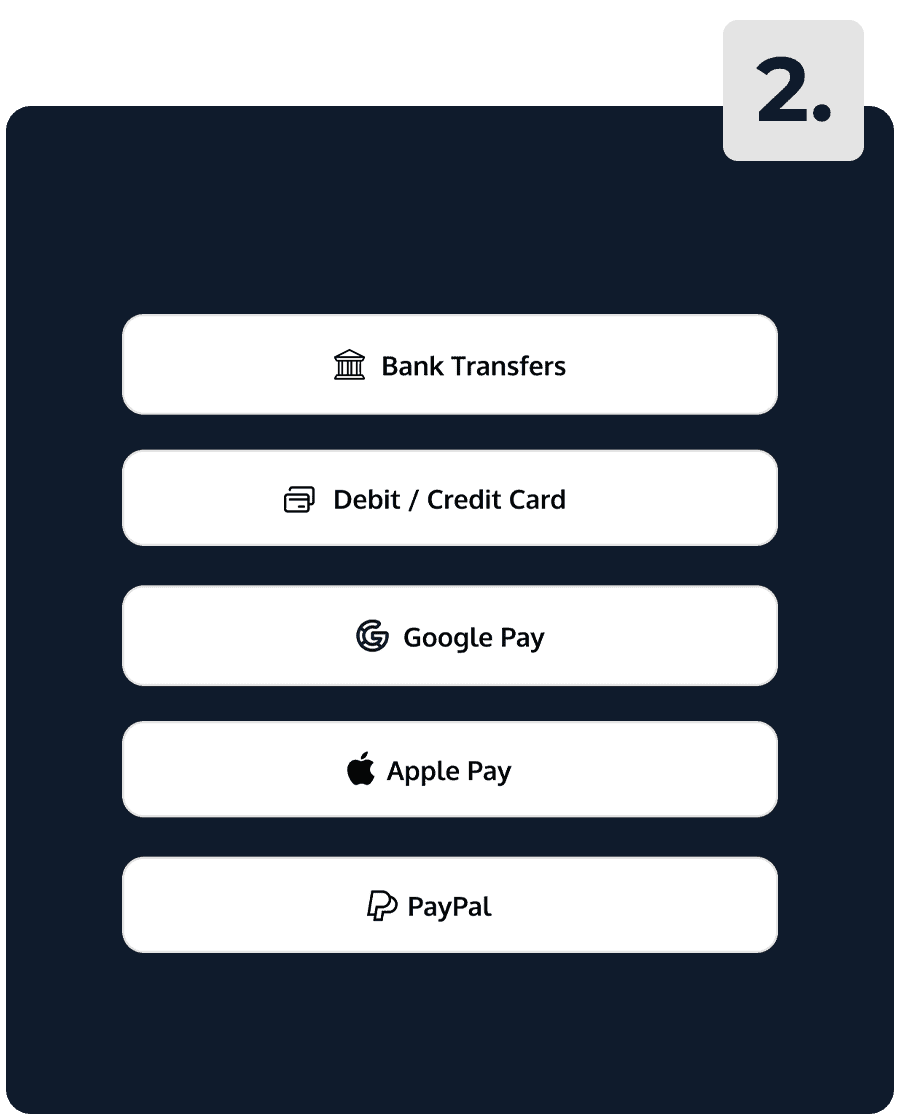
Add money to your Kraken account. US users can deposit via ACH (free, 1-3 days) or wire transfer. UK users can use Faster Payments (free, instant). EU users can use SEPA (free, same day). Debit/credit cards, Apple Pay, and Google Pay are also available for instant deposits – though card fees are higher (3.75%+). For larger APT purchases, bank transfer is the cheapest option.

Step 3: Go to “Buy Crypto”
Click “Buy Crypto” on the Kraken website or tap it in the mobile app. This opens the simple buying interface designed for beginners.

Step 4: Search for Aptos (APT)
Type “Aptos” or “APT” in the search bar and select it from the results. Choose the APT/USD pair if you deposited US dollars, APT/EUR for euros, or APT/USDT for stablecoin trading.

Step 5: Enter Your Purchase Amount
Enter how much you want to spend in your local currency (minimum $10). Kraken will automatically calculate how many APT tokens you will receive at the current market price. At approximately $0.85 per APT, a $100 purchase gives you roughly 117 APT tokens.

Step 6: Review and Confirm Your Order
Check the APT price, total cost including fees, and the amount of APT you will receive. Kraken shows the full breakdown before you confirm. Once you click “Buy,” the APT tokens are added to your Kraken account instantly.
Step 7: Stake or Withdraw Your APT
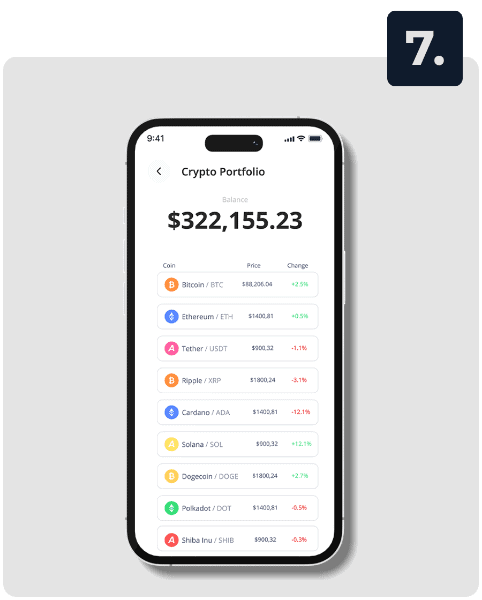
Your APT is now in your Kraken wallet. You can hold it here, stake it for approximately 2.6% APY (reduced from 5.19% after the March 2026 governance vote), or withdraw it to a personal wallet like Petra. If you plan to use Aptos DeFi protocols like Decibel (perpetuals exchange) or interact with BlackRock BUIDL tokenised assets on Aptos, you will need APT in a self-custody wallet.
What Is Aptos (APT)?
Aptos is built around the Move programming language – a smart contract language originally developed at Meta specifically for blockchain applications. Move treats digital assets as unique “resources” that cannot be duplicated by code errors, providing strong safety guarantees that prevent entire classes of vulnerabilities common in Solidity-based contracts. The Move Prover, a formal verification tool, allows developers to mathematically prove that their smart contracts behave as intended. Sui (built by another ex-Meta team) uses a different version of Move, but the languages share the same theoretical foundations.
Aptos’s most distinctive technical feature is Block-STM – a parallel execution engine that processes transactions simultaneously rather than sequentially. Most blockchains (including Ethereum) execute transactions one at a time, which limits throughput. Block-STM optimistically runs transactions in parallel, then validates them post-execution and re-runs any that conflicted. This achieves theoretical throughput of 160,000+ TPS, with current real-world capacity around 30,000 TPS – far higher than Ethereum’s ~15 TPS. Aptos uses AptosBFT consensus (currently version 4), a Byzantine Fault-Tolerant Proof-of-Stake mechanism derived from DiemBFT.
In 2026, Aptos has gained significant institutional traction. BlackRock’s BUIDL tokenised treasury fund and Franklin Templeton both settle tokenised assets on Aptos. Decibel – a perpetuals exchange developed by Aptos Labs – launched on mainnet in February 2026 with $58 million in pre-deposits. The network processes nearly 10 million daily transactions with fees around $0.00007 each. Petra Wallet (developed by Aptos Labs) is the primary self-custody option, supported alongside other multi-chain wallets like OKX Wallet.
March 2026 brought two transformative changes for Aptos. On March 1, the community ratified Proposal 183, which introduced a hard supply cap of 2.1 billion APT (transitioning from inflationary to deflationary mechanics), permanently burned all gas fees, and cut staking rewards from 5.19% to 2.6%. On March 17, the SEC and CFTC jointly classified APT as a “digital commodity” – one of 16 cryptocurrencies including Bitcoin, Ethereum, and Solana – removing the regulatory overhang that had kept institutional allocators on the sidelines. The 4-year VC vesting schedule from the original 2022 launch ends in October 2026, reducing structural sell pressure by approximately 60% after that date.
Aptos Price & Market Overview
Before buying APT, here are the key numbers to understand the size, liquidity, and structure of the Aptos market. Always check the live price on Kraken or CoinGecko before placing your order.
| Metric | Data (March 2026) |
|---|---|
| Current Price | ~$0.85 (check live on Kraken) |
| Market Cap | ~$700M – $830M |
| CoinGecko / CMC Rank | #67 – #71 |
| 24h Trading Volume | $45M – $80M |
| Circulating Supply | ~794 million APT |
| Max Supply | 2.1 billion APT (hard cap introduced March 1, 2026) |
| All-Time High (ATH) | $19.92 – January 26, 2023 |
| All-Time Low (ATL) | $0.7942 – February 23, 2026 |
| Blockchain | Own Layer 1 – Proof-of-Stake (AptosBFT v4) with Block-STM parallel execution |
| Throughput | ~30,000 TPS (real-world); 160,000+ TPS (benchmark) |
| Average Fee | ~$0.00007 per transaction |
| Daily Transactions | ~10 million |
| Smart Contract Language | Move (originally developed at Meta for Diem) |
| Founders | Mo Shaikh and Avery Ching (ex-Meta Diem team) |
| Funding Raised | ~$400M (a16z, Binance Labs, Multicoin, Jump, Franklin Templeton, others) |
| Staking Yield | ~2.6% APY (reduced from 5.19% in March 2026) |
| Regulatory Status | Digital commodity (SEC/CFTC joint classification – March 17, 2026) |
| Key Adoption | BlackRock BUIDL, Franklin Templeton, Decibel perpetuals exchange |
| Listed On | 100+ exchanges including Kraken, Binance, Coinbase, OKX, KuCoin, Gate |
Aptos Tokenomics – How the Supply Works
Aptos’s tokenomics changed fundamentally in March 2026. After three years as an inflationary token with continuous new supply, Proposal 183 introduced a hard supply cap, gas fee burns, and reduced staking rewards – shifting Aptos toward a deflationary model.
| Component | Amount | What This Means |
|---|---|---|
| Max Supply (NEW) | 2.1 billion APT | Hard cap introduced March 1, 2026 via Proposal 183 – no more than 2.1 billion APT will ever exist |
| Initial Total Supply (2022) | 1 billion APT | Created at mainnet launch on October 17, 2022 |
| Circulating Supply | ~794 million APT | Approximately 38% of the new max supply is currently in circulation |
| Locked Supply | ~1.6 billion APT | Subject to vesting schedules including the 4-year VC lockup ending October 2026 |
| Community Allocation | 51% | ~80% held by Aptos Foundation, ~20% by Aptos Labs – unlocked monthly over 10 years |
| Core Contributors | 19% | Subject to 4-year vesting schedule from October 2022 – fully vested October 2026 |
| Investors | 13.5% | VC backers (a16z, Multicoin, Jump, etc.) – same 4-year vesting schedule ending October 2026 |
| Foundation | 16.5% | Aptos Foundation operational reserves |
| Gas Fee Burns (NEW) | 100% of gas fees burned | Permanent burn of all transaction fees – introduced March 2026 as part of Proposal 183 |
| Staking Yield (NEW) | ~2.6% APY | Cut from 5.19% in March 2026 to slow inflation and incentivise productive use of APT |
Best Exchanges to Buy Aptos in 2026
While Kraken is our recommended platform, APT is widely available across major exchanges. Your best option depends on your location, preferred payment method, and whether you want staking access.
| Exchange | Fee | Min. Buy | Payment Methods | KYC | Best For |
|---|---|---|---|---|---|
| Kraken | 0.16%-0.26% | $10 | Bank Transfer, Card, ACH, Apple Pay, Google Pay | Yes | Beginners – US, UK, EU; built-in APT staking |
| Binance | 0.10% | $10 | Card, Bank, P2P, Apple Pay, Google Pay | Yes | Highest global APT volume; lowest fees |
| OKX | 0.08%-0.10% | $10 | Card, Bank, P2P | Yes | Most active APT/USDT trading pair globally |
| Coinbase | 0.40%-0.60% | $1 | Card, Bank Transfer, Apple Pay, PayPal (US) | Yes | Simplest UI; US-regulated |
| KuCoin | 0.10% | $1 | Card, Bank Transfer | Yes | Low minimum buy; popular for APT trading |
| Decibel (Aptos DEX) | ~0.05% perpetuals | No minimum | Aptos wallet only | No KYC | Native Aptos perpetuals exchange built by Aptos Labs |
How to Store Aptos Safely
Once you have bought APT, where you keep it matters. Leaving tokens on an exchange exposes you to platform risk. For anything you plan to hold long term, transferring APT to a personal wallet is the safer choice.
Option 1 – Exchange Wallet (Convenient, Lower Security)
Your APT stays in your Kraken or Binance account. The exchange holds the private keys on your behalf. Fine for active traders. Not recommended for long-term holding.
Option 2 – Software Wallet (Free, Self-Custody)
You control the private keys. Aptos has dedicated wallets that handle staking, voting, and dApp interactions.
| Wallet | Platform | Best For |
|---|---|---|
| Petra Wallet | Browser extension + iOS + Android | Official Aptos wallet developed by Aptos Labs. Full support for staking, NFTs, dApps, and the Aptos ecosystem. The default choice for Aptos users. |
| OKX Wallet | Browser extension + iOS + Android | Multi-chain wallet with strong Aptos support. Built-in DEX, NFT marketplace, and dApp browser. |
| Pontem Wallet | Browser extension | Aptos-focused wallet with advanced DeFi features and Move smart contract support. |
| Martian Wallet | Browser extension + iOS + Android | Popular Aptos and Sui wallet (both Move-based chains) with clean UX and dApp integration. |
Option 3 – Hardware Wallet (Highest Security)
Your private keys are stored on a physical device that never connects to the internet. The gold standard for long-term APT storage.
| Wallet | Price | Best For |
|---|---|---|
| Ledger Nano X | ~$149 | Industry standard; full Aptos support via Petra Wallet integration |
| Ledger Stax / Flex | $279 / $249 | Premium touchscreen hardware wallets; Aptos support included |
Is Aptos a Good Investment in 2026?
Aptos sits at one of the most unusual inflection points in crypto. The token is trading down 95% from its 2023 ATH, but the fundamental picture has shifted more in the past 90 days than in the previous two years combined. Three transformative changes happened in early 2026: Proposal 183 (March 1) introduced a 2.1 billion hard supply cap, gas fee burns, and reduced inflation; the SEC/CFTC joint classification (March 17) made APT a digital commodity alongside Bitcoin and Ethereum; and the 4-year VC vesting cliff completes in October 2026, reducing structural sell pressure by ~60%.
On the fundamentals side, Aptos has genuinely impressive technology: Move programming language with formal verification, Block-STM parallel execution achieving 160,000+ TPS in benchmarks, AptosBFT consensus, and ~10 million daily transactions at $0.00007 per transaction. Institutional adoption is accelerating with BlackRock BUIDL, Franklin Templeton tokenised assets, and the launch of Decibel perpetuals exchange ($58M pre-deposits) in February 2026. The original team’s pedigree (ex-Meta Diem engineers) and strong VC backing ($400M raised from a16z, Binance Labs, Multicoin, Jump) provide additional credibility.
However, Aptos faces real challenges. Despite strong on-chain metrics, the network has not produced a “killer app” that drives users to choose Aptos over alternatives. Solana processes 50-100 million daily transactions (5-10x more than Aptos). Sui shares the same Move language architecture and has been gaining developer mindshare. Ethereum L2s have vastly more TVL and liquidity. Aptos is technically impressive but tech advantage alone does not drive price – it needs ecosystem traction. The October 2026 vesting cliff is also a double-edged sword: while it reduces post-October sell pressure, the months leading up to it could see continued selling from investors taking profit before the unlock.
APT Price Scenarios for 2026
| Scenario | Price Range | What Would Need to Happen |
|---|---|---|
| Bearish | $0.50 – $0.80 | October vesting cliff brings continued selling, ecosystem fails to compete with Sui/Solana, broader crypto winter |
| Base Case | $0.85 – $1.80 | Hard cap narrative takes hold, October cliff passes, Decibel and DeFi grow steadily, stable macro |
| Bullish | $2.50 – $5.00 | Bitcoin bull run, killer app emerges, BlackRock/Franklin TVL grows significantly, deflationary mechanism kicks in |
| ATH Retest | $10 – $20+ | Full crypto super-cycle, Aptos becomes default Move ecosystem leader, institutional inflows accelerate |
Price scenarios are based on analyst estimates and historical data. They are not financial advice. Crypto markets are highly unpredictable.
Key Risks to Understand Before You Buy
- 95% drawdown from ATH – APT peaked at $19.92 in January 2023 and has been in a sustained downtrend since. The 3-year underperformance is one of the worst among major Layer 1 chains.
- Heavy unlock schedule until October 2026 – monthly token unlocks continue to add sell pressure until the 4-year VC vesting cliff completes in October 2026.
- Intense L1 competition – Solana (5-10x more transactions), Sui (same Move language), and Ethereum L2s all compete for the same DeFi and developer mindshare.
- No killer app yet – despite impressive technology, Aptos has not produced a defining application that creates organic user demand. Decibel is an early test of whether Aptos Labs can drive its own ecosystem.
- Reduced staking yield – the cut from 5.19% to 2.6% APY in March 2026 may reduce demand from yield-focused stakers, even though it improves long-term tokenomics.
- Modest market cap – APT’s $700M-$830M market cap is small compared to other commodity-classified chains (BTC, ETH, SOL all in tens or hundreds of billions). Less liquidity means more volatility.
- Move language adoption uncertainty – Move is technically superior to Solidity in many ways, but Solidity has years of tooling, libraries, and developer familiarity. Move adoption is split between Aptos and Sui.
How to Sell Aptos
Selling APT on Kraken is just as straightforward as buying it. Here is the complete step-by-step process:
- 1Log in to Kraken
Go to your Spot Wallet to confirm your current APT balance and the live market price.
- 2Unstake (If Applicable)
If your APT is staked, you will need to unstake it first. Aptos has a short unbonding period for on-chain staking. Exchange staking on Kraken/Binance is typically faster.
- 3Click “Sell”
Navigate to the Sell section in the main menu and search for APT in the asset list.
- 4Choose Your Trading Pair
Select the currency you want to receive – USD, EUR, GBP, or USDT depending on your preference.
- 5Enter the Amount to Sell
Type either an APT amount or a target cash value. Kraken will show your estimated proceeds after fees.
- 6Review and Confirm
Check the sell price, transaction amount, and fee. Click “Sell Now” to execute.
- 7Withdraw to Your Bank
Your cash balance appears in your Kraken account immediately. Go to Funding – Withdraw to transfer to your bank.
Questions & Answers

Aptos is a high-performance Layer 1 blockchain founded by ex-Meta Diem engineers Mo Shaikh and Avery Ching. It uses the Move programming language (originally developed at Meta) and Block-STM parallel execution to achieve 160,000+ TPS in benchmarks. Aptos is popular because of its strong technical fundamentals, institutional partnerships (BlackRock BUIDL, Franklin Templeton), the recent SEC commodity classification (March 17, 2026), and the introduction of a 2.1 billion hard supply cap with deflationary mechanics.
For most users, Kraken offers the best balance of security, fees, and ease of use with built-in APT staking. Binance has the highest global APT trading volume at 0.10% fees. OKX hosts the most active APT/USDT trading pair. APT is listed on 100+ exchanges globally.
As of March 2026, APT trades at approximately $0.85. Kraken allows purchases from as little as $10. Always check the live APT price on Kraken or CoinGecko before buying.
Move is a smart contract programming language originally developed at Meta for the Diem (formerly Libra) blockchain project. Unlike Ethereum’s Solidity, Move treats digital assets as unique “resources” that cannot be duplicated by code errors, providing strong safety guarantees. The Move Prover allows formal verification of smart contracts. Both Aptos and Sui (built by another ex-Meta team) use Move, though with different implementations.
Block-STM is Aptos’s parallel execution engine. Most blockchains process transactions one at a time (sequentially). Block-STM optimistically runs transactions in parallel, then validates them after execution and re-runs any that conflicted. This allows Aptos to achieve theoretical throughput of 160,000+ TPS, with current real-world capacity around 30,000 TPS – far higher than Ethereum’s ~15 TPS.
Yes. You can stake APT to earn approximately 2.6% APY (reduced from 5.19% in March 2026 as part of the new tokenomics). Staking is available directly on Kraken, Binance, and most major exchanges, or through wallets like Petra. Aptos uses Delegated Proof-of-Stake where you delegate your APT to validators who run the network.
Both Aptos and Sui were created by ex-Meta engineers from the Diem project, and both use the Move programming language. However, they took different technical paths after the split. Aptos uses Block-STM for parallel execution and AptosBFT consensus. Sui uses object-centric data modelling and Mysticeti consensus. Sui has gained more developer mindshare and DeFi traction since launch, while Aptos has stronger institutional partnerships (BlackRock, Franklin Templeton). Both compete in the same Move ecosystem niche.
Buying APT through a regulated exchange like Kraken is safe from a platform perspective. The Aptos network has operated since October 2022 with no fundamental security failures. The SEC and CFTC classified APT as a digital commodity in March 2026. The risk is market volatility – APT is down 95% from its 2023 ATH. Only invest what you can afford to lose.
Aptos has experienced major fundamental shifts in 2026 (hard supply cap, gas burns, SEC commodity classification, October vesting cliff approaching). The technology is impressive and institutional adoption is real. However, the price has been crushed for 3+ years and the network needs to prove it can attract users in a competitive L1 landscape. We provide education, not financial advice. APT is best suited for the speculative satellite portion of a portfolio (1-3% allocation), not the core.
On March 17, 2026, the SEC and CFTC jointly classified APT as a “digital commodity” – one of 16 cryptocurrencies including Bitcoin, Ethereum, and Solana. This means spot APT markets fall under CFTC jurisdiction (not the SEC), and staking APT is not considered a securities transaction. The classification removes regulatory uncertainty and enables institutional access from regulated wealth managers and asset allocators.





Grow your portfolio.
Buy CRYPTO today