How to Buy Monero – Step-by-Step Guide (2026)

How to Buy Monero on Kraken

Step 1: Create Your Free Kraken Account
Sign up at kraken.com by entering your email address and selecting your country of residence. Complete the identity verification (KYC) process by uploading a government-issued ID and a selfie. Note that Monero is restricted in many jurisdictions – check Kraken’s supported assets page for your country before proceeding.
Step 2: Deposit Funds
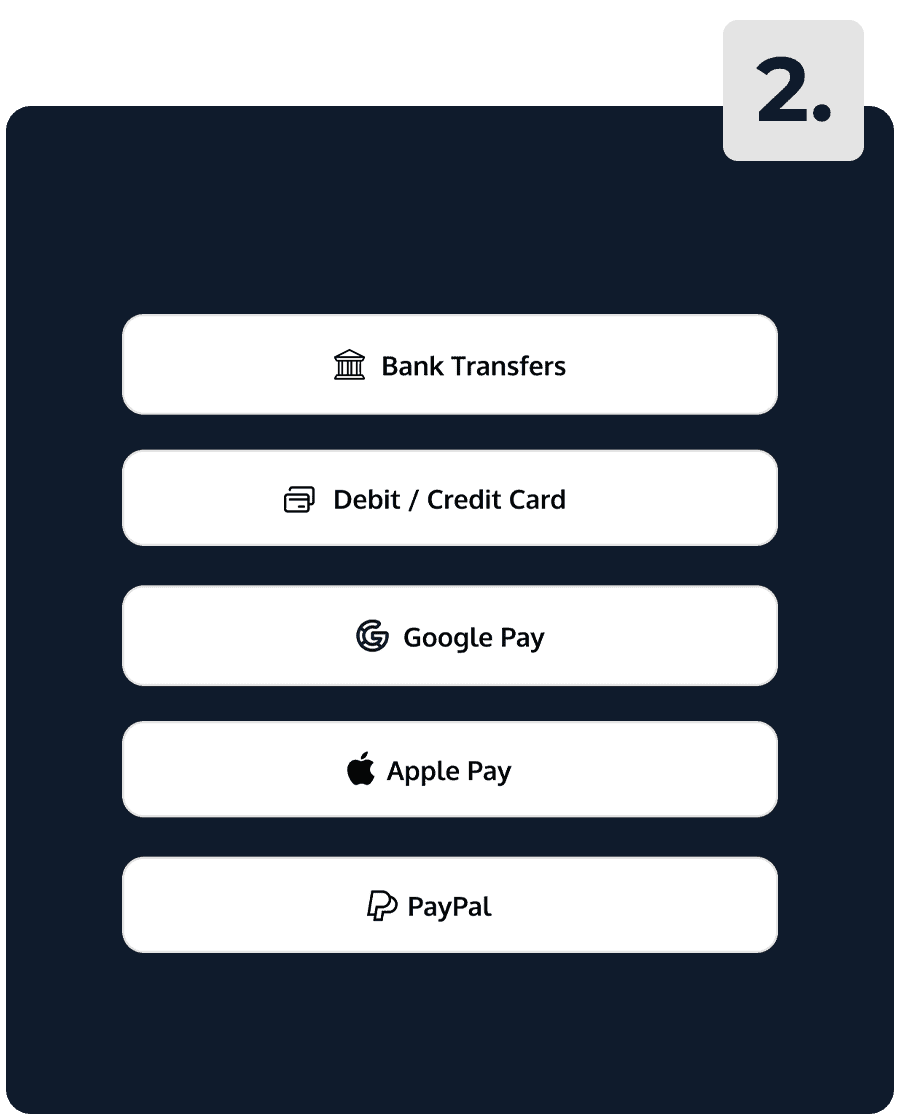
Add money to your Kraken account. US users can deposit via ACH (free, 1-3 days) or wire transfer. Canadian users can use Interac e-Transfer. Australian users can use PayID and Osko. Debit/credit cards are also available for instant deposits with higher fees (3.75%+). For larger XMR purchases, bank transfer is the cheapest option.

Step 3: Go to “Buy Crypto”
Click “Buy Crypto” on the Kraken website or tap it in the mobile app. This opens the simple buying interface designed for beginners.

Step 4: Search for Monero (XMR)
Type “Monero” or “XMR” in the search bar. If XMR does not appear, your jurisdiction does not currently support Monero trading on Kraken – skip to the alternative methods below. If available, choose the XMR/USD pair (or XMR/USDT for stablecoin trading).

Step 5: Enter Your Purchase Amount
Enter how much you want to spend in your local currency (minimum $10). Kraken will automatically calculate how much XMR you will receive at the current market price. At approximately $340 per XMR, a $100 purchase gives you roughly 0.29 XMR. You can buy fractional amounts – there is no need to purchase a whole Monero.

Step 6: Review and Confirm Your Order
Check the XMR price, total cost including fees, and the amount of XMR you will receive. Kraken shows the full breakdown before you confirm. Once you click “Buy,” the XMR is added to your Kraken account instantly.
Step 7: Withdraw to a Personal Wallet
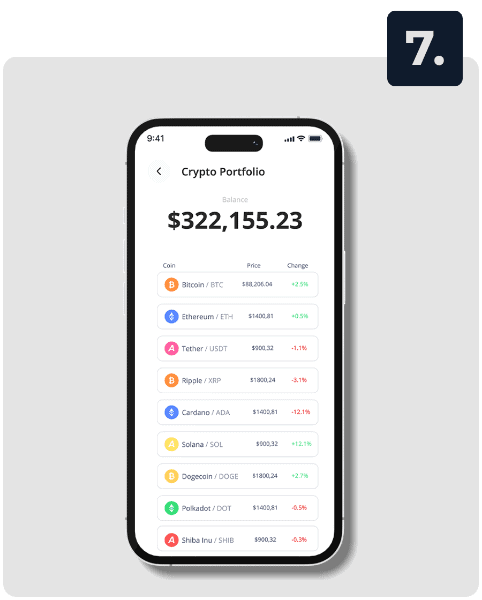
For Monero, withdrawing to a personal wallet is strongly recommended – leaving XMR on a centralised exchange exposes you to delisting risk (your tokens could be force-converted or trapped). Set up a Cake Wallet, Feather Wallet, or the official Monero GUI wallet, then withdraw your XMR. Once in your own wallet, no one can freeze, censor, or seize your Monero – which is the entire point of the asset.
What Is Monero (XMR)?
The Monero project has no CEO, foundation, or central company. It is developed entirely by a global community of volunteer cryptographers and engineers under the Monero Core Team and various working groups. There is no premine, no founder allocation, and no ICO – Monero was distributed entirely through proof-of-work mining starting in 2014. Monero uses RandomX, a CPU-friendly mining algorithm that resists ASIC dominance and ensures that ordinary computers can participate in securing the network. RandomX v2 launched in January 2026 with further improvements to mining decentralisation.
Monero’s privacy protections are mathematical, not legal or institutional. Ring signatures mix your transaction with decoys from other users so observers cannot determine which input is the real sender. Stealth addresses generate a unique one-time address for every transaction so the receiver cannot be linked to their public address. RingCT hides the transaction amount entirely. The combination makes Monero transactions effectively untraceable on-chain. The upcoming FCMP++ (Full-Chain Membership Proofs) upgrade scheduled for Q1 2026 will move Monero from probabilistic obfuscation to mathematically provable untraceability – a major cryptographic milestone.
Monero faces unprecedented regulatory pressure. In 2025, XMR was delisted from approximately 73 centralised exchanges including Binance and Kraken (for EU users) due to MiCA regulations and similar privacy coin restrictions in Japan, South Korea, and other jurisdictions. The EU is on track to fully ban privacy coin custody by 2027. However, this has paradoxically validated Monero’s value proposition – the price increased by 195% year-over-year between 2024 and early 2026, atomic swap technology has matured to allow direct BTC/ETH ↔ XMR exchanges without intermediaries, and US Congressman Warren Davidson has publicly advocated for privacy coin developers. Arizona’s Senate Bill 1649 explicitly names XMR as eligible for the state’s Digital Assets Strategic Reserve Fund.
Monero was NOT included in the SEC/CFTC’s March 17, 2026 digital commodity classification – the regulatory environment for privacy coins remains hostile in much of the Western world. Despite this, daily network activity remains stable and Monero continues to be widely used as private digital cash in regions with surveillance concerns, capital controls, or political instability. Two prominent European institutional custody providers added XMR support in early 2026, signalling a shift in how regulated wealth managers view privacy coins.
Monero Price & Market Overview
Before buying XMR, here are the key numbers to understand the size, liquidity, and structure of the Monero market. Always check the live price on a privacy-friendly exchange or CoinGecko before placing your order.
| Metric | Data (March 2026) |
|---|---|
| Current Price | ~$340 (check live on a Monero-supporting exchange) |
| Market Cap | ~$6.3 billion |
| CoinGecko / CMC Rank | #22 – #28 |
| 24h Trading Volume | $70M – $100M |
| Circulating Supply | ~18.5 million XMR |
| Max Supply | No fixed cap (tail emission of 0.6 XMR per block forever) |
| All-Time High (ATH) | $542 – January 2026 |
| Previous ATH | $517 – May 2021 |
| Blockchain | Own Layer 1 – Proof-of-Work (RandomX v2 – CPU-friendly) |
| Privacy Tech | Ring signatures + Stealth addresses + RingCT (mandatory privacy) |
| Block Time | ~2 minutes |
| 2026 Upgrade | FCMP++ (Full-Chain Membership Proofs) – Q1 2026 |
| Exchanges Delisted (2025) | ~73 (including Kraken EU, Binance, OKX in some regions) |
| Regulatory Status | Not on SEC/CFTC commodity list; banned for custody in EU MiCA framework |
| Founded | April 18, 2014 (decentralised, no founder/CEO) |
| Listed On | ~50 exchanges (down from ~120+ in 2024) |
Monero Tokenomics – How the Supply Works
Monero’s supply model is unique among major cryptocurrencies. Rather than a fixed hard cap like Bitcoin’s 21 million, Monero uses a “tail emission” of 0.6 XMR per block forever – ensuring miners are always incentivised to secure the network without relying solely on transaction fees.
| Component | Amount | What This Means |
|---|---|---|
| Initial Supply | ~18.4 million XMR (main emission) | The main emission curve completed in May 2022 – this distributed the initial supply over 8 years |
| Tail Emission | 0.6 XMR per block forever | After main emission ended, a fixed 0.6 XMR is created per block (~432 XMR per day) to perpetually reward miners |
| Annual Inflation | ~0.85% (decreasing over time) | As the supply grows, the percentage inflation rate steadily decreases toward zero |
| Premine / ICO | None | Monero had no premine, no ICO, no founder allocation – all XMR was distributed through mining starting in April 2014 |
| Mining Algorithm | RandomX v2 (CPU-friendly) | Designed to resist ASICs and maintain mining decentralisation – ordinary computers can mine XMR profitably |
| Block Reward | 0.6 XMR + transaction fees | Miners receive the tail emission plus any fees from transactions in the block |
| Block Time | ~2 minutes | Average time between blocks – faster than Bitcoin (10 min) but slower than newer chains |
| Primary Utility | Private digital cash + fungible store of value | XMR is used for private payments, savings free from surveillance, and as a censorship-resistant asset |
Best Ways to Buy Monero in 2026
Buying Monero in 2026 requires more planning than buying mainstream cryptocurrencies. Many major exchanges have delisted XMR due to privacy coin regulations. Here are the platforms and methods that still work, ranked by accessibility for global users.
| Platform / Method | Fee | Min. Buy | KYC | Region | Best For |
|---|---|---|---|---|---|
| Kraken | 0.16%-0.26% | $10 | Yes | US, Canada, Australia | Regulated exchange access; not available for EU/UK |
| KuCoin | 0.10% | $1 | Yes | Most non-EU regions | One of the few major exchanges still listing XMR globally |
| HTX (Huobi) | 0.10% | $10 | Yes | Asia-focused | Strong Asian liquidity; XMR still listed |
| Atomic Swap (BTC/XMR) | ~0.5% + network fees | No minimum | No KYC | Worldwide | Trustless swap directly from Bitcoin to Monero – most censorship-resistant method |
| Haveno (DEX) | ~0.7% | No minimum | No KYC | Worldwide | Peer-to-peer DEX built specifically for XMR – decentralised alternative |
| Cake Wallet (in-app) | ~1%-2% | No minimum | Varies | Worldwide | Buy XMR directly inside the wallet via integrated providers |
| LocalMonero / RetoSwap | Varies (P2P) | No minimum | No KYC | Worldwide | Peer-to-peer marketplace for buying XMR with cash, bank transfer, or other methods |
How to Store Monero Safely
For Monero, self-custody is even more important than for other cryptocurrencies. Centralised exchanges face ongoing delisting risk, and the entire point of Monero is to give you privacy and control over your own funds. Once your XMR is in a personal wallet, no one can freeze it, seize it, or force its conversion.
Option 1 – Software Wallet (Default Recommendation)
Unlike most cryptocurrencies where exchange storage is a reasonable option, Monero users are strongly encouraged to self-custody. Here are the leading XMR-compatible wallets:
| Wallet | Platform | Best For |
|---|---|---|
| Monero GUI / CLI | Windows + Mac + Linux | Official Monero wallet from the core team. Most secure and feature-complete. GUI version is beginner-friendly; CLI for power users. |
| Cake Wallet | iOS + Android + Desktop | Most popular mobile Monero wallet. Built-in atomic swaps, integrated buying providers, supports MWEB Litecoin and Bitcoin. Excellent UX. |
| Feather Wallet | Windows + Mac + Linux | Lightweight desktop Monero wallet with strong privacy focus. Integrates with Tor by default. Highly recommended for privacy-conscious users. |
| Stack Wallet | iOS + Android + Desktop | Open-source multi-coin wallet with strong Monero support and built-in atomic swap functionality. |
| MyMonero | Web + iOS + Android | Lightweight Monero wallet with simple onboarding. Good for beginners who want quick access. |
Option 2 – Hardware Wallet (Highest Security)
Your private keys are stored on a physical device that never connects to the internet. The gold standard for long-term XMR storage of significant amounts.
| Wallet | Price | Best For |
|---|---|---|
| Ledger Nano X | ~$149 | Industry standard; full Monero support via official Monero wallet integration |
| Trezor Safe 5 | ~$169 | Open-source firmware; native Monero support via Trezor Suite or Monero GUI integration |
Is Monero a Good Investment in 2026?
Monero has the strongest fundamental case of any privacy cryptocurrency. Mandatory privacy by default (not opt-in like Zcash), proven cryptography over 10+ years, no premine or founder allocation, decentralised mining via RandomX, and a tail emission model that solves the long-term miner security budget problem. The 2025 rally was extraordinary – XMR gained 195% in a year while most of crypto struggled, driven by surveillance concerns, capital controls, exchange delistings (which paradoxically validated the demand for privacy), and growing political support including Arizona’s SB 1649 explicitly naming XMR for its strategic reserve.
Recent positive catalysts include the FCMP++ upgrade (Q1 2026) moving Monero to mathematically provable untraceability, RandomX v2 (January 2026) improving mining decentralisation, two European institutional custody providers adding XMR support, US Congressman Davidson publicly defending privacy coin developers, and the maturation of atomic swap technology that makes XMR accessible without centralised exchanges. The Trump administration’s potential pardons for privacy coin developers (Samourai Wallet team) could further legitimise the sector.
However, Monero faces extreme regulatory headwinds. The European Union’s MiCA framework effectively banned privacy coin custody, with full implementation by 2027. Approximately 73 exchanges delisted XMR in 2025 alone, including Binance globally and Kraken in EU. Liquidity has shifted away from centralised platforms toward atomic swaps and decentralised exchanges, which is good for censorship resistance but bad for institutional adoption. A 51% attack incident in 2025 (where the Qubic mining pool briefly captured majority hashrate) raised concerns about Monero’s CPU-mining model and rented hashrate vulnerability. Long-term, quantum computing poses a structural threat to Monero’s elliptic curve cryptography.
XMR Price Scenarios for 2026
| Scenario | Price Range | What Would Need to Happen |
|---|---|---|
| Bearish | $180 – $280 | EU privacy coin ban accelerates, more delistings, additional 51% attack incidents |
| Base Case | $300 – $420 | FCMP++ launches successfully, atomic swap volume grows, stable macro, US privacy advocacy continues |
| Bullish | $450 – $700 | Bitcoin bull run, Trump pardons privacy developers, surveillance crackdowns drive demand, institutional custody expands |
| ATH Retest+ | $542 – $1,000+ | Privacy becomes a major political issue, MiCA reversed, mainstream demand for financial privacy explodes |
Price scenarios are based on analyst estimates and historical data. They are not financial advice. Crypto markets are highly unpredictable.
Key Risks to Understand Before You Buy
- Severe regulatory pressure – Monero is delisted from ~73 major exchanges, banned for custody in the EU under MiCA (full implementation by 2027), and faces hostile regulatory environments in Japan, South Korea, and other jurisdictions.
- Not on SEC commodity list – XMR was NOT included in the March 17, 2026 SEC/CFTC digital commodity classification. The US legal status remains less defined than for Bitcoin or Ethereum.
- 51% attack vulnerability – because Monero uses CPU mining, a well-funded actor can rent enough hashrate to capture majority control. The Qubic incident in 2025 demonstrated this is not a theoretical risk.
- Long-term quantum computing threat – Monero’s elliptic curve cryptography could eventually be broken by quantum computers, potentially deanonymising historical transactions. This is a 10-20+ year horizon risk but exists.
- Liquidity concentration – with most major exchanges delisted, XMR liquidity is increasingly concentrated on a smaller set of platforms and atomic swap routes. This makes large trades more difficult.
- No institutional adoption (yet) – unlike Bitcoin ETFs or Ethereum staking ETFs, no major spot XMR ETF exists or is being seriously considered due to regulatory hostility. Institutional access remains very limited.
- Optics problem – Monero’s privacy features have unfairly associated it with criminal use, even though research consistently shows transparent coins (BTC, ETH) are preferred for crime due to higher liquidity. The reputational headwind affects mainstream adoption.
How to Sell Monero
Selling Monero in 2026 requires choosing between centralised exchanges (where available) and decentralised methods. Here is the process for selling on Kraken (US/Canada/Australia) plus alternative methods:
- 1Send XMR to Your Exchange Wallet
From your Monero wallet, send XMR to your exchange’s deposit address using the Monero network. Confirmations take ~20 minutes (10 confirmations).
- 2Click “Sell” on Kraken
Navigate to the Sell section and search for XMR in the asset list.
- 3Choose Your Trading Pair
Select XMR/USD or XMR/USDT depending on what you want to receive.
- 4Enter the Amount to Sell
Type either an XMR amount or a target cash value. Kraken will show your estimated proceeds after fees.
- 5Review and Confirm
Check the sell price, transaction amount, and fee. Click “Sell Now” to execute.
- 6Withdraw to Your Bank
Your cash balance appears in your Kraken account immediately. Go to Funding – Withdraw to transfer to your bank.
Questions & Answers

Monero is the leading privacy-focused cryptocurrency, launched in 2014. It uses ring signatures, stealth addresses, and Ring Confidential Transactions (RingCT) to make all transactions private and untraceable by default – unlike Bitcoin where every transaction is publicly visible. Monero is popular because it offers true financial privacy, mandatory fungibility (every coin is indistinguishable), no premine or founder allocation, decentralised CPU mining, and over 10 years of proven cryptographic security. It is the closest digital equivalent to physical cash.
Monero has been delisted from many major exchanges due to privacy regulations. Available options include: Kraken (for US, Canada, Australia users only), KuCoin, HTX (Huobi), Cake Wallet’s in-app buying integrations, atomic swaps from Bitcoin (using Cake Wallet, Feather Wallet, or Stack Wallet), Haveno decentralised exchange, and P2P platforms like RetoSwap. EU and UK users typically need to use atomic swaps or P2P methods.
Privacy coins have faced increasing regulatory pressure since 2024. The EU’s Markets in Crypto-Assets (MiCA) framework effectively bans custodial services from holding privacy coins, with full implementation by 2027. Japan, South Korea, and Australia have similar restrictions. Approximately 73 exchanges delisted XMR in 2025 alone, including Binance globally and Kraken for EU users. The reasoning is that privacy coins make compliance with anti-money-laundering rules difficult. Paradoxically, the delistings have validated Monero’s value proposition and contributed to its 195% price rally in 2025.
As of March 2026, XMR trades at approximately $340. The price reached an all-time high of $542 in January 2026. You can buy fractional amounts – even $50 will give you a meaningful position. Always check the live XMR price on a Monero-supporting exchange or CoinGecko before buying.
An atomic swap is a peer-to-peer cryptocurrency exchange that uses smart contracts (specifically hash time-locked contracts) to ensure that both parties either complete the trade or both get their original coins back – no trusted third party required. For Monero, atomic swaps allow you to exchange Bitcoin directly for XMR without using any centralised exchange. Cake Wallet, Feather Wallet, and Stack Wallet all support atomic swaps natively. This technology is the reason Monero remains accessible despite mass exchange delistings.
Monero requires a dedicated wallet that supports the Monero network. Top choices: Cake Wallet (best mobile experience, built-in atomic swaps), Monero GUI/CLI (official wallet from the core team), Feather Wallet (lightweight desktop with Tor integration), or Stack Wallet (multi-coin with atomic swaps). For maximum security, use a Ledger or Trezor hardware wallet paired with the Monero GUI. Do not use generic multi-coin wallets like MetaMask – they do not support Monero.
Like all cryptocurrencies (and like cash), Monero can be used for illicit purposes. However, research consistently shows that transparent cryptocurrencies (Bitcoin, Ethereum) are preferred for criminal activity because they have far higher liquidity. Multiple studies estimate that less than 1% of all cryptocurrency transactions are illicit, and Monero represents only a tiny fraction of those. The vast majority of Monero users are privacy-conscious individuals, journalists, activists, businesses protecting trade secrets, and people in surveillance-heavy jurisdictions. Treating Monero as inherently criminal is like treating cash as inherently criminal.
Buying XMR from a reputable exchange or using mature atomic swap tools is safe from a technical perspective. The Monero network has operated since 2014 with no fundamental cryptographic failures. However, Monero faces unique risks: severe regulatory pressure (EU ban by 2027), mass exchange delistings, occasional 51% attack incidents, long-term quantum computing concerns, and the fact that XMR was not included in the SEC/CFTC commodity classification. Only invest what you can afford to lose.
Monero has the strongest fundamental case of any privacy cryptocurrency and was the best-performing major crypto in 2025 (gaining 195%). Mandatory privacy, no premine, decentralised mining, and the tail emission model are genuine strengths. However, the regulatory environment is hostile, no spot ETF exists, and accessing XMR requires more effort than mainstream coins. We provide education, not financial advice. XMR is best suited for investors who specifically value financial privacy and are willing to use self-custody and atomic swaps.
Both are privacy coins, but they differ fundamentally. Monero has mandatory privacy by default – every transaction is private. Zcash has optional privacy – users can choose between transparent and shielded transactions, and most ZEC transactions are actually transparent. This means Monero offers stronger fungibility (every coin is indistinguishable), while Zcash offers more flexibility for compliance use cases. Monero uses ring signatures + stealth addresses + RingCT; Zcash uses zk-SNARKs (more cryptographically advanced but with optional privacy). Monero is more decentralised (no founder, no company); Zcash has the Electric Coin Company and Zcash Foundation behind it.





Grow your portfolio.
Buy CRYPTO today