How to Buy Tron – Step-by-Step Guide (2026)
How to Buy Tron on Kraken

Step 1: Create Your Free Kraken Account
Sign up at kraken.com by entering your email address and selecting your country of residence. Complete the identity verification (KYC) process by uploading a government-issued ID and a selfie. This typically takes a few minutes and unlocks full buying and trading access.
Step 2: Deposit Funds
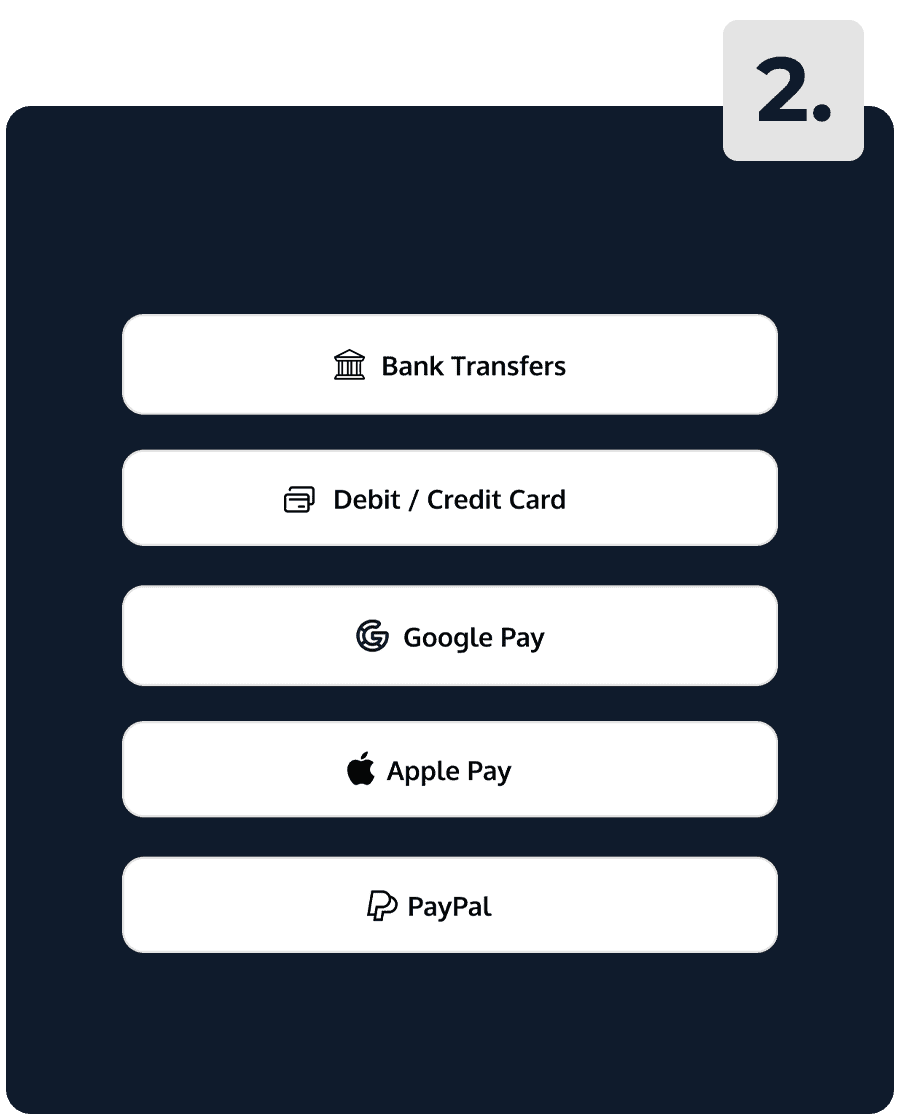
Add money to your Kraken account. US users can deposit via ACH (free, 1-3 days) or wire transfer. UK users can use Faster Payments (free, instant). EU users can use SEPA (free, same day). Debit/credit cards, Apple Pay, and Google Pay are also available for instant deposits – though card fees are higher (3.75%+). For larger TRX purchases, bank transfer is the cheapest option.

Step 3: Go to “Buy Crypto”
Click “Buy Crypto” on the Kraken website or tap it in the mobile app. This opens the simple buying interface designed for beginners – no trading experience needed.

Step 4: Search for Tron (TRX)
Type “Tron” or “TRX” in the search bar and select it from the results. Choose the TRX/USD pair if you deposited US dollars, TRX/EUR for euros, or TRX/GBP for British pounds.

Step 5: Enter Your Purchase Amount
Enter how much you want to spend in your local currency (minimum $10). Kraken will automatically calculate how many TRX tokens you will receive at the current market price. At approximately $0.32 per TRX, a $100 purchase gives you roughly 312 TRX tokens.

Step 6: Review and Confirm Your Order
Check the TRX price, total cost including fees, and the amount of TRX you will receive. Kraken shows the full breakdown before you confirm. Once you click “Buy,” the TRX tokens are added to your Kraken account instantly.
Step 7: Stake or Withdraw Your TRX
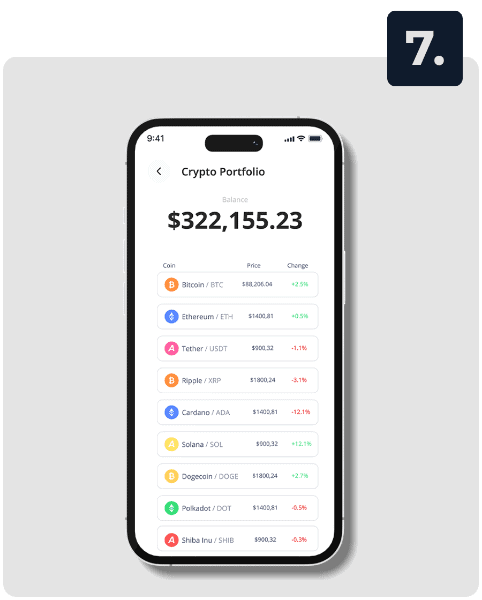
Your TRX is now in your Kraken wallet. You can hold it here, stake it for rewards (typically 4-5% APY), or withdraw it to a personal wallet like TronLink. Tron’s unique resource model means staking TRX gives you “TRON Power” for governance voting plus free bandwidth and energy for transactions. If you plan to send USDT (Tether), Tron is the cheapest network for stablecoin transfers, often costing fractions of a cent.
What Is Tron (TRX)?
Tron’s most significant achievement is its dominance in stablecoin transfers. As of 2026, Tron hosts over $86 billion in TRC-20 USDT and processes approximately 51% of all global USDT-TRC20 transaction volume. This makes Tron one of the most economically active blockchains in crypto by raw transaction value, even though many speculators overlook it. The combination of extremely low fees (typically fractions of a cent), fast transaction times, and 2,000+ TPS throughput makes Tron the preferred network for crypto users sending USDT internationally – particularly in emerging markets.
Tron uses Delegated Proof-of-Stake (DPoS) consensus, where TRX holders vote for 27 “Super Representatives” (SRs) who produce blocks and validate transactions. This model is more energy-efficient than Proof-of-Work and allows for high scalability. Tron’s resource model is unique: instead of paying gas for every transaction, users can freeze (stake) TRX to receive bandwidth and energy, which cover transaction costs. This means heavy users can transact essentially for free after staking – a major advantage for businesses processing high volumes.
Tron’s smart contract platform is fully EVM-compatible, meaning Ethereum dApps can be deployed on Tron with minimal modifications. Major DeFi protocols on Tron include JustLend (lending), SunSwap (DEX), and JustStables. Tron also operates the BitTorrent ecosystem (acquired in 2018) and the USDD algorithmic stablecoin. Recent ecosystem developments include MetaMask adding native Tron support (January 2026), Anchorage Digital adding institutional TRX custody (March 27, 2026), and Tron Inc. – a Nasdaq-listed entity backed by Justin Sun – building a TRX corporate treasury exceeding $200 million.
Tron has also faced significant controversies. Founder Justin Sun has been the subject of SEC charges (filed in 2023, status of which remains under negotiation), accusations of market manipulation, and various community disputes. Tron is sometimes criticised for being heavily centralised – the 27 Super Representative model concentrates power, and Sun himself wields significant influence over the network’s direction. Tron was NOT included in the SEC/CFTC’s March 17, 2026 digital commodity classification, leaving its US regulatory status less defined than competitors like Bitcoin, Ethereum, and Solana.
Tron Price & Market Overview
Before buying TRX, here are the key numbers to understand the size, liquidity, and structure of the Tron market. Always check the live price on Kraken or CoinGecko before placing your order.
| Metric | Data (March 2026) |
|---|---|
| Current Price | ~$0.32 (check live on Kraken) |
| Market Cap | ~$30 billion |
| CoinGecko / CMC Rank | #8 |
| 24h Trading Volume | $425M – $550M |
| Circulating Supply | ~95 billion TRX |
| Max Supply | No fixed cap (inflationary, but offset by burn mechanisms) |
| All-Time High (ATH) | $0.4313 – January 2018 |
| All-Time Low (ATL) | $0.001804 – November 2017 |
| Blockchain | Own Layer 1 – Delegated Proof-of-Stake (DPoS) with 27 Super Representatives |
| Throughput | ~2,000 TPS |
| Resource Model | Bandwidth + Energy (stake TRX for free transactions) |
| USDT Hosted | ~$86 billion (51% of global USDT-TRC20 volume) |
| Daily Network Fees | ~$7.6M (one of the highest revenue blockchains) |
| Founder | Justin Sun |
| Regulatory Status | Not on SEC/CFTC March 2026 commodity list; SEC charges from 2023 still pending |
| Listed On | 250+ exchanges including Kraken, Binance, OKX, HTX, Bybit, Coinbase |
Tron Tokenomics – How the Supply Works
TRX has no fixed maximum supply, but the network includes mechanisms that burn TRX during transactions, partially offsetting issuance. Here is how the supply structure works:
| Component | Amount | What This Means |
|---|---|---|
| Circulating Supply | ~95 billion TRX | All actively circulating; Tron has no locked vesting schedule |
| Max Supply | No fixed cap | Unlimited – new TRX is created as block rewards for Super Representatives |
| Original Supply | 100 billion TRX (2017 ICO) | Tron raised $70 million in its September 2017 ICO at $0.0019 per TRX |
| Block Reward | ~16 TRX per block | Distributed to Super Representatives and witnesses for producing blocks |
| Burn Mechanism | TRX burned for transaction energy | When users without staked resources transact, TRX is consumed and removed from supply |
| Net Supply Change | Approximately deflationary in 2026 | USDT-TRC20 transaction volume burns enough TRX to often exceed new issuance, making TRX net deflationary |
| Staking Yield | ~4%-5% APY | Earned by freezing TRX to vote for Super Representatives |
| Primary Utility | Resources + governance + payments | TRX is staked for bandwidth/energy, used to vote for SRs, and burned during transactions |
Best Exchanges to Buy Tron in 2026
While Kraken is our recommended platform, TRX is one of the most universally listed cryptocurrencies. Your best option depends on your location, preferred payment method, and whether you want staking access.
| Exchange | Fee | Min. Buy | Payment Methods | KYC | Best For |
|---|---|---|---|---|---|
| Kraken | 0.16%-0.26% | $10 | Bank Transfer, Card, ACH, Apple Pay, Google Pay | Yes | Beginners – US, UK, EU; built-in TRX staking |
| Binance | 0.10% | $10 | Card, Bank, P2P, Apple Pay, Google Pay | Yes | Highest global TRX volume; lowest fees |
| OKX | 0.08%-0.10% | $10 | Card, Bank, P2P | Yes | Most active TRX/USDT trading pair globally |
| HTX (Huobi) | 0.10% | $10 | Card, Bank, P2P | Yes | Strong Asian market access; founded by Justin Sun’s network |
| Coinbase | 0.40%-0.60% | $1 | Card, Bank Transfer, Apple Pay, PayPal (US) | Yes | Simplest UI; US regulated |
| SunSwap (DEX) | 0.3% swap | No minimum | Tron wallet only | No KYC | Native Tron DEX; swap TRX for ecosystem tokens directly |
How to Store Tron Safely
Once you have bought TRX, where you keep it matters. Leaving tokens on an exchange exposes you to platform risk. For anything you plan to hold long term, transferring TRX to a personal wallet is the safer choice.
Option 1 – Exchange Wallet (Convenient, Lower Security)
Your TRX stays in your Kraken or Binance account. The exchange holds the private keys on your behalf. Fine for active traders and convenient for simplified staking. Not recommended for long-term holding of significant amounts.
Option 2 – Software Wallet (Free, Self-Custody)
You control the private keys. Tron has dedicated wallets that handle staking, governance voting, and resource management.
| Wallet | Platform | Best For |
|---|---|---|
| TronLink | Browser extension + iOS + Android | Official Tron wallet. Full support for staking, voting, resource management, and Tron dApps. The default choice for the Tron ecosystem. |
| MetaMask | Browser extension + iOS + Android | As of January 2026, MetaMask added native Tron support including TRX, TRC-20 trading, and (coming soon) staking. |
| Trust Wallet | iOS + Android | Multi-chain mobile wallet with Tron support including TRC-20 USDT for cheap stablecoin transfers. |
| Klever Wallet | iOS + Android | Multi-chain wallet with strong Tron support and built-in swap functionality. |
Option 3 – Hardware Wallet (Highest Security)
Your private keys are stored on a physical device that never connects to the internet. The gold standard for long-term TRX storage.
| Wallet | Price | Best For |
|---|---|---|
| Ledger Nano X | ~$149 | Industry standard; Bluetooth; full Tron support including TRC-20 tokens via Ledger Live |
| Ledger Stax / Flex | $279 / $249 | Premium touchscreen hardware wallets; Tron support included |
| Trezor Safe 5 | ~$169 | Open-source firmware; Tron support via third-party integrations |
Is Tron a Good Investment in 2026?
Tron has one of the most unique investment cases in crypto. Unlike most altcoins that trade 70-95% below their all-time highs, TRX is only 26% below its peak – reflecting strong sustained network activity rather than speculative cycles. Tron’s dominance in stablecoin transfers ($86 billion in USDT, 51% of global USDT-TRC20 volume) generates approximately $7.6 million in daily protocol fees – one of the highest fee revenues of any blockchain. Combined with the TRX burn mechanism, this has made Tron net deflationary in recent years despite having no supply cap.
2026 catalysts include MetaMask native integration (January), Anchorage Digital institutional custody (March 27), Tron Inc.’s growing $200M+ corporate treasury, the rumoured Mastercard partnership for instant TRX/USDT conversions, and continued growth in global stablecoin payments. Tron’s resource model (stake for free transactions) makes it uniquely cost-effective for businesses processing high transaction volumes.
However, Tron carries significant risks. Founder Justin Sun has been the subject of SEC charges since 2023 for alleged unregistered securities offerings and market manipulation, and the case remains unresolved. Tron was NOT included in the SEC/CFTC’s March 17, 2026 digital commodity classification, leaving its US legal status more uncertain than competitors. The 27 Super Representative model is significantly more centralised than Bitcoin or Ethereum. Sun’s history of controversies (including the BitTorrent acquisition aftermath, USDD stablecoin questions, and various regulatory issues in different jurisdictions) creates ongoing reputational risk.
TRX Price Scenarios for 2026
| Scenario | Price Range | What Would Need to Happen |
|---|---|---|
| Bearish | $0.20 – $0.28 | SEC case escalates, USDT migration to other chains, broader crypto winter |
| Base Case | $0.30 – $0.40 | Stablecoin volume continues, MetaMask + Anchorage integrations drive adoption, stable macro |
| Bullish | $0.45 – $0.80 | Bitcoin bull run, USDT volume reaches new highs, Mastercard integration delivers, SEC case resolves favourably |
| ATH Retest+ | $1.00 – $1.50 | Full crypto super-cycle, Tron becomes default global payment chain, institutional inflows accelerate |
Price scenarios are based on analyst estimates and historical data. They are not financial advice. Crypto markets are highly unpredictable.
Key Risks to Understand Before You Buy
- SEC charges against Justin Sun – the SEC filed charges against Sun and Tron entities in 2023 for alleged unregistered securities offerings and market manipulation. The case remains unresolved and creates ongoing regulatory uncertainty.
- Not on SEC commodity list – TRX was NOT included in the March 17, 2026 SEC/CFTC digital commodity classification, unlike Bitcoin, Ethereum, Solana, Cardano, and 11 others.
- Heavy centralisation – the 27 Super Representative model concentrates power among a small group of validators. Justin Sun himself wields significant influence over network direction.
- Founder controversy – Justin Sun has been involved in numerous controversies including the BitTorrent acquisition aftermath, USDD stablecoin design questions, and various regulatory disputes. Reputational risk impacts price.
- USDT migration risk – Tron’s value is heavily tied to USDT volume. If Tether shifts focus to other chains (Ethereum, Solana, TON), Tron’s network activity could decline significantly.
- USDD stablecoin concerns – Tron’s algorithmic stablecoin USDD has faced volatility and depegging events. While over-collateralised (unlike Terra’s UST), it remains a risk factor for the broader Tron ecosystem.
- Phishing scam target – Tron’s low fees make it a prime target for mass-scale phishing attacks (including the FBI-warned fake “FBI token” scam from March 2026).
How to Sell Tron
Selling TRX on Kraken is just as straightforward as buying it. Here is the complete step-by-step process:
- 1Log in to Kraken
Go to your Spot Wallet to confirm your current TRX balance and the live market price.
- 2Unfreeze Staked TRX (If Applicable)
If your TRX is frozen for staking/voting, you will need to unfreeze it first. There is typically a short cooldown period (usually 14 days for the standard unfreeze).
- 3Click “Sell”
Navigate to the Sell section in the main menu and search for TRX in the asset list.
- 4Choose Your Trading Pair
Select the currency you want to receive – USD, EUR, GBP, or USDT depending on your preference and location.
- 5Enter the Amount to Sell
Type either a TRX amount or a target cash value. Kraken will show your estimated proceeds after fees in real time.
- 6Review and Confirm
Check the sell price, transaction amount, and fee on the confirmation screen. Click “Sell Now” to execute.
- 7Withdraw to Your Bank
Your cash balance appears in your Kraken account immediately. Go to Funding – Withdraw to transfer to your bank. Most withdrawals complete within 1-3 business days.
Questions & Answers

Tron is a Layer 1 blockchain founded by Justin Sun in 2017, designed for high-throughput stablecoin payments and decentralised applications. It is popular because it hosts approximately 51% of all global USDT-TRC20 transaction volume and over $86 billion in USDT, making it the world’s most-used network for stablecoin transfers. Tron’s extremely low fees, fast transactions, and unique resource model (stake TRX for free transactions) make it the preferred choice for cheap stablecoin transfers.
For most users, Kraken offers the best balance of security, fees, and ease of use. Binance has the highest global TRX trading volume at 0.10% fees. OKX hosts the most active TRX/USDT trading pair. TRX is listed on 250+ exchanges globally.
As of March 2026, TRX trades at approximately $0.32. Kraken allows purchases from as little as $10. Always check the live TRX price on Kraken or CoinGecko before buying.
Tron has become the dominant network for USDT transfers because of three factors: extremely low fees (often fractions of a cent), fast transaction times (3-second blocks), and the unique resource model that lets heavy users transact for free by staking TRX. For users in emerging markets sending USDT internationally, Tron is dramatically cheaper than Ethereum (where USDT transfers can cost $5-$30 in gas) and more accessible than Solana for many wallet ecosystems.
Yes. You can stake (freeze) TRX to earn approximately 4-5% APY plus voting rights for Super Representatives. You also receive bandwidth and energy that can be used for free transactions on the Tron network. Staking is available directly on Kraken, Binance, and most major exchanges, or through wallets like TronLink.
Unlike most blockchains that use gas for every transaction, Tron uses a unique resource model with two components: bandwidth (for transfers) and energy (for smart contracts). Every account gets some free bandwidth daily. For more usage, you can either pay TRX directly or freeze (stake) TRX to receive free bandwidth and energy. This makes Tron highly cost-effective for high-volume users like exchanges and businesses processing many stablecoin transfers.
Buying TRX through a regulated exchange like Kraken is safe from a platform perspective. The Tron network has operated since 2018 with no fundamental security failures. However, Tron faces unique risks: founder Justin Sun is the subject of unresolved SEC charges from 2023, TRX was not included in the SEC/CFTC commodity classification, and the network is more centralised than Bitcoin or Ethereum. Only invest what you can afford to lose.
Tron has the strongest stablecoin payment fundamentals of any altcoin – $86B in USDT, 51% of global USDT-TRC20 volume, $7.6M in daily protocol fees, and net deflationary supply. TRX is only 26% off its 2018 ATH (one of the smallest drawdowns in crypto). However, the unresolved SEC case, centralisation, and founder controversies create real risks. We provide education, not financial advice. TRX is best suited for investors who prioritise utility and revenue over decentralisation.
Justin Sun is the founder of Tron, born in China in 1990. He founded Tron in 2017, raised $70 million in an ICO, and acquired BitTorrent in 2018. He has been involved in numerous controversies including the SEC charges (filed 2023), the USDD stablecoin design, his bid for an ambassadorship to the WTO, and various market-related disputes. He continues to wield significant influence over Tron’s direction despite officially being just an advisor to the Tron DAO.
If you hold TRX on a centralised exchange and the platform experiences temporary downtime, your tokens remain in your account. The more serious risk is exchange insolvency, as seen with FTX in 2022. For anything you intend to hold longer term, transfer your TRX to TronLink, MetaMask, or a Ledger hardware wallet.



Grow your portfolio.
Buy CRYPTO today