How to Buy Polkadot – Step-by-Step Guide (2026)

How to Buy Polkadot on Kraken

Step 1: Create Your Free Kraken Account
Sign up at kraken.com by entering your email address and selecting your country of residence. Complete the identity verification (KYC) process by uploading a government-issued ID and a selfie. This typically takes a few minutes and unlocks full buying, trading, and staking access.
Step 2: Deposit Funds
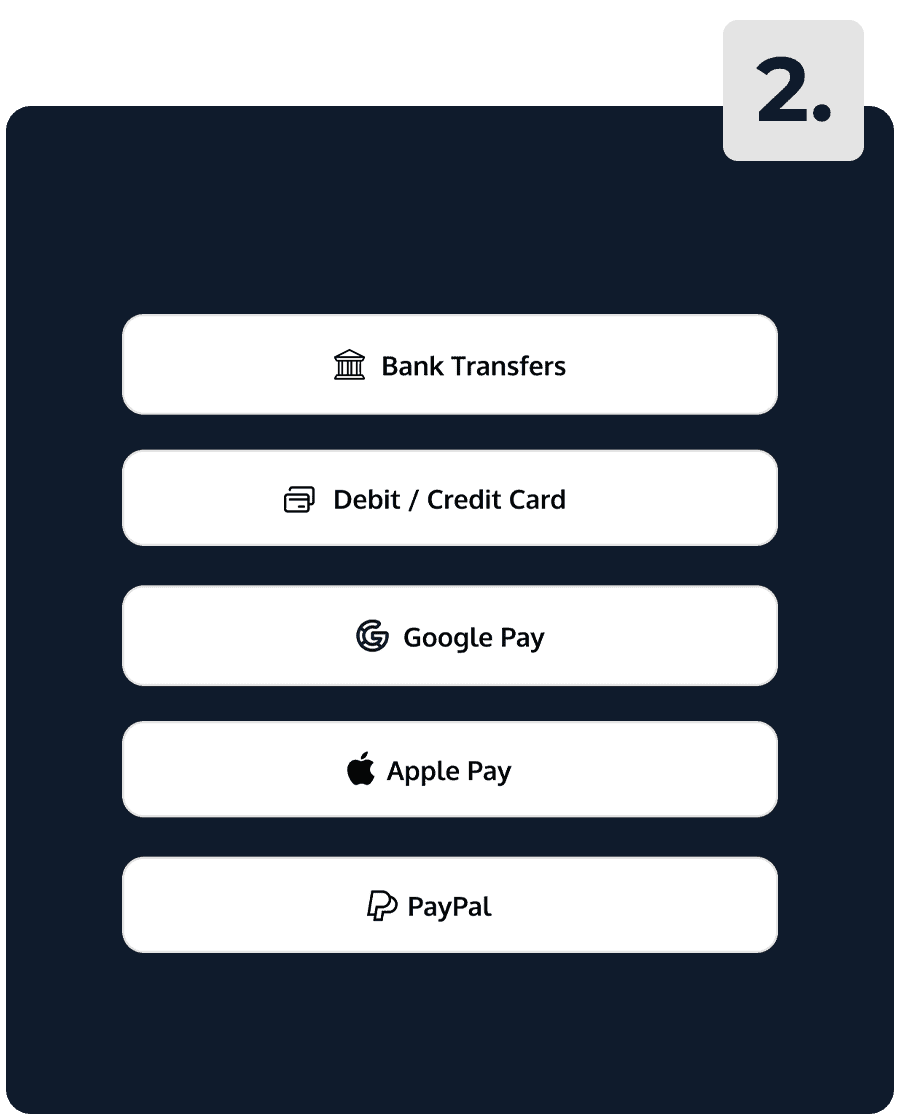
Add money to your Kraken account. US users can deposit via ACH (free, 1-3 days) or wire transfer. UK users can use Faster Payments (free, instant). EU users can use SEPA (free, same day). Debit/credit cards, Apple Pay, and Google Pay are also available for instant deposits – though card fees are higher (3.75%+). For larger DOT purchases, bank transfer is the cheapest option.

Step 3: Go to “Buy Crypto”
Click “Buy Crypto” on the Kraken website or tap it in the mobile app. This opens the simple buying interface designed for beginners – no trading experience needed.

Step 4: Search for Polkadot (DOT)
Type “Polkadot” or “DOT” in the search bar and select it from the results. Choose the DOT/USD pair if you deposited US dollars, DOT/EUR for euros, or DOT/GBP for British pounds.

Step 5: Enter Your Purchase Amount
Enter how much you want to spend in your local currency (minimum $10). Kraken will automatically calculate how many DOT tokens you will receive at the current market price. At approximately $1.27 per DOT, a $100 purchase gives you roughly 79 DOT tokens.

Step 6: Review and Confirm Your Order
Check the DOT price, total cost including fees, and the amount of DOT you will receive. Kraken shows the full breakdown before you confirm. Once you click “Buy,” the DOT tokens are added to your Kraken account instantly.
Step 7: Stake Your DOT (or Withdraw It)
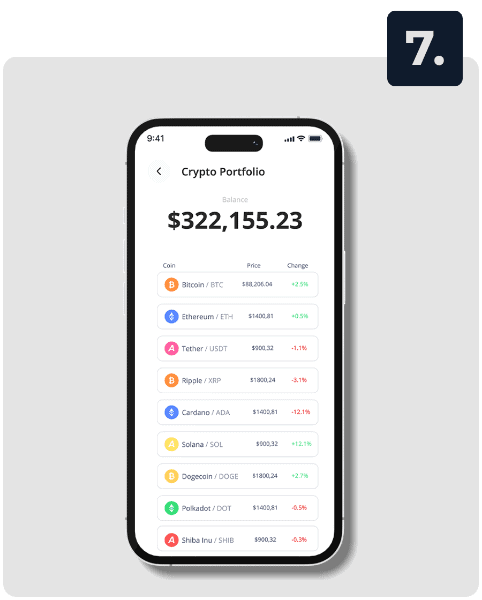
Your DOT is now in your Kraken wallet. You can hold it here, stake it directly on Kraken to earn approximately 6%-7% APY, or withdraw it to a personal wallet for self-custody. Polkadot offers some of the highest staking yields among major proof-of-stake networks. If you plan to participate in Polkadot governance or use DeFi protocols on parachains like Moonbeam or Acala, you will need DOT in a self-custody wallet.
What Is Polkadot (DOT)?
Polkadot’s architecture consists of the Relay Chain (the central chain that provides shared security and consensus), parachains (independent, application-specific blockchains that run in parallel), and bridges (which connect Polkadot to external networks like Ethereum and Bitcoin). Over 65 parachains are currently live on Polkadot, including Moonbeam (EVM-compatible smart contracts), Acala (DeFi hub), Astar (multi-chain dApp platform), and Phala (privacy computing). The network uses Nominated Proof-of-Stake (NPoS) consensus, where validators are selected by nominators who back them with staked DOT.
In March 2026, Polkadot underwent one of its most significant economic changes: the introduction of a 2.1 billion DOT hard supply cap, ending its previous unlimited inflation model. Annual token issuance was cut by over 53% (from ~120 million to ~55 million DOT per year), with the first reduction activating on March 14, 2026 – dubbed the “Pi Day halving.” This positions DOT as a disinflationary asset with a predictable supply trajectory, similar in concept to Bitcoin’s halving events but on a two-year cycle with a 13.14% reduction formula.
The Polkadot 2.0 roadmap is shifting the network from a chain-focused to an application-focused model. Instead of projects needing to win parachain auctions and lock up DOT for years, the new “Agile Coretime” system allows developers to purchase blockspace on demand – making it cheaper and more flexible to build on Polkadot. The JAM (Join-Accumulate Machine) protocol upgrade is also in development, designed to significantly increase the network’s processing capabilities. In March 2026, Walmart’s OnePay fintech platform added DOT support, and Polkadot leads all blockchain projects in total code commits for 2026.
On March 17, 2026, the SEC and CFTC jointly classified DOT as a “digital commodity” – not a security – alongside Bitcoin, Ethereum, and 13 other major cryptocurrencies. DOT is used for governance (voting on protocol changes), staking (securing the network and earning rewards), and bonding (securing blockspace through the coretime system). Polkadot staking ETF applications have been filed with the SEC, following BlackRock’s ETHB precedent.
Polkadot Price & Market Overview
Before buying DOT, here are the key numbers to understand the size, liquidity, and structure of the Polkadot market. Always check the live price on Kraken or CoinGecko before placing your order.
| Metric | Data (March 2026) |
|---|---|
| Current Price | ~$1.27 (check live on Kraken) |
| Market Cap | ~$2.1 billion |
| CoinGecko / CMC Rank | #33 – #37 |
| 24h Trading Volume | $80M – $120M |
| Circulating Supply | ~1.68 billion DOT |
| Max Supply | 2.1 billion DOT (hard cap introduced March 14, 2026) |
| All-Time High (ATH) | $54.98 – November 4, 2021 |
| All-Time Low (ATL) | $1.10 – February 6, 2026 |
| Blockchain | Own Layer 0 – Nominated Proof-of-Stake (NPoS) with Relay Chain + parachains |
| Staking Yield | ~6%-7% APY (among the highest of any major PoS network) |
| Active Parachains | 65+ |
| Annual Inflation (post-March 2026) | ~3.1% (reduced 53% from previous ~7.5%) |
| Founder | Dr. Gavin Wood (Ethereum co-founder, Solidity creator) |
| Regulatory Status | Digital commodity (SEC/CFTC joint classification – March 17, 2026) |
| Key Adoption | Walmart OnePay (March 2026); leads all blockchains in 2026 code commits |
| Listed On | 200+ exchanges including Kraken, Binance, Coinbase, OKX, KuCoin, Gemini |
Polkadot Tokenomics – How the Supply Works
Polkadot’s tokenomics underwent a historic change in March 2026. The network introduced a 2.1 billion DOT hard cap and cut annual issuance by over 53%, transitioning from an inflationary model to a disinflationary one. Here is exactly how the supply is structured:
| Component | Amount | What This Means |
|---|---|---|
| Max Supply (NEW) | 2.1 billion DOT | Hard cap introduced March 14, 2026 – no more than 2.1 billion DOT will ever exist |
| Circulating Supply | ~1.68 billion DOT | ~80% of the hard cap is already in circulation |
| Previous Inflation | ~7.5% per year (~120M DOT) | The old model had no supply cap and created ~120 million new DOT annually |
| New Inflation (post-March 2026) | ~3.1% per year (~55M DOT) | 53%+ reduction in annual issuance – with further cuts every 2 years |
| Future Reductions | ~13.14% cut every 2 years | Smooth disinflationary curve until the 2.1B cap is reached (estimated decades away) |
| Staking Rewards | ~6%-7% APY | Validators and nominators earn rewards from new issuance – yield may decrease slightly over time as inflation drops |
| Treasury | Funded by portion of issuance + fees | Community-governed treasury funds development, grants, and ecosystem growth |
| Primary Utility | Governance + staking + coretime | DOT is used to vote on proposals, secure the network through staking, and purchase blockspace (coretime) for parachains |
Best Exchanges to Buy Polkadot in 2026
While Kraken is our recommended platform, DOT is one of the most widely listed cryptocurrencies – available on over 200 exchanges worldwide. Your best option depends on your location, preferred payment method, and whether you want staking access.
| Exchange | Fee | Min. Buy | Payment Methods | KYC | Best For |
|---|---|---|---|---|---|
| Kraken | 0.16%-0.26% | $10 | Bank Transfer, Card, ACH, Apple Pay, Google Pay | Yes | Beginners – US, UK, EU; built-in DOT staking (~7% APY) |
| Binance | 0.10% | $10 | Card, Bank, P2P, Apple Pay, Google Pay | Yes | Highest global DOT volume; lowest fees |
| Coinbase | 0.40%-0.60% | $1 | Card, Bank Transfer, Apple Pay, PayPal (US) | Yes | Simplest UI; 98% of Coinbase users buying DOT (March 2026) |
| OKX | 0.08%-0.10% | $10 | Card, Bank, P2P | Yes | Low fees; Web3 wallet with Polkadot support |
| KuCoin | 0.10% | $1 | Card, Bank Transfer | Yes | Low minimum buy; popular for DOT trading |
| Hydration (DEX) | ~0.25% swap | No minimum | Polkadot wallet only | No KYC | Native Polkadot DEX; swap DOT for parachain tokens directly on-chain |
How to Store Polkadot Safely
Once you have bought DOT, where you keep it matters. Leaving tokens on an exchange exposes you to platform risk. For anything you plan to hold long term, transferring DOT to a personal wallet is the safer choice – and you can nominate validators to earn staking rewards directly from your wallet.
Option 1 – Exchange Wallet (Convenient, Lower Security)
Your DOT stays in your Kraken or Binance account. The exchange holds the private keys on your behalf. Fine for active traders and convenient for simplified staking. Not recommended for long-term holding of significant amounts.
Option 2 – Software Wallet (Free, Self-Custody)
You control the private keys and the wallet is connected to the internet. Polkadot has purpose-built wallets for staking, governance, and parachain interactions.
| Wallet | Platform | Best For |
|---|---|---|
| Polkadot.js | Browser extension + web app | The most feature-complete Polkadot wallet. Full staking, governance, and parachain support. Power-user interface. |
| Nova Wallet | iOS + Android | Best mobile wallet for Polkadot. Staking, governance, DeFi on parachains, NFTs. Clean modern design. |
| SubWallet | Browser extension + iOS + Android | Multi-chain wallet supporting Polkadot, Kusama, and all parachains. Built-in staking and dApp browser. |
| Talisman | Browser extension | Popular browser wallet for the Polkadot ecosystem. Supports staking, governance, and cross-chain transfers. |
Option 3 – Hardware Wallet (Highest Security)
Your private keys are stored on a physical device that never connects to the internet. The gold standard for long-term DOT storage.
| Wallet | Price | Best For |
|---|---|---|
| Ledger Nano X | ~$149 | Industry standard; Bluetooth; DOT support via Ledger Live including staking |
| Ledger Stax / Flex | $279 / $249 | Premium touchscreen hardware wallets; full Polkadot support |
| Polkadot Vault | Free (uses old phone) | Turn an old smartphone into an air-gapped signing device. Official Polkadot cold storage solution – completely free. |
Is Polkadot a Good Investment in 2026?
Polkadot’s investment case has fundamentally changed in March 2026. The introduction of the 2.1 billion DOT hard cap and 53%+ issuance reduction transforms DOT from a high-inflation utility token into a disinflationary asset with predictable scarcity. This is the most significant tokenomics shift in Polkadot’s history and positions it similarly to Bitcoin’s halving narrative. The network also benefits from being classified as a digital commodity by the SEC/CFTC, having the most active developer community by code commits in 2026, and gaining mainstream adoption through Walmart’s OnePay platform.
Additional catalysts include the Polkadot 2.0 roadmap (Agile Coretime replacing parachain auctions, JAM protocol upgrade), staking ETF applications following the BlackRock ETHB precedent, ~6-7% staking APY (among the highest of any major network), 65+ live parachains, and Dr. Gavin Wood’s continued technical leadership. The combination of reduced inflation, strong staking yield, and commodity classification creates a compelling yield-plus-scarcity narrative.
However, Polkadot faces extreme headwinds. DOT has dropped over 97% from its ATH and hit a new all-time low as recently as February 2026. The parachain ecosystem has not achieved the adoption levels many expected, and Polkadot’s complexity (Relay Chain, parachains, coretime, NPoS) can deter developers who prefer simpler platforms. Competition from Ethereum L2s, Cosmos (IBC), and monolithic L1s like Solana is intense. The 28-day unstaking period is the longest among major PoS networks, reducing liquidity for stakers.
DOT Price Scenarios for 2026
| Scenario | Price Range | What Would Need to Happen |
|---|---|---|
| Bearish | $0.80 – $1.10 | ATL retested, parachain adoption stalls, broader crypto winter continues, JAM delays |
| Base Case | $1.25 – $2.50 | Supply cap narrative takes hold, Agile Coretime drives new builders, stable macro, staking ETF filed |
| Bullish | $3.00 – $6.00 | Bitcoin bull run, scarcity premium priced in, JAM upgrade delivers, staking ETF approved |
| ATH Retest | $20 – $55+ | Full crypto super-cycle, Polkadot becomes dominant interoperability platform, massive institutional inflows |
Price scenarios are based on analyst estimates and historical data. They are not financial advice. Crypto markets are highly unpredictable.
Key Risks to Understand Before You Buy
- Near all-time low – DOT hit $1.10 in February 2026 and is down over 97% from its 2021 ATH of $54.98. This could represent deep value or a structural decline – the market has not decided.
- Ecosystem complexity – Polkadot’s architecture (Relay Chain, parachains, coretime, NPoS, bridges) is powerful but complex. Developers may prefer simpler platforms, limiting ecosystem growth.
- Parachain adoption underwhelming – despite 65+ live parachains, most have low TVL and user activity compared to Ethereum, Solana, or BNB Chain DeFi ecosystems.
- 28-day unstaking period – the longest among major PoS networks. Your DOT earns no rewards during unbonding and cannot be sold or transferred.
- Interoperability competition – Cosmos (IBC protocol), Chainlink CCIP, LayerZero, and Ethereum L2 bridges all compete for cross-chain activity.
- Existential deposit risk – Polkadot requires a minimum 1 DOT balance to keep an account active. Falling below this threshold causes the remaining balance to be permanently lost (reaped).
- No major spot ETF yet – while staking ETF applications are in progress, no spot DOT ETF has been approved. Institutional access remains limited compared to BTC, ETH, and SOL.
How to Sell Polkadot
Selling DOT on Kraken is just as straightforward as buying it. Here is the complete step-by-step process:
-
1
Log in to Kraken
Go to your Spot Wallet to confirm your current DOT balance and the live market price.
-
2
Unstake (If Applicable)
If your DOT is staked on-chain, you will need to initiate unbonding – this takes 28 days on the Polkadot network. On Kraken, the unstaking process is typically faster. Plan ahead if you anticipate needing to sell.
-
3
Click “Sell”
Navigate to the Sell section in the main menu and search for DOT in the asset list.
-
4
Choose Your Trading Pair
Select the currency you want to receive – USD, EUR, GBP, or USDT depending on your preference and location.
-
5
Enter the Amount to Sell
Type either a DOT amount or a target cash value. Kraken will show your estimated proceeds after fees in real time.
-
6
Review and Confirm
Check the sell price, transaction amount, and fee on the confirmation screen. Click “Sell Now” to execute.
-
7
Withdraw to Your Bank
Your cash balance appears in your Kraken account immediately. Go to Funding – Withdraw to transfer to your bank. Most withdrawals complete within 1-3 business days.
Questions & Answers

Polkadot is a Layer 0 blockchain protocol that connects multiple independent blockchains (parachains) into a single interoperable network. Founded by Dr. Gavin Wood (Ethereum co-founder), it enables different blockchains to share security and exchange data. Polkadot is popular because of its multi-chain architecture, strong developer community (leading in 2026 code commits), high staking yields (6-7% APY), and the new 2.1 billion DOT hard cap that positions it as a disinflationary asset.
For most users, Kraken offers the best balance of security, fees, and ease of use with built-in DOT staking at ~7% APY. Binance has the highest global DOT trading volume at 0.10% fees. Coinbase is the simplest option for total beginners. DOT is listed on over 200 exchanges globally.
As of March 2026, DOT trades at approximately $1.27 – near its all-time low. Kraken allows purchases from as little as $10. Always check the live DOT price on Kraken or CoinGecko before buying.
Yes, and Polkadot offers some of the highest staking yields among major PoS networks at approximately 6-7% APY. You can stake directly on Kraken or Binance (simplified, no minimum), or nominate validators on-chain through wallets like Nova Wallet or Polkadot.js (minimum 250 DOT for on-chain nomination). Note that on-chain staking has a 28-day unbonding period – your DOT is locked during this time.
On March 14, 2026, Polkadot introduced a 2.1 billion DOT hard cap through community governance, ending its previous unlimited inflation model. Annual issuance was cut by over 53%, and future reductions of approximately 13.14% will occur every two years. This is the most significant tokenomics change in Polkadot’s history and positions DOT as a scarce, disinflationary asset for the first time.
Parachains are independent, application-specific blockchains that run in parallel within the Polkadot ecosystem. Each parachain has its own logic, tokens, and governance but inherits security from Polkadot’s Relay Chain. Over 65 parachains are currently live, including Moonbeam (EVM-compatible smart contracts), Acala (DeFi), Astar (multi-chain dApps), and Phala (privacy computing). The new Agile Coretime system makes it easier and cheaper for projects to deploy parachains.
Polkadot requires a minimum balance of 1 DOT to keep an account active on-chain. If your balance drops below this threshold (called the “existential deposit”), the account is “reaped” and the remaining balance is permanently lost. Always keep at least 1.1 DOT in your wallet after making transactions to avoid this. This does not apply when DOT is held on an exchange.
Buying DOT through a regulated exchange like Kraken is safe from a platform perspective. Polkadot’s protocol has operated since 2020 with no fundamental security failures, and its NPoS consensus mechanism is well-tested. The SEC and CFTC have classified DOT as a digital commodity. The risk is market volatility – DOT dropped over 97% from its 2021 ATH and hit an all-time low of $1.10 in February 2026. Only invest what you can afford to lose.
The March 2026 supply cap and issuance reduction fundamentally changed Polkadot’s investment thesis for the better – DOT now has a scarcity narrative, high staking yield, SEC commodity status, and active development. However, the price is near all-time lows, parachain adoption has underperformed expectations, and the network’s complexity is a barrier compared to simpler platforms. We provide education, not financial advice. DOT could be deep value or a value trap – consider it as part of a diversified portfolio.
If you hold DOT on a centralised exchange and the platform experiences temporary downtime, your tokens remain in your account. The more serious risk is exchange insolvency, as seen with FTX in 2022. For anything you intend to hold longer term, transfer your DOT to Nova Wallet, SubWallet, or a Ledger hardware wallet. You hold the private keys; no exchange failure can touch it. Remember the 1 DOT existential deposit requirement when withdrawing.






Grow your portfolio.
Buy CRYPTO today