How to Buy Sui – Step-by-Step Guide (2026)

How to Buy Sui on Kraken

Step 1: Create Your Free Kraken Account
Sign up at kraken.com by entering your email address and selecting your country of residence. Complete the identity verification (KYC) process by uploading a government-issued ID and a selfie. This typically takes a few minutes and unlocks full buying and trading access.
Step 2: Deposit Funds
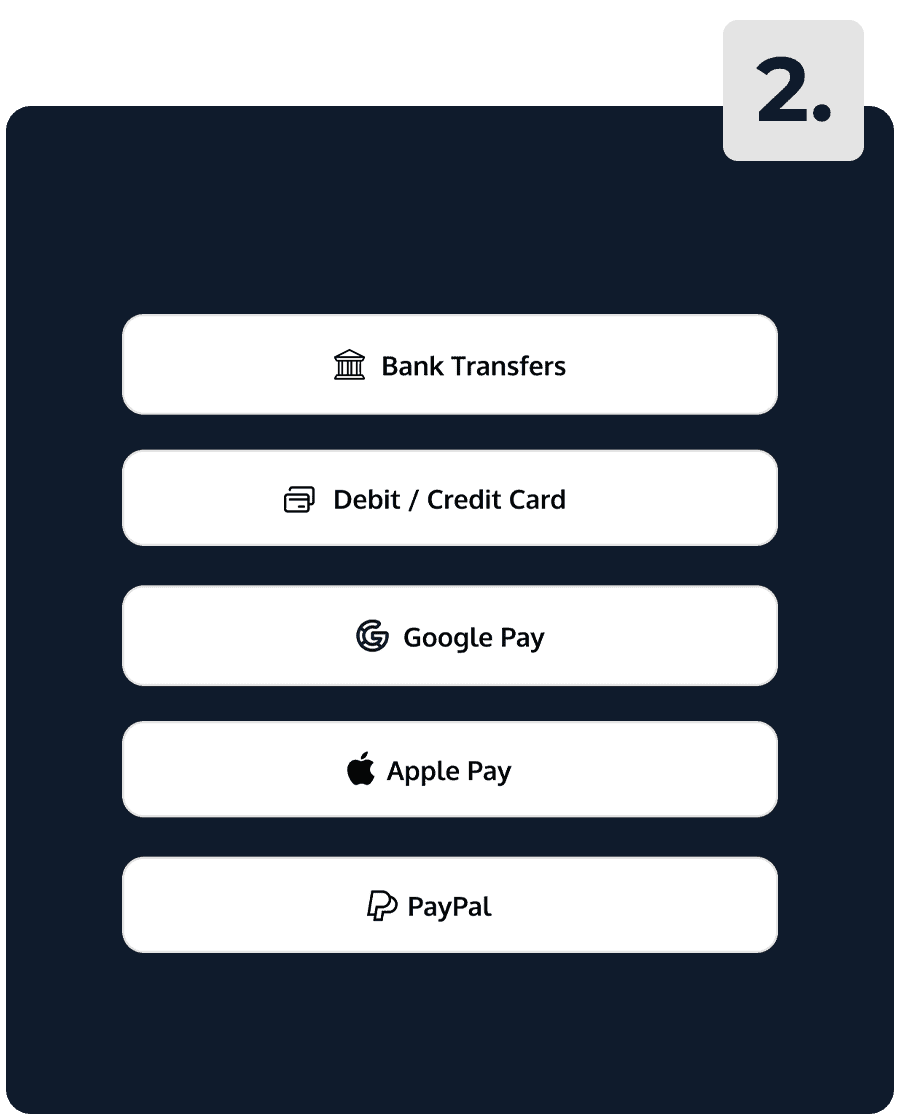
Add money to your Kraken account. US users can deposit via ACH (free, 1-3 days) or wire transfer. UK users can use Faster Payments (free, instant). EU users can use SEPA (free, same day). Debit/credit cards, Apple Pay, and Google Pay are also available for instant deposits – though card fees are higher (3.75%+). For larger SUI purchases, bank transfer is the cheapest option.

Step 3: Go to “Buy Crypto”
Click “Buy Crypto” on the Kraken website or tap it in the mobile app. This opens the simple buying interface designed for beginners – no trading experience needed.

Step 4: Search for Sui (SUI)
Type “Sui” or “SUI” in the search bar and select it from the results. Choose the SUI/USD pair if you deposited US dollars, SUI/EUR for euros, or SUI/GBP for British pounds.

Step 5: Enter Your Purchase Amount
Enter how much you want to spend in your local currency (minimum $10). Kraken will automatically calculate how many SUI tokens you will receive at the current market price. At approximately $0.95 per SUI, a $100 purchase gives you roughly 105 SUI tokens.

Step 6: Review and Confirm Your Order
Check the SUI price, total cost including fees, and the amount of SUI you will receive. Kraken shows the full breakdown before you confirm. Once you click “Buy,” the SUI tokens are added to your Kraken account instantly.
Step 7: Secure Your SUI (or Stake It)
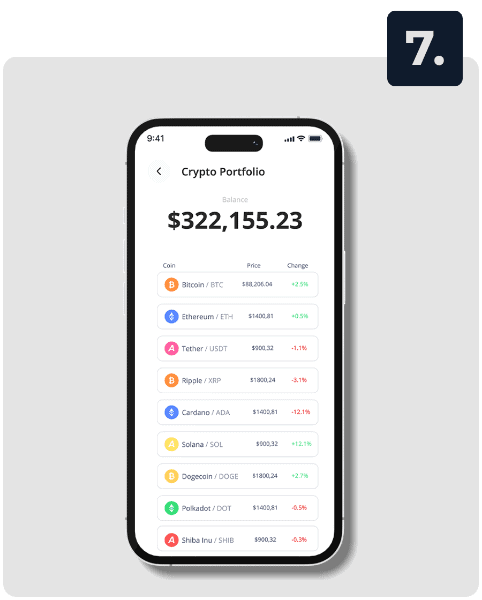
Your SUI is now in your Kraken wallet. You can hold it here, trade it, or withdraw it to a personal wallet for self-custody. If you plan to stake SUI, explore Sui DeFi protocols, or use gaming applications on the network, you will need SUI in a self-custody wallet like Sui Wallet, Suiet, or Navi. SUI staking currently earns approximately 2.5%-4% APY through the network’s delegated proof-of-stake system.
What Is Sui (SUI)?
This architecture enables parallel transaction processing – multiple operations that do not touch the same objects can execute simultaneously without waiting in a queue. The result is sub-second finality, extremely high throughput (866+ TPS via the Mysticeti v2 consensus, with theoretical capacity far higher), and consistently low transaction fees. Sui was built from the ground up for the use cases that earlier blockchains struggle with: real-time gaming, high-frequency payments, social applications, and complex DeFi interactions that require speed and predictability.
Sui uses the Move programming language, which was originally developed by members of the Mysten Labs team while at Meta. Move is adapted from Rust and provides strong safety guarantees that significantly reduce common smart contract vulnerabilities like reentrancy attacks and overflow errors. Developers can define custom object types with inherent ownership rules, making it easier to build complex applications with asset safety built into the language itself. This approach has attracted gaming studios, DeFi builders, and enterprise developers looking for a more secure development experience.
The Sui ecosystem has grown rapidly since launch. Key products include DeepBook (an on-chain central limit order book for institutional-grade trading), Walrus (a decentralised storage network), SuiNS (a naming service), and Ika (a cross-chain signing protocol). Gaming is a particularly strong vertical, with multiple studios building fully on-chain games that leverage Sui’s speed and object model. DeFi TVL on Sui has reached approximately $900 million to $1 billion, with protocols like Navi, Scallop, Cetus, and Turbos gaining traction.
In February 2026, multiple spot SUI ETFs launched in the US: the Canary Staked SUI ETF (SUIS) with built-in staking rewards, the 21shares Spot SUI ETF (Nasdaq: TSUI), and the Grayscale Sui Staking ETF (GSUI) on NYSE Arca. These give traditional investors exposure to SUI through standard brokerage accounts. Mysten Labs is led by CEO Evan Cheng, CPO Adeniyi Abiodun, CTO Sam Blackshear, Chief Scientist George Danezis, and Chief Cryptographer Kostas Chalkias, and is backed by a16z, Apollo Global, Franklin Templeton, and others.
Sui Price & Market Overview
Before buying SUI, here are the key numbers to understand the size, liquidity, and structure of the Sui market. Always check the live price on Kraken or CoinGecko before placing your order.
| Metric | Data (March 2026) |
|---|---|
| Current Price | ~$0.95 (check live on Kraken) |
| Market Cap | ~$3.7 billion |
| CoinGecko / CMC Rank | #27 – #33 |
| 24h Trading Volume | $240M – $560M |
| Circulating Supply | ~3.9 billion SUI (~39% of max supply) |
| Max Supply | 10 billion SUI |
| All-Time High (ATH) | $5.35 – January 6, 2025 |
| All-Time Low (ATL) | $0.3648 – October 19, 2023 |
| Blockchain | Own Layer 1 – Delegated Proof-of-Stake (Mysticeti v2 consensus) |
| Programming Language | Move (developed at Meta, adapted from Rust) |
| TPS / Finality | 866+ TPS live; sub-second finality |
| Staking Yield | ~2.5%-4% APY (delegated PoS) |
| DeFi TVL | ~$900M – $1B |
| Spot ETFs | Canary SUIS (staking), 21shares TSUI, Grayscale GSUI – all live since Feb 2026 |
| Key Backers | a16z, Apollo Global, Franklin Templeton, Coinbase Ventures |
| Listed On | 125+ exchanges including Kraken, Binance, Coinbase, OKX, Bybit, KuCoin |
Sui Tokenomics – How the Supply Works
SUI has a fixed maximum supply of 10 billion tokens. The circulating supply is growing through scheduled token unlocks that distribute SUI to early investors, the team, community reserves, and the ecosystem. Understanding the unlock schedule is critical when evaluating SUI as an investment.
| Allocation | Amount | What This Means |
|---|---|---|
| Max Supply | 10 billion SUI | Hard cap – no more than 10 billion SUI will ever exist |
| Circulating Supply | ~3.9 billion SUI (~39%) | Only 39% of total supply is currently in circulation – the rest unlocks gradually through 2030 |
| Community Reserve | 50% (5 billion SUI) | Largest allocation – distributed through grants, ecosystem growth, staking subsidies, and the storage fund |
| Early Contributors (Team) | 20% (2 billion SUI) | Allocated to Mysten Labs team members – subject to multi-year vesting |
| Investors | 14% (1.4 billion SUI) | Allocated to VC backers (a16z, Apollo, Franklin Templeton, etc.) – vesting through 2030 |
| Mysten Labs Treasury | 10% (1 billion SUI) | Reserved for operational expenses and strategic initiatives |
| CommunityAccess / Public Sale | 6% (600 million SUI) | Sold during the May 2023 public launch at $0.10 per SUI |
| Monthly Unlocks | ~43 million SUI/month | Regular token unlocks add supply – next unlock April 1, 2026 (~42.9M SUI, ~$40M) |
| Storage Fund | Portion of gas fees | A portion of transaction fees is deposited into a storage fund to subsidise on-chain data storage costs |
Best Exchanges to Buy Sui in 2026
While Kraken is our recommended platform, SUI is listed on over 125 exchanges worldwide. Your best option depends on your location, preferred payment method, and whether you want staking or DeFi access.
| Exchange | Fee | Min. Buy | Payment Methods | KYC | Best For |
|---|---|---|---|---|---|
| Kraken | 0.16%-0.26% | $10 | Bank Transfer, Card, ACH, Apple Pay, Google Pay | Yes | Beginners – US, UK, EU; strong security |
| Binance | 0.10% | $10 | Card, Bank, P2P, Apple Pay, Google Pay | Yes | Highest global SUI volume; lowest fees |
| Coinbase | 0.40%-0.60% | $1 | Card, Bank Transfer, Apple Pay, PayPal (US) | Yes | Simplest UI; 98% of Coinbase users buying SUI (March 2026) |
| Bybit | 0.10% | $10 | Card, Bank, P2P | Yes | Strong derivatives market for SUI; advanced traders |
| OKX | 0.08%-0.10% | $10 | Card, Bank, P2P | Yes | Low fees; Web3 wallet with Sui support |
| Cetus / Turbos (DEX) | 0.25%-0.3% swap | No minimum | Sui wallet only | No KYC | Native Sui DEXs; swap SUI for ecosystem tokens directly |
How to Store Sui Safely
Once you have bought SUI, where you keep it matters. Leaving tokens on an exchange exposes you to platform risk – if the exchange is hacked or goes insolvent (as FTX did in 2022), your funds could be lost. For anything you plan to hold long term, transferring SUI to a personal wallet is the safer choice.
Option 1 – Exchange Wallet (Convenient, Lower Security)
Your SUI stays in your Kraken or Binance account. The exchange holds the private keys on your behalf. Fine for active traders, but not recommended for long-term holding of significant amounts.
Option 2 – Software Wallet (Free, Self-Custody)
You control the private keys and the wallet is connected to the internet. Sui has a growing ecosystem of purpose-built wallets.
| Wallet | Platform | Best For |
|---|---|---|
| Sui Wallet | Browser extension + iOS + Android | Official wallet by Mysten Labs. Full staking support, dApp connector, and native Sui ecosystem access. The default choice. |
| Suiet | Browser extension | Community-built Sui wallet with clean interface and strong dApp compatibility. |
| Navi | Browser extension | DeFi-focused Sui wallet built by the Navi Protocol lending team. Integrated lending and borrowing. |
| Martian Wallet | Browser extension + iOS + Android | Multi-chain wallet supporting Sui and Aptos (both use Move language). Good for cross-ecosystem users. |
Option 3 – Hardware Wallet (Highest Security)
Your private keys are stored on a physical device that never connects to the internet. The gold standard for long-term SUI storage.
| Wallet | Price | Best For |
|---|---|---|
| Ledger Nano X | ~$149 | Industry standard; Bluetooth; supports Sui via Ledger Live |
| Ledger Stax / Flex | $279 / $249 | Premium touchscreen hardware wallets; Sui support included |
Is Sui a Good Investment in 2026?
Sui has one of the most technically advanced blockchain architectures in crypto. Its object-centric model, Move programming language, parallel execution engine, and sub-second finality give it genuine performance advantages over most competitors. The team (ex-Meta engineers who built the original Move language) is among the most credentialed in the industry, and backing from a16z, Apollo Global, and Franklin Templeton lends institutional credibility. Grayscale Research has highlighted Sui as a potential platform for the next consumer “killer application” in crypto.
In 2026, key catalysts include multiple spot SUI ETFs launched in February (SUIS, TSUI, GSUI), growing DeFi TVL approaching $1 billion, expanding gaming ecosystem, Mysten Labs’ privacy features roadmap, the Walrus decentralised storage network, and 98% of Coinbase users buying SUI (March 2026). The vertically integrated product suite (DeepBook, Walrus, SuiNS, Ika) differentiates Sui from chains that only offer a base layer.
However, SUI faces significant headwinds. The token is down 82% from its ATH just 14 months ago. Only 39% of the total supply is in circulation, meaning approximately 6.1 billion tokens will gradually unlock through 2030 – creating persistent sell pressure that weighs on every rally. Monthly unlocks of ~43 million SUI ($40M+) dilute existing holders. Sui was not included in the SEC/CFTC’s March 2026 digital commodity classification (unlike many of its competitors). Competition from Solana, Ethereum L2s, and other high-performance L1s is intense, and Sui’s ecosystem is still young compared to these established platforms.
SUI Price Scenarios for 2026
| Scenario | Price Range | What Would Need to Happen |
|---|---|---|
| Bearish | $0.50 – $0.80 | Continued macro weakness, unlock sell pressure overwhelms demand, L1 rotation to competitors |
| Base Case | $0.90 – $1.80 | ETF inflows grow, gaming/DeFi adoption accelerates, market stabilises, unlocks absorbed |
| Bullish | $2.00 – $3.50 | Bitcoin bull run, Sui gaming breakout app, privacy features launch, ETFs drive institutional demand |
| ATH Retest | $4.00 – $5.35+ | Full crypto super-cycle, Sui becomes top 3 L1 by TVL, consumer killer app emerges from ecosystem |
Price scenarios are based on analyst estimates and historical data. They are not financial advice. Crypto markets are highly unpredictable.
Key Risks to Understand Before You Buy
- Massive token unlocks – only 39% of SUI is in circulation. Approximately 6.1 billion tokens will unlock through 2030, adding ~43 million SUI (~$40M) to the market each month. This is the primary headwind for price appreciation.
- High FDV relative to market cap – SUI’s fully diluted valuation (~$9.5 billion) is roughly 2.5x its circulating market cap (~$3.7 billion), meaning the market is pricing in significant future dilution.
- Not classified as a digital commodity – unlike Bitcoin, Ethereum, Solana, and Cardano, SUI was not included in the SEC/CFTC’s March 2026 commodity classification. This creates regulatory uncertainty.
- Young ecosystem – Sui launched in May 2023 and is less than 3 years old. Its DeFi, gaming, and developer ecosystems are still maturing compared to Ethereum, Solana, and Avalanche.
- Intense L1 competition – Solana has a much larger ecosystem and developer base, Ethereum L2s offer access to the largest DeFi market, and other Move-based chains (Aptos) compete directly.
- Validator concentration – Sui’s validator set is relatively concentrated compared to more established networks, which some view as a decentralisation concern.
- Volatile price history – SUI dropped 82% from its ATH in just 14 months. It rallied from $0.36 to $5.35 and back to $0.95 within roughly 18 months – extreme volatility even by crypto standards.
How to Sell Sui
Selling SUI on Kraken is just as straightforward as buying it. Here is the complete step-by-step process:
-
1
Log in to Kraken
Go to your Spot Wallet to confirm your current SUI balance and the live market price.
-
2
Unstake (If Applicable)
If your SUI is staked on the Sui network, you will need to unstake it first. Sui has an epoch-based staking system – your SUI becomes available at the end of the current epoch (approximately 24 hours).
-
3
Click “Sell”
Navigate to the Sell section in the main menu and search for SUI in the asset list.
-
4
Choose Your Trading Pair
Select the currency you want to receive – USD, EUR, GBP, or USDT depending on your preference and location.
-
5
Enter the Amount to Sell
Type either a SUI amount or a target cash value. Kraken will show your estimated proceeds after fees in real time.
-
6
Review and Confirm
Check the sell price, transaction amount, and fee on the confirmation screen. Click “Sell Now” to execute.
-
7
Withdraw to Your Bank
Your cash balance appears in your Kraken account immediately. Go to Funding – Withdraw to transfer to your bank. Most withdrawals complete within 1-3 business days.
Questions & Answers

Toncoin is the native cryptocurrency of The Open Network (TON), a Layer 1 blockchain originally designed by Telegram’s co-founder Dr. Nikolai Durov. It is popular because of its deep integration with Telegram – the messaging platform used by over 950 million people. TON is the exclusive blockchain for Telegram Mini Apps, Telegram Ads are purchased in TON, and the built-in Telegram Wallet makes it one of the easiest cryptocurrencies to buy, send, and use. No other major cryptocurrency has this kind of built-in distribution to nearly a billion users.
For most users, Kraken offers the best balance of security, fees, and ease of use. Binance has the highest global TON trading volume. KuCoin is popular for TON trading with low minimums. Uniquely, you can also buy TON directly inside Telegram through the built-in Wallet feature using a credit card or P2P transfer – no exchange account needed.
As of March 2026, TON trades at approximately $1.22. Kraken allows purchases from as little as $10. Always check the live TON price on Kraken or CoinGecko before buying.
Yes. Telegram has a built-in Wallet that lets you buy, store, send, and receive TON without leaving the app. You can purchase TON with a credit or debit card through the custodial Crypto Wallet, or use the self-custodial TON Wallet for full ownership of your keys. In January 2026, Telegram launched a self-custodial wallet for U.S. users, expanding access. You can send TON to any Telegram contact using their @username.
For maximum convenience within Telegram, use the built-in Telegram Wallet (self-custodial version for better security). For a dedicated wallet experience outside Telegram, Tonkeeper is the most popular choice with full staking, DeFi, and NFT support. MyTonWallet is a strong alternative. For maximum security, use a Ledger hardware wallet. Do not use Ethereum wallets like MetaMask for TON – they are different blockchains.
Cocoon is a decentralised AI computing platform launched by Pavel Durov in December 2025 on the TON blockchain. It allows GPU owners worldwide to rent out their computing power for AI workloads (inference and training) and earn Toncoin as payment. Cocoon processes AI requests on encrypted data, so the compute provider never sees the input or output – making it a privacy-first alternative to centralised cloud providers. It creates a new demand driver for TON independent of Telegram’s messaging activity.
Buying TON through a regulated exchange like Kraken is safe from a platform perspective – your account is protected by KYC, 2FA, and institutional-grade security. The TON blockchain has operated since 2020 with no fundamental security failures. However, TON carries unique risks: it was not included in the SEC/CFTC commodity classification, Pavel Durov’s legal situation creates headline risk, and 68% of supply is concentrated in whale wallets. The price dropped 85% from its ATH. Only invest what you can afford to lose.
TON has the strongest distribution advantage in crypto – direct access to 950+ million Telegram users. The exclusive Mini App ecosystem, Cocoon AI compute, TON Storage, and corporate treasury strategies are genuine catalysts. However, extreme whale concentration, regulatory uncertainty, modest DeFi adoption, and no SEC commodity status are material risks. We provide education, not financial advice. TON is a high-conviction bet on Telegram’s crypto integration. Consider it as a speculative position within a diversified portfolio.
In 2018-2019, Telegram raised $1.7 billion to fund the Telegram Open Network and its Gram token. In October 2019, the SEC filed an emergency action to halt the token distribution, alleging it was an unregistered securities offering. In June 2020, Telegram settled with the SEC, paying an $18.5 million penalty and agreeing to return $1.2 billion to investors. Telegram then withdrew from the project, but the open-source community continued development independently as “The Open Network” with Toncoin as the native token. The current TON project is legally separate from Telegram’s original offering.
TON’s primary differentiator is its integration with Telegram. While Ethereum has the largest DeFi ecosystem and Solana has the fastest single-chain throughput, TON has direct access to 950+ million users through a messaging app they already use daily. TON uses dynamic sharding for scalability, has its own programming language (FunC/Tact), and offers unique features like sending crypto via @username and AI compute through Cocoon. The trade-off is a smaller DeFi ecosystem and higher whale concentration than most competitors.





Grow your portfolio.
Buy CRYPTO today