How to Buy Polygon – Step-by-Step Guide (2026)

How to Buy Polygon on Kraken

Step 1: Create Your Free Kraken Account
Sign up by entering your email address and selecting your country of residence. This begins the secure account verification process required to start buying cryptocurrency.
Step 2: Deposit Funds
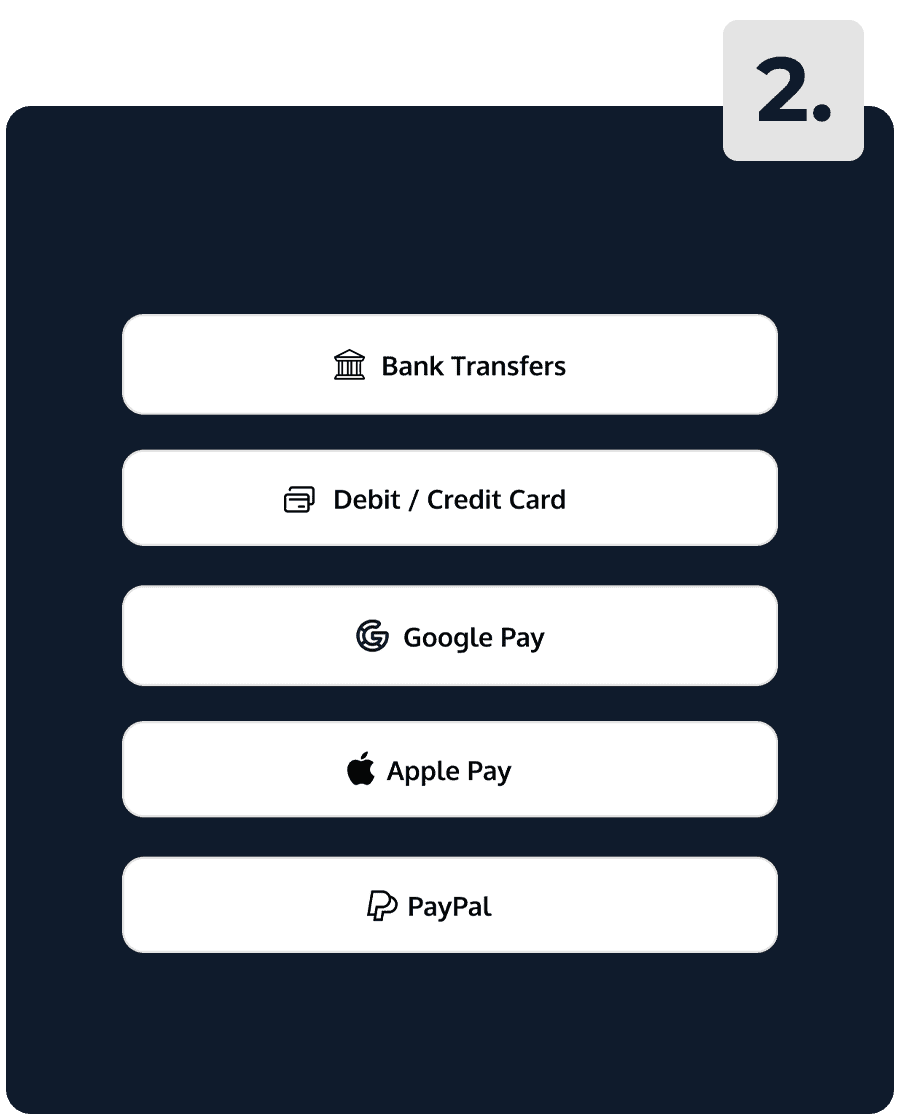
Add money to your Kraken account. US users can deposit via ACH (free, 1-3 days) or wire transfer. UK users can use Faster Payments (free, instant). EU users can use SEPA (free, same day). Debit/credit cards, Apple Pay, and Google Pay are also available for instant deposits – though card fees are higher (3.75%+). For larger POL purchases, bank transfer is the cheapest option.

Step 3: Go to “Buy Crypto”
Click “Buy Crypto” on the Kraken website or tap it in the mobile app. This opens the simple buying interface designed for beginners – no trading experience needed.

Step 4: Search for Polygon (POL)
Type “Polygon” or “POL” in the search bar and select it from the results. Note that some exchanges may still list it under the old ticker “MATIC” – POL replaced MATIC as the native token in September 2024. Choose the POL/USD pair if you deposited US dollars, POL/EUR for euros, or POL/GBP for British pounds.

Step 5: Enter Your Purchase Amount
Enter how much you want to spend in your local currency (minimum $10). Kraken will automatically calculate how many POL tokens you will receive at the current market price. At approximately $0.10 per POL, a $100 purchase gives you roughly 1,000 POL tokens – making it one of the most affordable major cryptocurrencies by unit price.

Step 6: Review and Confirm Your Order
Check the POL price, total cost including fees, and the amount of POL you will receive. Kraken shows the full breakdown before you confirm. Once you click “Buy,” the POL tokens are added to your Kraken account instantly.
Step 7: Secure Your POL (or Stake It)
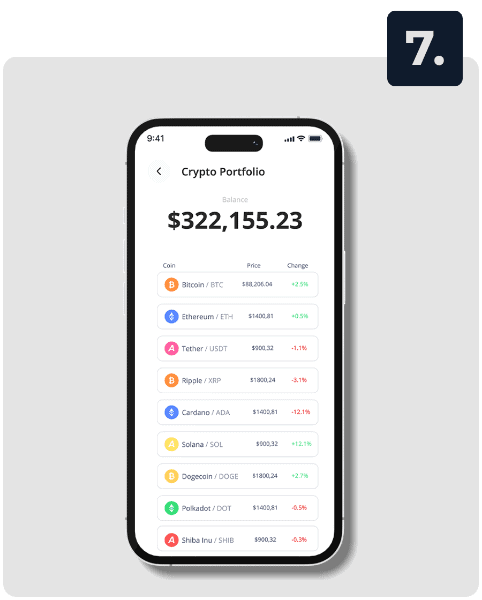
Your POL is now in your Kraken wallet. You have three options: hold it on Kraken for easy access, stake it on Kraken to earn rewards, or withdraw it to a personal wallet like MetaMask for self-custody and access to the Polygon ecosystem. If you plan to use Polygon DeFi protocols (Aave, QuickSwap, Uniswap), you will need POL in a self-custody wallet on the Polygon PoS network.
What Is Polygon (POL)?
Polygon’s flagship product is Polygon PoS – an EVM-compatible sidechain that runs alongside Ethereum and offers dramatically lower fees (typically fractions of a cent) with fast confirmation times. It is one of the most-used chains in crypto for stablecoin transfers, with Polygon ranking #1 in USDC addresses and #3 in daily active USDT addresses globally. Major institutions including Stripe, Mastercard, Reliance Jio, BlackRock, Hamilton Lane, and Apollo have built on Polygon. In March 2026, Mastercard deepened its integration by connecting Polygon’s on-chain payment system to its traditional financial infrastructure.
In September 2024, Polygon completed the migration from MATIC to POL as the network’s native token. The upgrade was a core component of Polygon 2.0 – a broader strategic overhaul that aims to unify multiple Polygon-powered chains into a single, seamless ecosystem. POL replaced MATIC at a 1:1 ratio and now serves as the gas token, staking asset, and governance token for the entire Polygon ecosystem. If you still hold unmigrated MATIC on Ethereum or exchanges, you can convert it to POL through Polygon’s official migration portal.
In mid-2025, co-founder Sandeep Nailwal took over as CEO and announced a major strategic pivot. Polygon is sunsetting its zkEVM product by 2026 and refocusing on two pillars: Polygon PoS (optimised for stablecoin payments and RWAs through the “Gigagas” roadmap targeting 100,000 TPS) and the AggLayer (a cross-chain interoperability layer designed to unify liquidity and state across multiple Polygon-powered chains). The Gigagas roadmap has already delivered testnet performance of 1,000+ TPS, with devnet benchmarks exceeding 5,000 TPS.
POL has a total supply of approximately 10.6 billion tokens. All tokens are in circulation – there is no locked supply or vesting schedule. However, POL includes a 2% annual emission (over 10 years) earmarked for network security and community development, which creates ongoing inflation. On March 17, 2026, the SEC and CFTC did not explicitly name POL in their 16-asset digital commodity classification, but the broader regulatory clarity benefits the entire Ethereum scaling ecosystem.
Polygon Price & Market Overview
Before buying POL, here are the key numbers to understand the size, liquidity, and structure of the Polygon market. Always check the live price on Kraken or CoinGecko before placing your order.
| Metric | Data (March 2026) |
|---|---|
| Current Price | ~$0.10 (check live on Kraken) |
| Market Cap | ~$1.0 billion |
| CoinGecko / CMC Rank | #55 – #67 |
| 24h Trading Volume | $50M – $80M |
| Total Supply | ~10.6 billion POL |
| Max Supply | No hard cap – 2% annual emission for 10 years (network security + community) |
| POL All-Time High | $1.29 – December 3, 2024 (POL token); MATIC ATH was $2.92 – December 27, 2021 |
| POL All-Time Low | $0.087 – March 2026 |
| Blockchain | Polygon PoS (EVM-compatible sidechain) – also available as ERC-20 on Ethereum |
| Staking Yield | ~3%-5% APY |
| TPS (Current) | ~1,000+ TPS on testnet; targeting 100,000 TPS via Gigagas roadmap |
| EVM Compatible | Yes – fully compatible with all Ethereum tooling (MetaMask, Solidity, Hardhat) |
| Key Partnerships | Mastercard, Stripe, BlackRock, Reliance Jio, Hamilton Lane, Apollo |
| Stablecoin Activity | #1 in USDC addresses; #3 in daily active USDT addresses globally |
| Listed On | 200+ exchanges including Kraken, Binance, Coinbase, OKX, KuCoin |
Polygon Tokenomics – How the Supply Works
POL replaced MATIC at a 1:1 ratio in September 2024. The new token includes a redesigned emission model with a 2% annual inflation rate over 10 years to fund network security and community development. All original MATIC supply has been converted or is eligible for conversion.
| Component | Amount | What This Means |
|---|---|---|
| Total Supply | ~10.6 billion POL | All tokens are in circulation – no locked team tokens or vesting |
| Original MATIC Supply | 10 billion MATIC | Converted 1:1 to POL; original supply fully distributed |
| Annual Emission | 2% per year (for 10 years) | Split between staking rewards (1%) and community treasury (1%) |
| Emission Duration | 10 years from launch | After 10 years, community governance decides whether to continue, reduce, or stop emissions |
| Staking Rewards | 1% annual emission | Distributed to validators and delegators who stake POL to secure the network |
| Community Treasury | 1% annual emission | Funds ecosystem grants, development, and partnerships – governed by community proposals |
| Burn Mechanism | None currently | Community discussions around introducing buybacks or burns from treasury are ongoing |
| Primary Utility | Gas fees + staking + governance | POL pays for transactions on Polygon PoS, secures the network through staking, and powers governance voting |
Best Exchanges to Buy Polygon in 2026
While Kraken is our recommended platform, POL is widely listed on over 200 exchanges globally. Your best option depends on your location, preferred payment method, and whether you want staking or DeFi access.
| Exchange | Fee | Min. Buy | Payment Methods | KYC | Best For |
|---|---|---|---|---|---|
| Kraken | 0.16%-0.26% | $10 | Bank Transfer, Card, ACH, Apple Pay, Google Pay | Yes | Beginners – US, UK, EU; staking available |
| Binance | 0.10% | $10 | Card, Bank, P2P, Apple Pay, Google Pay | Yes | Highest global POL volume; lowest fees |
| Coinbase | 0.40%-0.60% | $1 | Card, Bank Transfer, Apple Pay, PayPal (US) | Yes | Simplest UI; POL is #13 most popular on Coinbase |
| OKX | 0.08%-0.10% | $10 | Card, Bank, P2P | Yes | Low fees; Web3 wallet with Polygon support |
| KuCoin | 0.10% | $1 | Card, Bank Transfer | Yes | Low minimum buy; wide altcoin selection |
| QuickSwap (DEX) | 0.3% swap + gas | No minimum | Polygon wallet only | No KYC | Native Polygon DEX; swap POL for any Polygon token directly |
How to Store Polygon Safely
Once you have bought POL, where you keep it matters. Leaving tokens on an exchange exposes you to platform risk – if the exchange is hacked or goes insolvent (as FTX did in 2022), your funds could be lost. For anything you plan to hold long term, transferring POL to a personal wallet is the safer choice.
Option 1 – Exchange Wallet (Convenient, Lower Security)
Your POL stays in your Kraken or Binance account. The exchange holds the private keys on your behalf. Fine for active traders and convenient for on-platform staking, but not recommended for long-term holding of significant amounts.
Option 2 – Software Wallet (Free, Self-Custody)
You control the private keys and the wallet is connected to the internet. Because Polygon PoS is EVM-compatible, any Ethereum wallet works with the Polygon network – just add the Polygon network in your wallet settings.
| Wallet | Platform | Best For |
|---|---|---|
| MetaMask | Browser extension + iOS + Android | The standard wallet for Polygon. Add the Polygon PoS network and access all DeFi protocols, NFTs, and dApps. Works with both Polygon and Ethereum. |
| Rabby Wallet | Browser extension + desktop | Advanced security with pre-transaction risk scanning. Multi-chain support including Polygon natively. |
| Trust Wallet | iOS + Android | Multi-chain mobile wallet. Supports Polygon, Ethereum, BNB Chain, Solana, and dozens more. |
| Coinbase Wallet | Browser extension + iOS + Android | Separate from Coinbase exchange. Good Polygon support with built-in dApp browser. |
Option 3 – Hardware Wallet (Highest Security)
Your private keys are stored on a physical device that never connects to the internet. The gold standard for long-term POL storage.
| Wallet | Price | Best For |
|---|---|---|
| Ledger Nano X | ~$149 | Industry standard; Bluetooth; supports Polygon PoS via Ledger Live or MetaMask pairing |
| Ledger Stax / Flex | $279 / $249 | Premium touchscreen hardware wallets; full Polygon support |
| Trezor Safe 5 | ~$169 | Open-source firmware; Polygon support via MetaMask integration |
Is Polygon a Good Investment in 2026?
Polygon has arguably the strongest real-world adoption story of any Ethereum scaling solution. It leads in stablecoin address activity, processes $700 million in monthly stablecoin transactions via platforms like Tazapay, and counts Mastercard, Stripe, BlackRock, and Reliance Jio among its partners. The Gigagas roadmap targeting 100,000 TPS would position Polygon PoS as Visa-level payment infrastructure, and the Lisovo hard fork (March 2026) introduced gas subsidies for AI agents and improved transaction reliability.
In 2026, key catalysts include the Mastercard payment integration (March 2026), the AggLayer v0.3 upgrade for cross-chain interoperability, ongoing Gigagas performance milestones (testnet already at 1,000+ TPS, devnet at 5,000+ TPS), the AggLayer Breakout Program (airdrops for POL stakers), and community governance discussions about introducing burn mechanics to counter the 2% annual inflation. CEO Sandeep Nailwal’s focused leadership and the strong treasury (several hundred million dollars in reserves) provide runway for continued development.
That said, POL faces serious headwinds. The token has dropped over 92% from its POL ATH and is one of the weakest-performing major altcoins in this cycle. Polygon PoS is technically an Ethereum sidechain (not a true Layer 2 rollup), meaning it does not inherit Ethereum’s security guarantees the way Arbitrum or Optimism do. Competition from true L2s (Base, Arbitrum, Optimism) and from Solana is intense. The 2% annual inflation with no burn mechanism creates ongoing selling pressure. The zkEVM sunsetting represents a strategic pivot that some view as an admission of failure in the ZK scaling race.
POL Price Scenarios for 2026
| Scenario | Price Range | What Would Need to Happen |
|---|---|---|
| Bearish | $0.05 – $0.09 | Continued macro weakness, Gigagas delays, L2 competitors dominate, no burn mechanism introduced |
| Base Case | $0.10 – $0.22 | Gigagas milestones hit, Mastercard integration drives usage, AggLayer gains traction |
| Bullish | $0.25 – $0.60 | Bitcoin bull run, stablecoin payment adoption surges, burn mechanism introduced, Polygon becomes default payment chain |
| ATH Retest | $1.00 – $2.92+ | Full crypto super-cycle, Polygon PoS becomes primary global payment settlement layer, massive institutional RWA flows |
Price scenarios are based on analyst estimates and historical data. They are not financial advice. Crypto markets are highly unpredictable.
Key Risks to Understand Before You Buy
- Extreme drawdown from ATH – POL/MATIC has dropped over 96% from its 2021 peak of $2.92. Many altcoins from previous cycles never recover to prior highs.
- Sidechain, not a rollup – Polygon PoS does not inherit Ethereum’s security guarantees. It has its own validator set and consensus, meaning a compromise of Polygon validators could put funds at risk.
- 2% annual inflation – POL emits approximately 2% new tokens per year with no burn mechanism. This creates persistent selling pressure unless offset by growing demand for the token.
- Fierce L2 competition – Base (Coinbase), Arbitrum, and Optimism are true Ethereum rollups and are gaining market share. Solana offers an even faster single-chain experience.
- zkEVM pivot – Polygon’s decision to sunset zkEVM and refocus on PoS and AggLayer represents a significant strategic shift that some interpret as abandoning the ZK scaling thesis.
- Revenue-to-value gap – Polygon generates relatively modest fee revenue compared to its market cap. Daily protocol fees are often under $5,000, raising questions about long-term value accrual to POL holders.
- Leadership changes – co-founder Mihailo Bjelic’s departure in May 2025 and Sandeep Nailwal’s shift to a “zero to one startup” mentality signals ongoing internal restructuring.
How to Sell Polygon
Selling POL on Kraken is just as straightforward as buying it. Here is the complete step-by-step process:
-
1
Log in to Kraken
Go to your Spot Wallet to confirm your current POL balance and the live market price.
-
2
Click “Sell”
Navigate to the Sell section in the main menu and search for POL in the asset list.
-
3
Choose Your Trading Pair
Select the currency you want to receive – USD, EUR, GBP, or USDT depending on your preference and location.
-
4
Enter the Amount to Sell
Type either a POL amount or a target cash value. Kraken will show your estimated proceeds after fees in real time.
-
5
Review and Confirm
Check the sell price, transaction amount, and fee on the confirmation screen. Click “Sell Now” to execute.
-
6
Withdraw to Your Bank
Your cash balance appears in your Kraken account immediately. Go to Funding – Withdraw to transfer to your bank. Most withdrawals complete within 1-3 business days.
Questions & Answers

Polygon is an Ethereum scaling ecosystem that provides fast, cheap blockchain infrastructure for payments, DeFi, and real-world asset tokenisation. Its flagship product, Polygon PoS, is an EVM-compatible sidechain that processes transactions at a fraction of a cent with fast confirmation times. Polygon is popular because it leads in stablecoin payment activity, has partnerships with Mastercard, Stripe, and BlackRock, and is fully compatible with all Ethereum tooling – meaning any Ethereum dApp works on Polygon with minimal changes.
MATIC was Polygon’s original native token, launched in 2017. In September 2024, MATIC was replaced by POL at a 1:1 ratio as part of the Polygon 2.0 upgrade. POL has enhanced tokenomics including a 2% annual emission for network security and community development. If you still hold MATIC, you can migrate to POL through Polygon’s official portal. Most exchanges auto-converted MATIC to POL in user accounts.
For most users, Kraken offers the best balance of security, fees, and ease of use. Binance has the highest global POL trading volume at 0.10% fees. Coinbase is the simplest option for total beginners. POL is listed on over 200 exchanges globally. Note that some exchanges may still show the ticker as “MATIC” – you are buying the same underlying asset (POL).
As of March 2026, POL trades at approximately $0.10 – making it one of the most affordable major cryptocurrencies by unit price. Kraken allows purchases from as little as $10, giving you roughly 100 POL tokens. Always check the live price on Kraken or CoinGecko before buying.
Yes. Kraken, Binance, Coinbase, OKX, and most other major exchanges support debit and credit card purchases of POL. Card payments are processed instantly but carry higher fees (typically 3.75%+). For larger purchases, bank transfers (ACH in the US, SEPA in the EU, Faster Payments in the UK) are significantly cheaper – often free.
Because Polygon PoS is EVM-compatible, any Ethereum wallet works. MetaMask is the most popular choice – simply add the Polygon PoS network in your wallet settings, and your wallet address works on both Ethereum and Polygon. Trust Wallet and Rabby Wallet also offer native Polygon support. For maximum security, use a Ledger or Trezor hardware wallet paired with MetaMask.
Yes. You can stake POL to help secure the Polygon PoS network and earn approximately 3%-5% APY. Staking can be done through centralised exchanges like Kraken or directly on the Polygon network by delegating to a validator through the staking portal at staking.polygon.technology. Direct staking gives you more control and typically higher returns, but requires a self-custody wallet.
Gigagas is Polygon’s scaling initiative targeting 100,000 transactions per second on Polygon PoS – performance comparable to Visa’s payment network. The roadmap was announced in June 2025 and has already achieved 1,000+ TPS on testnet and 5,000+ TPS on devnet. If successful, it would position Polygon as the primary blockchain for global stablecoin payments and real-world asset settlements. Major milestones include sub-second finality, zero reorgs, and the AggLayer integration for cross-chain liquidity.
The AggLayer (Aggregation Layer) is Polygon’s cross-chain interoperability protocol that aims to unify liquidity and state across multiple Polygon-powered chains into one seamless experience. Instead of each chain operating as an isolated island, the AggLayer connects them so users can move assets and data across chains without traditional bridges. Version 0.3 launched in mid-2025, and full maturity is expected in 2026. POL stakers are positioned to receive airdrops from projects that join the AggLayer ecosystem.
Buying POL through a regulated exchange like Kraken is safe from a platform perspective – your account is protected by KYC, 2FA, and institutional-grade security. Polygon PoS has operated since 2020 with no fundamental security failures and processes millions of transactions daily. However, it is important to understand that Polygon PoS is a sidechain with its own validator set – it does not inherit Ethereum’s full security guarantees. The market risk is significant: POL has dropped over 92% from its ATH. Only invest what you can afford to lose.






Grow your portfolio.
Buy CRYPTO today