How to Buy Avalanche – Step-by-Step Guide (2026)

How to Buy Avalanche on Kraken

Step 1: Create Your Free Kraken Account
Sign up at kraken.com by entering your email address and selecting your country of residence. Complete the identity verification (KYC) process by uploading a government-issued ID and a selfie. This typically takes a few minutes and unlocks full buying, trading, and staking access.
Step 2: Deposit Funds
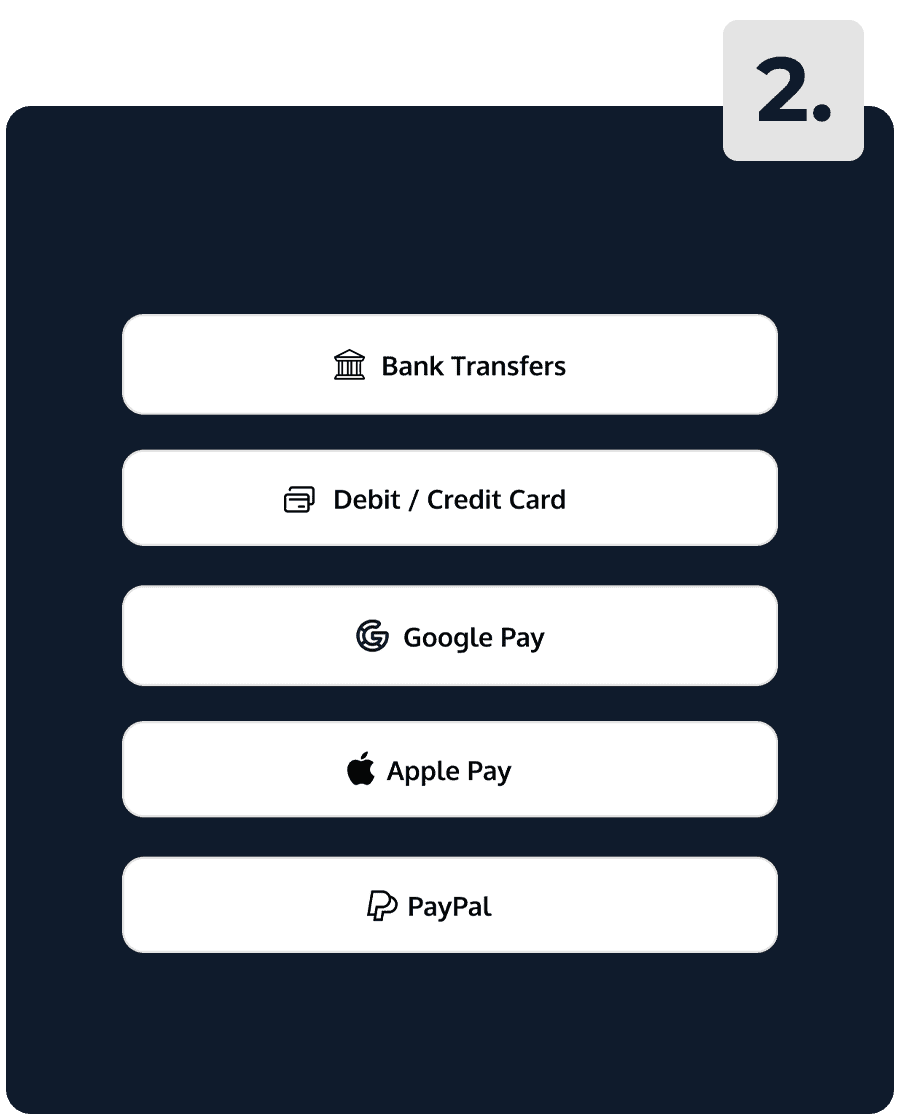
Add money to your Kraken account. US users can deposit via ACH (free, 1-3 days) or wire transfer. UK users can use Faster Payments (free, instant). EU users can use SEPA (free, same day). Debit/credit cards, Apple Pay, and Google Pay are also available for instant deposits – though card fees are higher (3.75%+). For larger AVAX purchases, bank transfer is the cheapest option.

Step 3: Go to “Buy Crypto”
Click “Buy Crypto” on the Kraken website or tap it in the mobile app. This opens the simple buying interface designed for beginners – no trading experience needed.

Step 4: Search for Avalanche (AVAX)
Type “Avalanche” or “AVAX” in the search bar and select it from the results. Choose the AVAX/USD pair if you deposited US dollars, AVAX/EUR for euros, or AVAX/GBP for British pounds.

Step 5: Enter Your Purchase Amount
Enter how much you want to spend in your local currency (minimum $10). Kraken will automatically calculate how many AVAX tokens you will receive at the current market price. At approximately $9.50 per AVAX, a $100 purchase gives you roughly 10.5 AVAX tokens.

Step 6: Review and Confirm Your Order
Check the AVAX price, total cost including fees, and the amount of AVAX you will receive. Kraken shows the full breakdown before you confirm. Once you click “Buy,” the AVAX tokens are added to your Kraken account instantly.
Step 7: Secure Your AVAX (or Stake It)
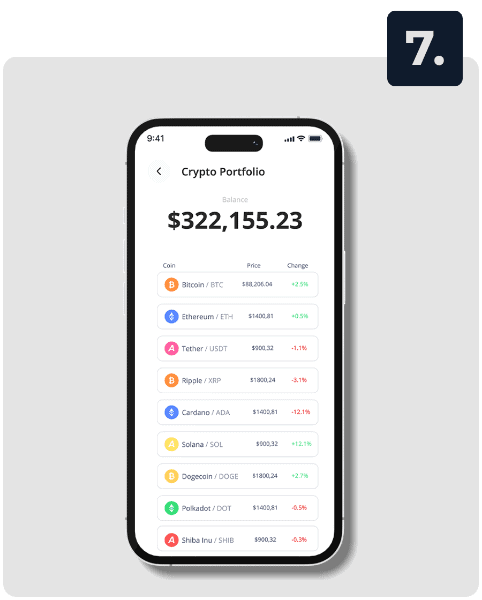
Your AVAX is now in your Kraken wallet. You have three options: hold it on Kraken for easy access, stake it directly on Kraken to earn staking rewards, or withdraw it to a personal wallet like MetaMask (configured for the Avalanche C-Chain) or the Core wallet for self-custody. If you plan to explore Avalanche DeFi protocols like Trader Joe, Benqi, or GMX, you will need AVAX in a self-custody wallet.
What Is Avalanche (AVAX)?
What makes Avalanche unique is its multi-chain architecture. The network is built on three interoperable blockchains, each optimised for a specific purpose: the C-Chain (Contract Chain) hosts smart contracts and is fully compatible with Ethereum’s tooling, meaning any Ethereum dApp can be deployed on Avalanche with minimal changes; the X-Chain (Exchange Chain) handles asset creation and transfers; and the P-Chain (Platform Chain) manages validators and coordinates the creation of new blockchains. This separation of responsibilities allows each chain to be optimised independently, delivering better overall performance than monolithic designs.
In December 2024, Avalanche launched its largest upgrade to date: Avalanche9000 (also called the Etna upgrade). This transformed the network’s previous “subnet” model into sovereign Layer 1 blockchains. The key change is that developers can now launch their own fully independent blockchain on Avalanche at 99.9% lower cost than before – the previous requirement for validators to stake 2,000 AVAX on the Primary Network was eliminated. New L1s can set their own staking rules, gas tokens, permissions, and compliance requirements while remaining interoperable with the rest of the Avalanche ecosystem through Interchain Messaging (ICM). The C-Chain base gas fee was also reduced by 96% (from 25 nAVAX to 1 nAVAX), making it one of the cheapest EVM-compatible chains available.
Avalanche has attracted significant institutional interest. BlackRock’s tokenized treasury fund BUIDL uses Avalanche infrastructure, and Franklin Templeton has built tokenized investment products on the network. The Avalanche Foundation raised $250 million in late 2024 (led by Galaxy Digital, Dragonfly, and ParaFi Capital) to support the Avalanche9000 rollout, and Nasdaq filed in March 2025 to list a spot AVAX ETF by Canary Capital. Gaming partnerships (including a dedicated subnet for FIFA) and DeFi protocols like Trader Joe, Benqi, and Aave have built substantial ecosystems on the platform.
On March 17, 2026, the SEC and CFTC jointly classified AVAX as a “digital commodity” – not a security – alongside Bitcoin, Ethereum, and 13 other major cryptocurrencies. AVAX is the native token of the network, used to pay transaction fees, stake to secure the network, and participate in governance.
Avalanche Price & Market Overview
Before buying AVAX, here are the key numbers to understand the size, liquidity, and structure of the Avalanche market. Always check the live price on Kraken or CoinGecko before placing your order.
| Metric | Data (March 2026) |
|---|---|
| Current Price | ~$9.50 (check live on Kraken) |
| Market Cap | ~$4.1 billion |
| CoinGecko / CMC Rank | #22 – #26 |
| 24h Trading Volume | $200M – $400M |
| Circulating Supply | ~432 million AVAX |
| Max Supply | 720 million AVAX (hard cap) |
| All-Time High (ATH) | $144.96 – November 21, 2021 |
| All-Time Low (ATL) | $2.80 – December 31, 2020 |
| Blockchain | Own Layer 1 – Avalanche Consensus (Proof-of-Stake with sub-second finality) |
| Staking Yield | ~7%-9% APY (minimum 25 AVAX to delegate, 2,000 AVAX to validate) |
| TPS (C-Chain) | ~4,500 transactions per second with sub-second finality |
| EVM Compatible | Yes – C-Chain runs full Ethereum Virtual Machine; deploy Solidity smart contracts directly |
| Key Upgrade | Avalanche9000 (Etna) – live since December 2024; 99.9% cheaper L1 deployment |
| Regulatory Status | Digital commodity (SEC/CFTC joint classification – March 17, 2026) |
| ETF Filing | Canary Capital spot AVAX ETF – filed via Nasdaq, March 2025; pending SEC approval |
| Listed On | 200+ exchanges including Kraken, Binance, Coinbase, OKX, KuCoin, Gemini |
Avalanche Tokenomics – How the Supply Works
AVAX has a fixed maximum supply of 720 million tokens. New AVAX enters circulation through staking rewards, which are drawn from an uncirculated allocation that diminishes over time. Uniquely, all AVAX transaction fees are permanently burned (destroyed), creating deflationary pressure as network usage grows.
| Allocation | Amount | What This Means |
|---|---|---|
| Max Supply | 720 million AVAX | Hard cap – the absolute maximum that will ever exist |
| Circulating Supply | ~432 million AVAX | ~60% of total supply currently in circulation |
| Staking Rewards Pool | ~288 million AVAX remaining | Released as validator/delegator rewards over time – rate declines as pool shrinks |
| Initial Token Sale (2020) | ~16% across seed, private, and public rounds | Sold at prices ranging from $0.33 (seed) to $0.50 (public) – all fully vested |
| Foundation | 9.26% | Avalanche Foundation allocation for ecosystem grants, development, and partnerships |
| Team / Ava Labs | 10% | Distributed to founders and early team members – vesting completed |
| Fee Burn Mechanism | 100% of transaction fees burned | Every AVAX spent on gas is permanently destroyed – reduces supply over time |
| Staking Requirements | 25 AVAX min (delegate) / 2,000 AVAX (validate) | Minimum lockup period of 2 weeks for validators; delegators can choose duration |
| Primary Utility | Gas fees + staking + L1 validator registration | AVAX pays for transactions, secures the network, and registers new L1 validators on the P-Chain |
Best Exchanges to Buy Avalanche in 2026
While Kraken is our recommended platform, AVAX is widely listed on over 200 exchanges globally. Your best option depends on your location, preferred payment method, and whether you want access to staking or DeFi features.
| Exchange | Fee | Min. Buy | Payment Methods | KYC | Best For |
|---|---|---|---|---|---|
| Kraken | 0.16%-0.26% | $10 | Bank Transfer, Card, ACH, Apple Pay, Google Pay | Yes | Beginners – US, UK, EU; staking available |
| Binance | 0.10% | $10 | Card, Bank, P2P, Apple Pay, Google Pay | Yes | Highest global AVAX volume; lowest fees |
| Coinbase | 0.40%-0.60% | $1 | Card, Bank Transfer, Apple Pay, PayPal (US) | Yes | Simplest UI for total beginners |
| OKX | 0.08%-0.10% | $10 | Card, Bank, P2P | Yes | Low fees; advanced traders; Web3 wallet with Avalanche support |
| KuCoin | 0.10% | $1 | Card, Bank Transfer | Yes | Low minimum buy; wide altcoin selection |
| Trader Joe (DEX) | 0.3% swap + gas | No minimum | Avalanche wallet only | No KYC | Native Avalanche DEX; swap AVAX for any Avalanche token directly |
How to Store Avalanche Safely
Once you have bought AVAX, where you keep it matters. Leaving tokens on an exchange exposes you to platform risk – if the exchange is hacked or goes insolvent (as FTX did in 2022), your funds could be lost. For anything you plan to hold long term, transferring AVAX to a personal wallet is the safer choice.
Option 1 – Exchange Wallet (Convenient, Lower Security)
Your AVAX stays in your Kraken or Binance account. The exchange holds the private keys on your behalf. Fine for active traders and convenient for on-platform staking, but not recommended for long-term holding of significant amounts.
Option 2 – Software Wallet (Free, Self-Custody)
You control the private keys and the wallet is connected to the internet. Essential for interacting with Avalanche DeFi protocols, staking, and dApps.
| Wallet | Platform | Best For |
|---|---|---|
| Core | Browser extension + iOS + Android | Official Avalanche wallet by Ava Labs. Full support for C-Chain, X-Chain, P-Chain, staking, and cross-chain transfers. The go-to wallet for the Avalanche ecosystem. |
| MetaMask | Browser extension + iOS + Android | Most popular EVM wallet. Add the Avalanche C-Chain network and use all Ethereum-compatible dApps on Avalanche. Does not support X-Chain or P-Chain natively. |
| Rabby Wallet | Browser extension + desktop | Advanced security features with pre-transaction risk scanning. Multi-chain support including Avalanche C-Chain. |
| Trust Wallet | iOS + Android | Multi-chain mobile wallet. Supports Avalanche C-Chain alongside Ethereum, BNB Chain, Solana, and dozens more. |
Option 3 – Hardware Wallet (Highest Security)
Your private keys are stored on a physical device that never connects to the internet. The gold standard for long-term AVAX storage.
| Wallet | Price | Best For |
|---|---|---|
| Ledger Nano X | ~$149 | Industry standard; Bluetooth; supports Avalanche C-Chain via Ledger Live or MetaMask pairing |
| Ledger Stax / Flex | $279 / $249 | Premium touchscreen hardware wallets; full Avalanche support |
| Trezor Safe 5 | ~$169 | Open-source firmware; Avalanche C-Chain support via MetaMask integration |
Is Avalanche a Good Investment in 2026?
Avalanche has one of the most technically innovative architectures in crypto. Its multi-chain design, sub-second finality, EVM compatibility, and the Avalanche9000 upgrade (which reduced L1 deployment costs by 99.9%) position it as a serious infrastructure play for institutional and enterprise blockchain adoption. BlackRock and Franklin Templeton are building tokenized products on Avalanche, and the network’s C-Chain recorded over 20 million transactions in a single recent week – near all-time highs for network activity.
In 2026, key catalysts include the SEC/CFTC classification of AVAX as a digital commodity (March 17, 2026), the pending Canary Capital spot AVAX ETF (filed via Nasdaq in March 2025), the ongoing rollout of hundreds of new L1 chains enabled by Avalanche9000, the $250 million ecosystem fund, institutional partnerships with BlackRock, Franklin Templeton, and FIFA, and the Granite upgrade (improving dynamic block times and cross-chain messaging). Active wallets reached 1.318 million, signalling growing user engagement.
That said, AVAX faces real headwinds. The price has dropped over 93% from its 2021 ATH and roughly 50% year-over-year. Competition from Ethereum Layer 2s (particularly Base and Arbitrum) and Solana is intense, and Avalanche’s DeFi TVL has not kept pace with these rivals. Validator centralisation is a concern – the top 10 validators control approximately 40% of staked AVAX. The 40% of supply that remains uncirculated (~288 million AVAX) will gradually enter the market through staking rewards, creating ongoing dilution.
AVAX Price Scenarios for 2026
| Scenario | Price Range | What Would Need to Happen |
|---|---|---|
| Bearish | $5 – $8 | Continued macro weakness, L1 adoption fails to materialise, ETF rejected, DeFi TVL stagnates |
| Base Case | $9 – $16 | Avalanche9000 L1 launches gain traction, institutional partnerships deepen, stable macro |
| Bullish | $18 – $35 | Bitcoin bull run, AVAX ETF approved, hundreds of new L1s launch driving fee burns, RWA tokenisation accelerates |
| ATH Retest | $80 – $145+ | Full crypto super-cycle, Avalanche becomes default enterprise blockchain platform, massive institutional inflows |
Price scenarios are based on analyst estimates and historical data. They are not financial advice. Crypto markets are highly unpredictable.
Key Risks to Understand Before You Buy
- Extreme drawdown from ATH – AVAX is down over 93% from its $144.96 peak. There is no guarantee it will recover to previous highs, and many altcoins from past cycles never do.
- Intense L1 competition – Avalanche competes with Ethereum (and its L2 ecosystem), Solana, Cardano, and newer platforms for developers, users, and institutional adoption.
- Validator centralisation – the top 10 validators control roughly 40% of staked AVAX, raising concerns about network decentralisation and potential censorship resistance.
- Supply dilution – approximately 288 million AVAX (~40% of max supply) remain uncirculated and will gradually enter the market through staking rewards over the coming years.
- DeFi TVL competition – Avalanche’s DeFi ecosystem is smaller than Ethereum, Solana, and BNB Chain. Attracting and retaining liquidity is an ongoing challenge.
- Avalanche9000 execution risk – the success of the L1 model depends on hundreds of new chains actually launching and generating meaningful activity. If adoption is slow, the upgrade’s benefits may not translate to AVAX price appreciation.
- ETF uncertainty – the Canary Capital spot AVAX ETF is pending, and approval is not guaranteed. Rejection could dampen institutional sentiment.
How to Sell Avalanche
Selling AVAX on Kraken is just as straightforward as buying it. Here is the complete step-by-step process:
-
1
Log in to Kraken
Go to your Spot Wallet to confirm your current AVAX balance and the live market price.
-
2
Unstake (If Applicable)
If your AVAX is staked on Kraken or delegated to a validator via the Core wallet, you will need to wait for the staking period to end before your AVAX becomes freely transferable. Avalanche staking has a minimum lockup period of 2 weeks for validators.
-
3
Click “Sell”
Navigate to the Sell section in the main menu and search for AVAX in the asset list.
-
4
Choose Your Trading Pair
Select the currency you want to receive – USD, EUR, GBP, or USDT depending on your preference and location.
-
5
Enter the Amount to Sell
Type either an AVAX amount or a target cash value. Kraken will show your estimated proceeds after fees in real time.
-
6
Review and Confirm
Check the sell price, transaction amount, and fee on the confirmation screen. Click “Sell Now” to execute.
-
7
Withdraw to Your Bank
Your cash balance appears in your Kraken account immediately. Go to Funding – Withdraw to transfer to your bank. Most withdrawals complete within 1-3 business days.
Questions & Answers

Avalanche is a high-performance Layer 1 blockchain built for speed, low costs, and the ability to host independent custom blockchains. Founded by Cornell professor Emin Gun Sirer, it achieves sub-second transaction finality and processes up to 4,500 TPS. Avalanche is popular because of its EVM compatibility (any Ethereum dApp works on it), its innovative multi-chain architecture, and its appeal to institutional users like BlackRock and Franklin Templeton who are building tokenized products on the network.
Avalanche is the blockchain network and ecosystem. AVAX is the native cryptocurrency token used to pay transaction fees (which are permanently burned), stake to secure the network, and register validators for new L1 chains. When people say “buy Avalanche,” they mean buying AVAX tokens.
For most users, Kraken offers the best balance of security, fees, and ease of use. Binance has the highest global AVAX trading volume at 0.10% fees. Coinbase is the simplest option for total beginners. AVAX is listed on over 200 exchanges globally. For DeFi users, you can also acquire AVAX directly on decentralised exchanges like Trader Joe on the Avalanche network.
As of March 2026, AVAX trades at approximately $9.50. Kraken allows purchases from as little as $10, and you can buy fractional amounts. Always check the live AVAX price on Kraken or CoinGecko before buying.
Yes. Kraken, Binance, Coinbase, OKX, and most other major exchanges support debit and credit card purchases of AVAX. Card payments are processed instantly but carry higher fees (typically 3.75%+). For larger purchases, bank transfers (ACH in the US, SEPA in the EU, Faster Payments in the UK) are significantly cheaper – often free.
For full Avalanche ecosystem access (including staking and all three chains), use the Core wallet – it is built by Ava Labs specifically for Avalanche. For DeFi and dApp interaction on the C-Chain, MetaMask works perfectly since Avalanche is EVM-compatible. For maximum security, use a Ledger or Trezor hardware wallet paired with MetaMask or the Core wallet.
Yes. You can delegate AVAX to a validator through the Core wallet (minimum 25 AVAX, minimum 2-week lockup) and earn approximately 7%-9% APY. Running your own validator requires a minimum of 2,000 AVAX. Centralised exchanges like Kraken also offer simplified staking with lower minimums. Unlike Cardano, Avalanche staking involves a lockup period – your AVAX is not liquid while staked.
Avalanche9000 (also called the Etna upgrade) is Avalanche’s largest network upgrade to date, launched in December 2024. It transformed the previous subnet model into fully sovereign Layer 1 blockchains that can operate independently with their own validators, staking rules, gas tokens, and compliance requirements. The upgrade reduced L1 deployment costs by 99.9% and cut C-Chain gas fees by 96%. The goal is for hundreds of application-specific chains to launch on Avalanche, each connected through Interchain Messaging for seamless cross-chain interoperability.
Avalanche is faster (sub-second finality vs 12-15 seconds on Ethereum), cheaper (especially after Avalanche9000), and natively supports multiple independent blockchains. Its C-Chain is fully EVM-compatible, so Ethereum dApps work on Avalanche with minimal changes. Ethereum has the larger ecosystem (57%-68% of DeFi TVL) and more institutional products (spot ETFs, staking ETFs), while Avalanche focuses on horizontal scaling through its L1 model – each application can have its own dedicated blockchain rather than sharing one congested chain.
Buying AVAX through a regulated exchange like Kraken is safe from a platform perspective – your account is protected by KYC, 2FA, and institutional-grade security. Avalanche’s protocol has operated since 2020 with no fundamental security failures, and its consensus mechanism (Avalanche Consensus) has been formally verified. The SEC and CFTC have classified AVAX as a digital commodity. The risk is market volatility – AVAX dropped over 93% from its 2021 ATH. Only invest what you can afford to lose.



Grow your portfolio.
Buy CRYPTO today