How to Buy Tether (USDT) – Step-by-Step Guide (2026)
How to Buy Tether on Kraken

Step 1: Create Your Free Kraken Account
Sign up at kraken.com by entering your email address and selecting your country of residence. Complete the identity verification (KYC) process by uploading a government-issued ID and a selfie. This typically takes a few minutes and unlocks full buying and trading access.
Step 2: Deposit Funds
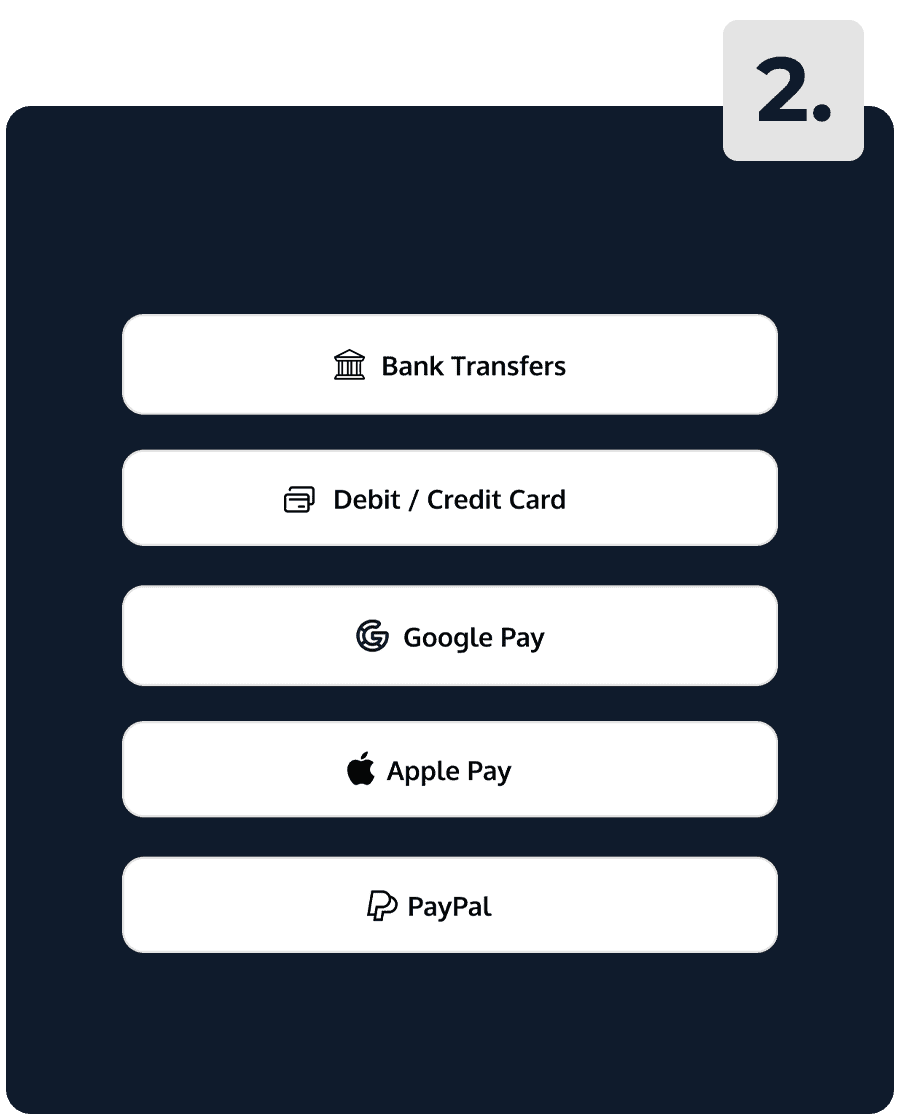
Add money to your Kraken account. US users can deposit via ACH (free, 1–3 days) or wire transfer. UK users can use Faster Payments (free, instant). EU users can use SEPA (free, same day). Debit/credit cards, Apple Pay, and Google Pay are also available for instant deposits. Since USDT is pegged to $1, a $100 deposit gives you approximately 100 USDT minus any fees.

Step 3: Go to “Buy Crypto”
Click “Buy Crypto” on the Kraken website or tap it in the mobile app. This opens the simple buying interface – no trading experience needed.

Step 4: Search for Tether (USDT)
Type “Tether” or “USDT” in the search bar and select it from the results. Choose the USDT/USD pair if you deposited US dollars, USDT/EUR for euros, or USDT/GBP for British pounds. USDT is the most-traded asset on Kraken by volume.

Step 5: Enter Your Purchase Amount
Enter how much you want to spend in your local currency (minimum $10). Since USDT is designed to maintain a 1:1 peg with the US dollar, $100 buys you approximately 100 USDT. The small difference is the spread and trading fee.

Step 6: Review and Confirm Your Order
Check the total cost including fees. Kraken shows the full breakdown before you confirm. Once you click “Buy,” the USDT is added to your Kraken account instantly. Note: Kraken charges 0.9% for stablecoin purchases via the instant buy feature, or 0.16%–0.26% via the spot trading interface.
Step 7: Use or Store Your USDT
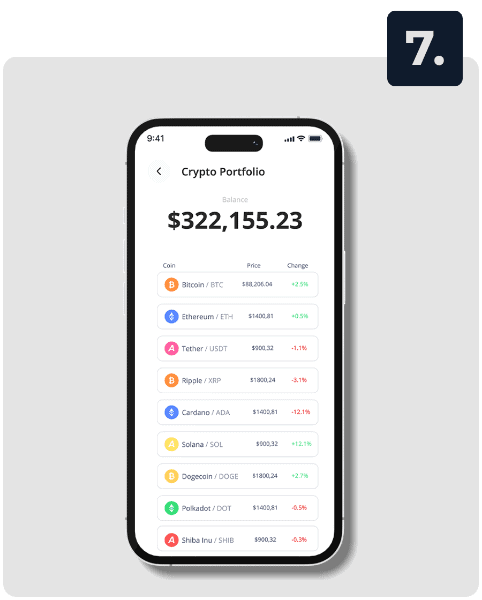
Your USDT is now in your Kraken wallet. You can hold it as a stable store of value, use it to buy other cryptocurrencies (Bitcoin, Ethereum, altcoins), transfer it to an external wallet, or withdraw it back to fiat. USDT is the primary trading pair for most cryptocurrencies on most exchanges.
What Is Tether (USDT)?
Unlike volatile cryptocurrencies like Bitcoin or Ethereum, USDT is not designed to increase in value. Its purpose is to provide price stability – a digital dollar that moves at the speed of blockchain. This makes USDT essential infrastructure for crypto markets: it is the primary trading pair on most exchanges, the most-used settlement currency in DeFi, a popular tool for cross-border payments and remittances, and a way for traders to “park” funds in a stable asset during market volatility without converting back to fiat.
Each USDT token is claimed to be backed 1:1 by Tether’s reserves. As of 2026, Tether states that over 80% of its reserves consist of US Treasury Bills (short-term government debt), with the remainder in cash, cash equivalents, gold, Bitcoin, secured loans, and other investments. Tether publishes quarterly reserve attestations conducted by BDO Italia, an independent accounting firm. However, these are point-in-time attestations – not full independent audits – which has been a recurring criticism. In late 2025, S&P Global Ratings downgraded USDT’s stability rating to “Weak” (5/5), citing transparency gaps and exposure to volatile assets.
USDT is a multi-chain token, available on more blockchains than any other stablecoin. The most commonly used networks include Ethereum (ERC-20), Tron (TRC-20 – the most popular for transfers due to low fees), Solana, BNB Chain, Polygon, Avalanche, Algorand, and others. The network you choose affects transaction speed and fees: Tron transfers cost a fraction of a cent, while Ethereum transfers can cost several dollars during congestion.
A major development in 2026 is the EU’s Markets in Crypto-Assets Regulation (MiCA), which requires stablecoin issuers to maintain 60% of reserves in EU bank deposits, obtain an Electronic Money Institution (EMI) licence, and undergo regular audits. Tether has not obtained MiCA authorisation, leading several major EU exchanges – including Coinbase, Crypto.com, and Kraken (for EEA users) – to delist or restrict USDT trading for European customers. EU users may need to use USDC or euro-backed stablecoins instead. USDT remains fully available outside the EU.
Tether Market Overview
USDT is not a speculative investment – it is a utility token designed to hold a stable $1.00 value. Here are the key numbers to understand the scale and structure of the USDT market:
| Metric | Data (March 2026) |
|---|---|
| Current Price | ~$1.00 (designed to maintain 1:1 USD peg) |
| Market Cap | ~$140 billion |
| CoinMarketCap Rank | #3 |
| 24h Trading Volume | $50B – $130B (highest of any cryptocurrency) |
| Circulating Supply | ~140 billion USDT |
| Max Supply | No cap – Tether mints and burns USDT based on demand |
| Peg Target | $1.00 USD |
| Reserve Backing | 80%+ US Treasury Bills, plus cash, gold, Bitcoin, and other assets |
| Reserve Attestations | Quarterly – by BDO Italia (point-in-time attestation, not full audit) |
| Issuer | Tether Limited (affiliated with iFinex / Bitfinex) |
| Blockchains | Ethereum, Tron, Solana, BNB Chain, Polygon, Avalanche, Algorand, and more |
| EU Availability (MiCA) | Restricted – delisted or limited on major EU exchanges due to MiCA non-compliance |
| Listed On | Virtually every exchange globally – Kraken, Binance, OKX, KuCoin, Bybit, etc. |
USDT Reserves & Backing – What Supports the $1 Peg
Each USDT token is claimed to be backed by real-world reserves held by Tether Limited. Understanding the reserve composition is critical for anyone holding significant amounts of USDT. Here is the current reserve breakdown:
| Reserve Category | % of Reserves | What This Means |
|---|---|---|
| US Treasury Bills | ~80%+ | Short-term US government debt – the safest and most liquid asset class in the world |
| Cash & Cash Equivalents | Included in above | Bank deposits and money market instruments |
| Gold | Small allocation | Physical gold as a diversified store of value |
| Bitcoin | Small allocation | Adds volatility risk – a 20% BTC drop could reduce reserves by billions |
| Secured Loans | Small allocation | Loans backed by collateral – less liquid than Treasuries |
| Excess Reserves (Buffer) | ~$6.8 billion | Tether claims to hold more assets than USDT in circulation – this surplus acts as a safety margin |
| Minting / Burning | On demand | Authorised counterparties deposit USD to mint USDT, or return USDT to redeem for USD |
| Attestation Provider | BDO Italia | Quarterly point-in-time attestations – not full independent audits |
| S&P Stability Rating | 5/5 (“Weak”) | Downgraded in late 2025 due to transparency gaps and volatile asset exposure |
Best Exchanges to Buy USDT in 2026
USDT is the most traded cryptocurrency in the world and is available on virtually every exchange. Your best option depends on your location, payment method, and – crucially – whether you are in the EU (where MiCA restrictions apply).
| Exchange | Fee | Min. Buy | Payment Methods | KYC | Best For |
|---|---|---|---|---|---|
| Kraken | 0.16%–0.26% (spot) / 0.9% (instant buy) | $10 | Bank Transfer, Card, ACH, Apple Pay, Google Pay | Yes | US & UK users; strong security (USDT may be restricted for EEA users) |
| Binance | 0.10% | $10 | Card, Bank, P2P, Apple Pay, Google Pay | Yes | Highest global USDT volume; widest USDT trading pairs |
| OKX | 0.10% | $5 | Card, Bank, Crypto, P2P | Yes | Wide payment options; P2P for restricted regions |
| KuCoin | 0.10% | $1 | Card, Bank Transfer | Yes | Low minimum buy |
| Bybit | 0.10% | $10 | Card, Bank, P2P | Yes | Derivatives and futures traders |
| MoonPay / Ramp (on-ramp) | 1%–3.5% | $20 | Card, Apple Pay, Google Pay, Bank | Yes | Buy USDT directly to your own wallet – no exchange account needed |
How to Store Tether (USDT) Safely
Once you have bought USDT, where you keep it matters. Leaving tokens on an exchange is convenient for trading, but exposes you to platform risk. For larger amounts you plan to hold, transferring USDT to a personal wallet gives you full control.
Option 1 – Exchange Wallet (Convenient, Lower Security)
Your USDT stays in your Kraken or Binance account. The exchange holds the private keys on your behalf. This is the most common option for active traders who use USDT as a trading base currency.
Option 2 – Software Wallet (Free, Self-Custody)
You control the private keys. Good for holding USDT outside of exchanges or using it in DeFi applications.
| Wallet | Type | Cost | Best For |
|---|---|---|---|
| MetaMask | Browser & Mobile | Free | USDT on Ethereum, Polygon, BNB Chain – DeFi access |
| Trust Wallet | Mobile | Free | Multi-chain USDT support – Ethereum, Tron, BSC, Solana |
| Phantom | Browser & Mobile | Free | USDT on Solana – fast and cheap transfers |
Option 3 – Hardware Wallet (Most Secure, Recommended for Large Amounts)
Your private keys are stored on a physical device never connected to the internet. Recommended for storing significant amounts of USDT long-term.
| Device | Price | Best For |
|---|---|---|
| Ledger Nano X | ~$149 | Most popular – supports USDT on Ethereum, Tron, Polygon, and more |
| Ledger Nano S Plus | ~$79 | Budget option – same security, USB only |
| Trezor Safe 3 | ~$79 | Open-source, supports USDT on Ethereum |
Should You Hold USDT? Use Cases, Risks & Alternatives
USDT is the most widely used stablecoin in crypto, with daily trading volumes regularly exceeding $50 billion – more than Bitcoin. It serves as the backbone of the crypto trading ecosystem. Most cryptocurrency trading pairs are denominated in USDT, making it the default “cash” of crypto markets.
Common Use Cases for USDT
| Use Case | How USDT Helps |
|---|---|
| Trading base currency | Most altcoins are paired with USDT – it’s the default quote currency on nearly every exchange |
| Parking funds during volatility | Convert volatile crypto to USDT to protect value without withdrawing to fiat (no bank delays) |
| Cross-border payments | Send USDT globally in seconds via Tron (TRC-20) for near-zero fees – faster and cheaper than bank wires |
| DeFi yield | Earn interest by lending USDT on DeFi platforms like Aave, Compound, or centralised earn products |
| Remittances | Workers send USDT home as a dollar-equivalent value transfer, avoiding expensive remittance fees |
| On-ramp to other crypto | Buy USDT first, then swap for any cryptocurrency – often the cheapest route to buying altcoins |
Key Risks to Understand
- Depeg risk – while USDT has maintained its $1.00 peg since 2014, it briefly dipped to $0.95 during the May 2022 Terra/Luna collapse. A severe loss of confidence in Tether’s reserves could cause a depeg.
- Reserve transparency – Tether publishes quarterly attestations, not full audits. S&P downgraded USDT to “Weak” (5/5) in late 2025 citing transparency gaps. Approximately 12.5% of reserves include volatile assets like Bitcoin and gold.
- Regulatory risk – the EU’s MiCA regulation has already led to USDT delistings on major European exchanges. The US GENIUS Act (pending) could impose stricter reserve and audit requirements. Future regulation could further restrict USDT availability.
- Counterparty risk – USDT is issued by Tether Limited, a centralised entity. If Tether faces legal, regulatory, or financial difficulties, USDT holders are exposed. Tether can also freeze individual wallets when compelled by law enforcement.
- No yield by default – holding USDT in a wallet earns 0% interest. Your dollars are losing purchasing power to inflation unless you actively lend or stake USDT in a yield-generating platform (which introduces its own smart contract and counterparty risks).
- Competition – USDC (Circle), PYUSD (PayPal), USDe (Ethena), and others are gaining market share. Tether’s dominance has declined from 91.6% of stablecoin market cap in 2024 to approximately 62% in 2026.
How to Sell or Convert USDT
Converting USDT back to fiat currency or swapping it for other cryptocurrencies on Kraken is straightforward. Here is the complete step-by-step process:
-
1
Log in to Kraken
Go to your Spot Wallet to confirm your current USDT balance.
-
2
Choose “Sell” or “Convert”
To convert USDT to fiat (USD, EUR, GBP), go to the Sell section and search for USDT. To swap USDT for another crypto (BTC, ETH, SOL, etc.), use the Convert or Trade feature.
-
3
Select Your Output Currency
Choose what you want to receive – USD for US dollars, EUR for euros, GBP for pounds, or any cryptocurrency available on Kraken.
-
4
Enter the Amount
Type the USDT amount you want to sell or convert. Kraken will show the estimated output after fees.
-
5
Review and Confirm
Check the exchange rate, total amount, and fees. Click “Confirm” to execute.
-
6
Withdraw to Your Bank (if selling for fiat)
Your fiat balance appears in your Kraken account immediately. Go to Funding → Withdraw to transfer to your bank. US users: ACH or wire. UK users: Faster Payments. EU users: SEPA. Most withdrawals complete within 1–3 business days.
Questions & Answers

Tether (USDT) is the world’s largest stablecoin – a cryptocurrency designed to maintain a 1:1 peg with the US dollar. Launched in 2014, it is used primarily as a trading pair currency on crypto exchanges, a stable store of value during market volatility, and a fast, cheap tool for cross-border transfers. USDT is issued by Tether Limited and claims to be backed 1:1 by reserves including US Treasury Bills, cash, gold, and other assets.
No. USDT is a digital token designed to track the value of the US dollar, but it is not the US dollar itself. It is not issued by any government or central bank, not FDIC insured, and not guaranteed by any regulatory body. Its value depends on Tether Limited maintaining adequate reserves and market confidence in the peg. While USDT has traded very close to $1.00 since 2014, brief deviations have occurred during periods of extreme market stress.
For US and UK users, Kraken is a reliable option with competitive spot trading fees (0.16%–0.26%). Binance offers the highest global USDT liquidity at 0.10% fees. For EU/EEA users, check your exchange’s current USDT availability – MiCA restrictions may limit access. If you want to buy USDT directly to your wallet without an exchange account, on-ramp providers like MoonPay and Ramp allow card purchases sent directly to your personal wallet.
USDT is available on 10+ blockchains. The most popular are Tron (TRC-20) – the cheapest and fastest for simple transfers, with fees under $0.01 – and Ethereum (ERC-20) – the most widely supported but with higher gas fees ($1–$10+). Solana and Polygon offer a good balance of speed, cost, and DeFi access. Always match the network you withdraw on to the network your destination wallet supports.
USDT has maintained its $1.00 peg since 2014, but it carries specific risks that differ from volatile cryptocurrencies. The main concerns are reserve transparency (Tether has never completed a full independent audit), regulatory pressure (MiCA delistings in the EU, pending US legislation), and counterparty risk (dependence on Tether Limited as a centralised issuer). S&P rates USDT’s stability as “Weak” (5/5). For maximum safety, consider diversifying across multiple stablecoins (USDT + USDC) rather than holding all stable assets in one issuer.
While USDT has maintained its peg over a decade, brief deviations have occurred. During the May 2022 Terra/Luna collapse, USDT dipped to approximately $0.95 on some exchanges before recovering within hours. A sustained depeg would require a severe loss of confidence in Tether’s reserves – for example, if reserves were found to be significantly less than the USDT in circulation. The $6.8 billion excess reserve buffer provides a safety margin, but no stablecoin is risk-free.
MiCA (Markets in Crypto-Assets) is the EU’s comprehensive crypto regulation, effective from mid-2025. It requires stablecoin issuers to maintain 60% of reserves in EU bank deposits, obtain an Electronic Money Institution licence, and undergo regular audits. Tether has not obtained MiCA authorisation, leading several major EU exchanges to delist or restrict USDT for European users. The transition deadline is July 1, 2026. EU users should consider USDC as a MiCA-compliant alternative.
Both are dollar-pegged stablecoins, but they differ in transparency and regulation. USDC is issued by Circle, undergoes monthly audits by Deloitte, is MiCA-compliant in the EU, and holds reserves primarily in US Treasuries and cash at regulated banks. USDT is issued by Tether Limited, publishes quarterly attestations (not full audits), is not MiCA-compliant, and includes Bitcoin and gold in its reserves. USDT has higher global trading volume and wider exchange support, while USDC is favoured by institutions and regulated markets.
Yes. You can earn yield on USDT through centralised exchange earn products (Binance Earn, Kraken Earn, Bybit Earn – typically 2%–8% APY) or by lending USDT on DeFi protocols like Aave or Compound. However, all yield-generating options introduce counterparty risk (exchange insolvency) or smart contract risk (DeFi exploits). Higher yields typically mean higher risk. Never deposit more than you can afford to lose into any yield platform.
In most jurisdictions, converting USDT to fiat, swapping it for another cryptocurrency, or spending it are taxable events – even though USDT is a stablecoin pegged to $1.00. In the US, this triggers Capital Gains Tax (likely minimal if you bought and sold at $1.00, but still reportable). In the UK, HMRC treats it as a disposal subject to CGT. DeFi yields and interest earned on USDT may also be taxable as income. Keep records of all transactions. Tools like Koinly, CoinTracker, or TaxBit can automate this.






Grow your portfolio.
Buy CRYPTO today