How to Buy Solana – Step-by-Step Guide (2026)
How to Buy Solana on Kraken

Step 1: Create Your Account
Sign up by entering your email address and selecting your country of residence. This begins the secure account verification process required to start buying cryptocurrency.
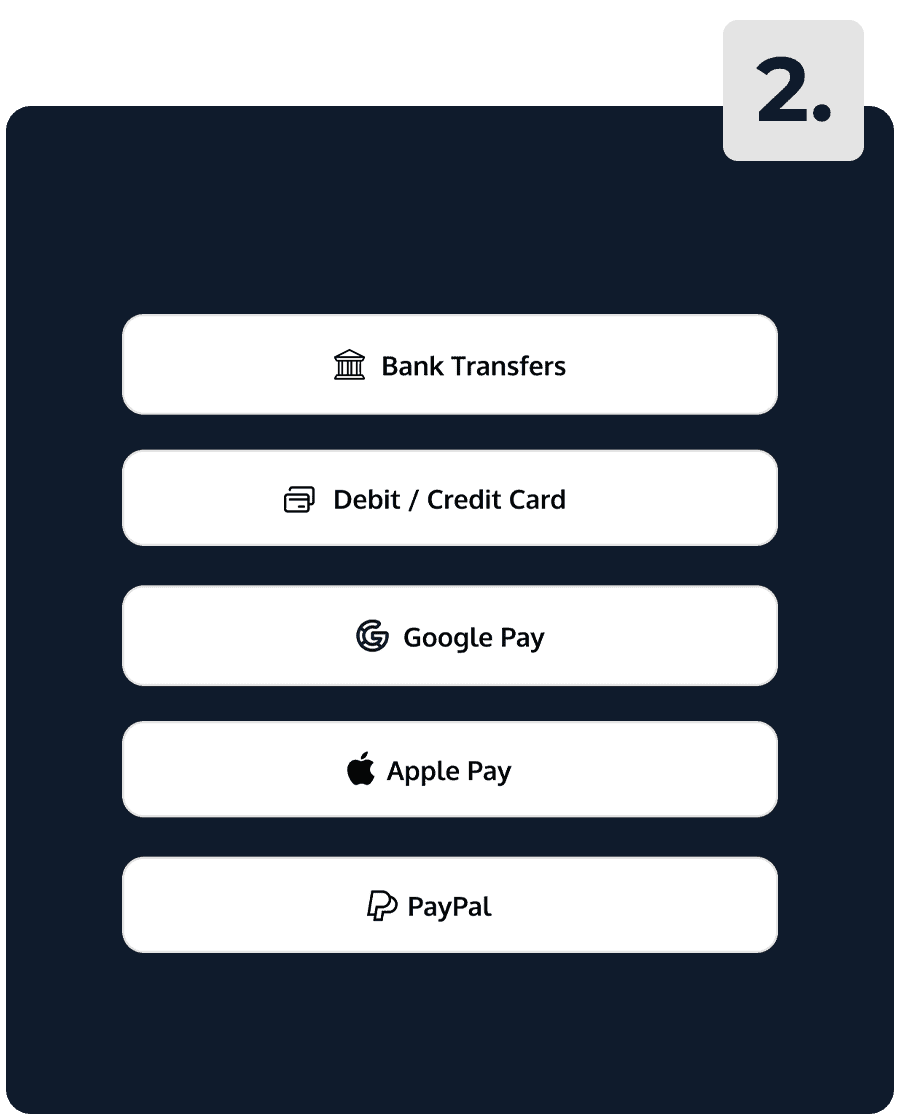
Step 2: Choose a Payment Method
Select how you want to fund your purchase. Most platforms allow bank transfers, ACH payments, credit or debit cards, and other supported payment options.

Step 3: Go to “Buy Crypto”
Navigate to the Buy Crypto section on the platform’s website or mobile app to begin purchasing cryptocurrency.

Step 4: Select Your Cryptocurrency
Choose from hundreds of available digital assets, including popular cryptocurrencies such as Bitcoin and other major coins. Asset availability may vary depending on your region.

Step 5: Enter Your Purchase Amount
Enter the amount you want to spend using your local currency. The platform will automatically calculate the estimated amount of cryptocurrency you will receive.

Step 6: Review and Confirm Your Order
Before completing your purchase, review the asset price, transaction amount, and any applicable fees. Once confirmed, the cryptocurrency will be added to your account.
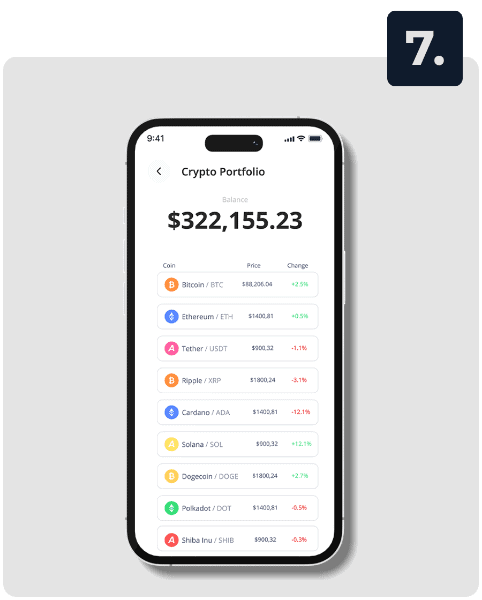
Step 7: Track Your Crypto Portfolio
After your purchase is complete, visit your crypto portfolio to view your balance, track your digital assets, and monitor cryptocurrency market movements in real time.
What Is Solana (SOL)?
Solana is a high-performance Layer 1 blockchain designed to support decentralised applications (dApps), DeFi, NFTs, gaming, and payments at scale. Founded in 2017 by Anatoly Yakovenko, a former Qualcomm engineer, Solana launched its mainnet in March 2020 and has since grown into one of the most widely used blockchains in crypto – consistently ranking among the top 5 cryptocurrencies by market capitalisation.
Solana’s defining technical innovation is Proof of History (PoH), a cryptographic clock that timestamps transactions before they enter the consensus process. Combined with Proof of Stake (PoS) for validator incentives and Tower BFT as its consensus mechanism, this architecture enables Solana to process over 65,000 transactions per second with sub-second finality and average fees of approximately $0.00025 per transaction – a fraction of what Ethereum charges. The network is secured by over 2,000 validators globally.
SOL is the native token of the Solana network and serves three core functions: paying transaction fees (denominated in lamports, the smallest unit of SOL), staking for network security (currently yielding 5–7% annually), and participating in governance. A portion of each transaction fee is burned, permanently removing SOL from circulation. New SOL enters supply through an inflation schedule designed to fund staking rewards, with the inflation rate gradually decreasing over time.
The Solana ecosystem is one of the most active in crypto. It hosts over 3,500 active developer projects spanning DeFi protocols (Jupiter, Raydium, Marinade), NFT marketplaces (Tensor, Magic Eden), meme coins (BONK, WIF), gaming, and real-world asset (RWA) tokenisation. Solana ranked second only to Ethereum for new developer inflows in 2025, adding over 11,500 developers. Applications built on Solana now earn approximately $3.50 in revenue for every $1.00 the network itself generates.
In October 2025, the first spot Solana ETFs were approved in the United States. Major issuers include VanEck (VSOL), Grayscale (GSOL), 21Shares (TSOL), and Bitwise (BSOL). Several of these ETFs stake a portion of their SOL holdings and pass staking yield back to shareholders – a unique feature that makes Solana ETFs distinctively attractive compared to Bitcoin or Ethereum ETFs. As of early 2026, weekly institutional ETF inflows into SOL continue to be positive.
SOL reached its all-time high of approximately $295 in January 2025. As of March 2026, it trades at approximately $93 with a market cap around $55 billion. SOL is available on virtually every major exchange, including Kraken, Binance, Coinbase, KuCoin, OKX, Bybit, and Gemini.
Solana Price & Market Overview
Before buying SOL, here are the key numbers to understand the size, liquidity, and structure of the Solana market. Always check the live price on Kraken or CoinGecko before placing your order.
| Metric | Data (March 2026) |
|---|---|
| Current Price | ~$93 / ~£74 (check live on Kraken) |
| Market Cap | ~$55 billion (~£44 billion) |
| CoinGecko / CMC Rank | #5 – #6 |
| 24h Trading Volume | $2B – $4B |
| Circulating Supply | ~589 million SOL |
| Max Supply | No hard cap – inflationary with decreasing rate (currently ~5% per year) |
| All-Time High (ATH) | ~$295 – January 2025 |
| All-Time Low (ATL) | $0.50 – May 11, 2020 |
| Blockchain | Solana (own L1 – Proof of History + Proof of Stake) |
| Transaction Speed | ~400ms (sub-second finality) |
| Average Transaction Fee | ~$0.00025 |
| Staking Yield | 5–7% APY |
| Spot SOL ETFs | Approved (October 2025) – VanEck, Grayscale, 21Shares, Bitwise |
| Listed On | All major exchanges including Kraken, Binance, Coinbase, OKX, Bybit |
Solana Tokenomics – How the Supply Works
SOL has no fixed maximum supply. New tokens are created through an inflation schedule that funds staking rewards, while a portion of every transaction fee is burned. The inflation rate decreases each year, making SOL progressively less inflationary over time. Here is how the supply works:
| Parameter | Value | What This Means |
|---|---|---|
| Circulating Supply | ~589 million SOL | Actively tradable and staked on the network |
| Max Supply | No hard cap | Inflationary – new SOL issued to stakers through block rewards |
| Current Inflation Rate | ~5% per year | Decreasing by 15% each year until reaching a long-term floor of 1.5% |
| Fee Burn Mechanism | 50% of fees burned | Half of every transaction fee is permanently destroyed, reducing net inflation |
| Staking Yield | 5–7% APY | Earned by delegating SOL to validators – offsets inflation for stakers |
| Validators | 2,000+ | Independent nodes securing the network globally |
| Consensus | PoH + PoS + Tower BFT | Proof of History timestamps transactions; PoS secures the network |
| Throughput | 65,000+ TPS | One of the highest-throughput blockchains – designed for scale |
| Transaction Fee | ~$0.00025 | Among the cheapest fees of any major blockchain |
| FTX Estate Tokens | Tens of millions of SOL | Periodic unlocks from the bankrupt FTX estate create predictable selling pressure |
Best Exchanges to Buy Solana in 2026
SOL is one of the most widely listed cryptocurrencies, available on virtually every major exchange. You can also gain exposure through spot Solana ETFs if you prefer a traditional brokerage account.
| Exchange | Fee | Min. Buy | Payment Methods | KYC | Best For |
|---|---|---|---|---|---|
| Kraken | 0.16%–0.26% | £10 | Faster Payments, Card, ACH, Apple Pay, Google Pay | Yes | Beginners – UK, EU, US; SOL staking available |
| Binance | 0.10% | £15 | Card, Bank, P2P, Apple Pay, Google Pay | Yes | Highest global SOL volume |
| Coinbase | 0.40%–0.60% | £2 | Card, Bank Transfer, Apple Pay | Yes | Simplest UI; SOL staking available |
| KuCoin | 0.10% | £1 | Card, Bank Transfer | Yes | Low minimum buy |
| Bybit | 0.10% | £10 | Card, Bank, P2P | Yes | Derivatives and futures traders |
| SOL ETFs (VanEck, Grayscale, etc.) | 0.21%–0.30% annual | 1 share | Stock brokerage account | Yes | Traditional investors – buy SOL in an ISA or pension |
How to Store Solana Safely
Once you have bought SOL, where you keep it matters. Leaving tokens on an exchange exposes you to platform risk – if the exchange is hacked or goes insolvent (as FTX did in 2022), your tokens could be lost. For anything you plan to hold, transferring SOL to a personal wallet is the safer choice – and self-custody wallets also let you stake SOL directly for 5–7% APY.
Option 1 – Exchange Wallet (Convenient, Lower Security)
Your SOL stays in your Kraken or Coinbase account. The exchange holds the private keys on your behalf. Many exchanges offer built-in staking (Kraken and Coinbase both support SOL staking). Fine for active traders, but not recommended for long-term holding of large amounts.
Option 2 – Software Wallet (Free, Self-Custody)
You control the private keys. Good for regular use, staking, accessing Solana DeFi, and managing NFTs.
| Wallet | Type | Cost | Best For |
|---|---|---|---|
| Phantom | Browser & Mobile | Free | The most popular Solana wallet – DeFi, NFTs, staking, swaps all built in |
| Solflare | Browser & Mobile | Free | Advanced Solana wallet with native staking and DeFi features |
| Backpack | Browser & Mobile | Free | Next-generation Solana wallet with xNFT support |
Option 3 – Hardware Wallet (Most Secure, Recommended for Holders)
Your private keys are stored on a physical device never connected to the internet. Even if your computer is hacked, your SOL cannot be accessed without the physical device. Ledger supports SOL staking directly through Ledger Live.
| Device | Price | Best For |
|---|---|---|
| Ledger Nano X | ~£119 | Most popular – Bluetooth, supports SOL natively via Ledger Live + staking |
| Ledger Nano S Plus | ~£63 | Budget option – same security, USB only, SOL support |
| Trezor Safe 3 | ~£63 | Open-source, supports Solana via third-party integrations |
Is Solana a Good Investment in 2026?
Solana is one of the strongest fundamental assets in crypto in 2026. It ranks #5–6 by market cap at approximately $55 billion, has over 3,500 active developer projects, 2,000+ validators, and is home to the most active meme coin and DeFi ecosystem outside of Ethereum. Spot SOL ETFs were approved in late 2025 with weekly institutional inflows continuing, and some ETFs pass staking yield (5–7%) back to shareholders.
The SIMD-0266 protocol upgrade, approved in March 2026, introduces compute-efficient p-tokens designed to further lower transaction costs, with a mainnet debut projected for April 2026. Developer activity ranked second globally behind Ethereum in 2025, and Solana applications now earn $3.50 for every $1.00 the network itself generates.
That said, Solana remains a volatile cryptocurrency. It dropped from $295 to approximately $93 between January 2025 and March 2026 – a ~68% drawdown. The FTX bankruptcy estate holds tens of millions of SOL tokens, and periodic unlocks have repeatedly triggered double-digit corrections. Competition from Ethereum, BNB Chain, and emerging Layer 1s remains intense.
SOL Price Scenarios for 2026
| Scenario | Price Range | What Would Need to Happen |
|---|---|---|
| Bearish | $50 – $80 | Macro headwinds, FTX unlocks accelerate, meme coin activity fades, ETF outflows |
| Base Case | $90 – $150 | Stable market, continued ETF inflows, ecosystem growth, SIMD-0266 mainnet launch |
| Bullish | $150 – $250 | Bitcoin bull run, altcoin season, major institutional adoption, RWA tokenisation growth |
| ATH Retest / New ATH | $295+ | Full crypto super-cycle, massive ETF inflows, Solana becomes dominant DeFi/payments chain |
Price scenarios are based on analyst estimates and historical data. They are not financial advice. Crypto markets are highly unpredictable.
Key Risks to Understand Before You Buy
- Market volatility – SOL dropped ~68% from its January 2025 ATH. Swings of 20–30% in a matter of weeks are normal for large-cap altcoins.
- FTX token unlocks – the bankrupt FTX estate holds tens of millions of SOL. Each scheduled unlock creates predictable selling pressure and has triggered double-digit corrections.
- Network outage history – Solana experienced multiple network outages in 2022–2023, raising reliability concerns. Stability has improved significantly in 2024–2026, but the risk remains.
- Inflationary supply – new SOL is issued continuously through staking rewards. Stakers offset this, but non-stakers are diluted over time.
- Competition – Ethereum (with L2 rollups), BNB Chain, Avalanche, and other Layer 1s compete for developers, users, and capital.
- Regulatory risk – the SEC previously labelled SOL a potential unregistered security, although the regulatory environment has improved under the current administration. Future policy shifts remain a risk.
How to Sell Solana
Selling SOL on Kraken is just as straightforward as buying it. Here is the complete step-by-step process:
-
1
Log in to Kraken
Go to your Spot Wallet to confirm your current SOL balance and the live market price.
-
2
Click “Sell”
Navigate to the Sell section in the main menu and search for SOL in the asset list.
-
3
Choose Your Trading Pair
Select the currency you want to receive – GBP, EUR, USD, or USDT depending on your preference and location.
-
4
Enter the Amount to Sell
Type either a SOL amount or a target cash value. Kraken will show your estimated proceeds after fees in real time.
-
5
Review and Confirm
Check the sell price, transaction amount, and fee on the confirmation screen. Click “Sell Now” to execute.
-
6
Withdraw to Your Bank
Your cash balance appears in your Kraken account immediately. Go to Funding → Withdraw to transfer to your bank. Most withdrawals complete within 1–3 business days.
Questions & Answers

Solana is a high-performance Layer 1 blockchain launched in 2020, designed for speed, scalability, and low cost. It can process over 65,000 transactions per second with fees averaging $0.00025 – making it one of the fastest and cheapest blockchains in the world. Solana is popular because it hosts a thriving ecosystem of over 3,500 active projects across DeFi, NFTs, gaming, meme coins, and payments. It consistently ranks among the top 5 cryptocurrencies by market cap and now has approved spot ETFs in the United States.
For most UK users, Kraken is the best place to buy SOL – it’s FCA-registered, supports free GBP deposits via Faster Payments, offers competitive fees starting at 0.16%, and provides built-in SOL staking. Coinbase is another strong UK option with a beginner-friendly interface and SOL staking. Binance offers the highest global volume at 0.10% fees. If you prefer traditional brokerage exposure, you can also buy spot Solana ETFs (VanEck VSOL, Grayscale GSOL) through any stock platform that lists US ETFs.
As of March 2026, SOL trades at approximately $93 (about £74). Unlike meme coins priced in fractions of a cent, SOL has a conventional price per token. You can invest any amount – Kraken allows purchases from as little as £10, meaning you can buy fractional SOL. Always check the live SOL price on Kraken or CoinGecko before buying.
Yes. Kraken, Binance, Coinbase, and most major exchanges support debit and credit card purchases of SOL. Card payments are processed instantly. However, card fees are typically higher (3.75%+ on Kraken). Bank transfers via Faster Payments are free and same-day for UK users – the cheapest method for most buyers. Apple Pay and Google Pay are also accepted on most platforms.
Because SOL runs on its own blockchain, you need a Solana-compatible wallet. You cannot store SOL in MetaMask (Ethereum-only). The most popular option is Phantom (browser and mobile) – the default wallet for the Solana ecosystem. Solflare and Backpack are also excellent choices. For maximum security, use a Ledger Nano X, which supports SOL natively through Ledger Live. All of these wallets also let you stake SOL directly for 5–7% APY.
Yes – staking is one of Solana’s biggest advantages. You can delegate your SOL to a validator and earn 5–7% APY in staking rewards. Staking is available directly in Phantom, Solflare, and Ledger Live (self-custody), or through exchanges like Kraken and Coinbase. Staking is non-custodial when done through your own wallet – your SOL remains yours. Unstaking takes approximately 2–3 days (one epoch). Staking is strongly recommended for long-term holders because the yield offsets SOL’s inflationary supply.
Buying SOL through a regulated exchange like Kraken is safe from a platform perspective. Solana’s blockchain itself is secured by over 2,000 validators globally and has operated without a major outage since 2023 (following earlier reliability issues in 2022). The spot SOL ETFs approved in 2025 have added institutional-grade legitimacy. The risk is market volatility: SOL dropped ~68% from its 2025 ATH. Only invest what you can afford to lose.
Solana has one of the strongest fundamental cases in crypto: it’s a top-5 blockchain by market cap, hosts the second-largest developer ecosystem globally, has approved spot ETFs with staking yield, and processes more daily transactions than most competing chains. However, it remains a volatile cryptocurrency subject to macro headwinds, FTX token unlocks, and competition from Ethereum and other L1s. We provide education, not financial advice. Consider Solana as part of a diversified portfolio.
Both are smart contract platforms, but they differ architecturally. Solana processes 65,000+ TPS with ~$0.00025 fees and sub-second finality on its base layer. Ethereum processes ~15 TPS on its base layer with fees often exceeding $1–10, relying on Layer 2 rollups (Arbitrum, Optimism, Base) for scaling. Solana uses Proof of History + Proof of Stake; Ethereum uses Proof of Stake. Ethereum has a larger developer base and longer track record, while Solana leads in speed, fees, and meme coin ecosystem activity. Both have approved spot ETFs in the US.
Spot Solana ETFs are regulated exchange-traded funds that hold actual SOL tokens on behalf of shareholders. They were approved in the United States in October 2025. Major issuers include VanEck (VSOL, 0.30% annual fee), Grayscale (GSOL), 21Shares (TSOL, 0.21% fee), and Bitwise (BSOL). Several of these ETFs stake a portion of their SOL and pass the 5–7% yield to shareholders – a unique feature not available with Bitcoin or Ethereum ETFs. ETFs allow investors to gain SOL exposure in traditional brokerage accounts, ISAs, or pensions without managing crypto wallets.





Grow your portfolio.
Buy CRYPTO today